Galal, Levite of the Restoration
A Levite listed among the residents of Jerusalem during the post-exilic period following the return from Babylon.
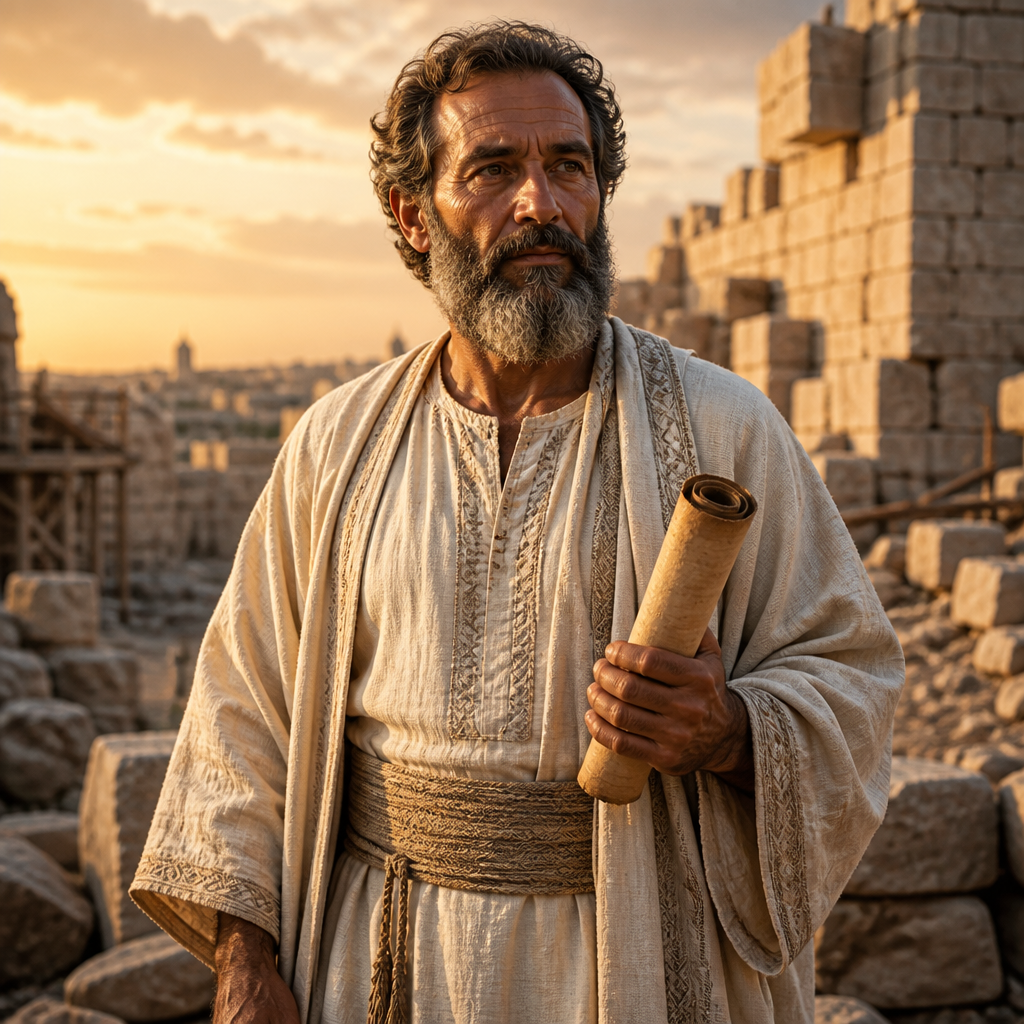
Galal was a member of the tribe of Levi who resided in Jerusalem during the era of the Exile and Return. His name appears within the genealogical records of 1 Chronicles, specifically in a section detailing the inhabitants of the holy city after the Babylonian captivity ended. As a Levite, he was part of the hereditary class responsible for the maintenance of the temple and the facilitation of Israel's liturgical life.
While the biblical record regarding Galal is brief, his presence in the text signifies the re-establishment of the religious order in Jerusalem. He is listed alongside other prominent Levites who returned to the land to ensure that the worship of Yahweh continued according to the ancestral traditions established during the time of the monarchy.
Background and Family
Galal is identified in the biblical text as a Levite living in Jerusalem during the post-exilic period (the era of the Return). The tribe of Levi held a unique position in Israelite society, as they were set apart for service to God and did not receive a traditional land inheritance like the other tribes. Following the decree of Cyrus the Great in 538 BC, which allowed the Jewish exiles to return to their homeland, the Levites were essential in restoring the spiritual infrastructure of the nation.
In the genealogical record of 1 Chronicles 9, Galal is listed among the "heads of their fathers' houses" who dwelt in Jerusalem. This specific list (1 Chronicles 9:1–34) serves to document the continuity between the pre-exilic and post-exilic community, proving that the sacred offices remained in the hands of the divinely appointed lineages.
Major Life Events
The biblical record for Galal is confined to a single appearance in the list of Jerusalem's inhabitants. He is mentioned in 1 Chronicles 9:15 as part of a group that includes Bakbakkar, Heresh, and Mattaniah. While the text does not describe specific deeds performed by Galal, his inclusion in this census indicates he was a man of sufficient standing and lineage to be recorded in the official registers of the restoration community.
Living in Jerusalem during this time would have involved the arduous task of rebuilding the city walls and the Second Temple. As a Levite, Galal would have been involved in the logistical or ceremonial aspects of this reconstruction, contributing to the stabilization of the Jewish remnant in a period of significant political and social transition.
Relationship to Other Biblical Figures
Galal is mentioned in the company of several other Levites: Bakbakkar, Heresh, and Mattaniah. The text identifies Mattaniah as a descendant of Asaph, the famous choir leader from the time of King David. While Galal is listed immediately before Mattaniah, the text does not explicitly define his specific parental lineage or his exact relationship to the house of Asaph, though his proximity to these figures suggests he shared in their responsibilities within the temple service.
Spiritual Significance
The significance of Galal lies in his role as a "living link" in the chain of Israelite worship. By returning to Jerusalem and establishing his residence there, he participated in the fulfillment of prophetic promises regarding the restoration of Zion. His name, preserved in the Chronicles, serves as a testament to the faithfulness of the individuals who abandoned their lives in Babylon to reclaim the ruins of Jerusalem for the sake of the covenant and the service of the sanctuary.
Spiritual Significance
Galal represents the vital remnant of Levites who returned to Jerusalem to restore the sacrificial and musical traditions of the Temple. His inclusion in the genealogical records of 1 Chronicles 9 emphasizes the importance of lineage and divine order in the post-exilic community, ensuring that the service of God was conducted by those legally and spiritually authorized to do so.
Though his personal history is not detailed, he stands as a symbol of the thousands of unnamed individuals whose commitment to their ancestral faith allowed the Jewish religion to survive the trauma of the exile and flourish during the Second Temple period.
Frequently Asked Questions
Which tribe did Galal belong to?
Galal belonged to the tribe of Levi, the tribe designated for religious service and temple duties in Israel.
In what time period did Galal live?
Galal lived during the Post-Exilic Period, the era when the Jewish people returned from their captivity in Babylon (starting around 538 BC).
Where did Galal reside?
According to 1 Chronicles 9:15, Galal was among those who dwelt in the city of Jerusalem following the return from exile.
What does the name 'Galal' mean?
The Hebrew name Galal (גָּלָל) is generally understood to mean 'influential' or 'great,' though in some contexts it can relate to the root for 'rolling' or 'account.'
Connected Figures
Mattaniah
Associate mentioned in 1 Chronicles 9:15
Asaph
Ancestral head of the house associated with Galal's group
Bakbakkar
Levitical contemporary in Jerusalem
Categories
Mentions by Book
- 1 Chronicles1
Others Named Galal
Galal, Descendant of Jeduthun1 Chronicles 9:16
A Levite of the post-exilic period and descendant of the royal musician Jeduthun, serving in the restoration of Jerusalem.