Galal, Descendant of Jeduthun
A Levite of the post-exilic period and descendant of the royal musician Jeduthun, serving in the restoration of Jerusalem.
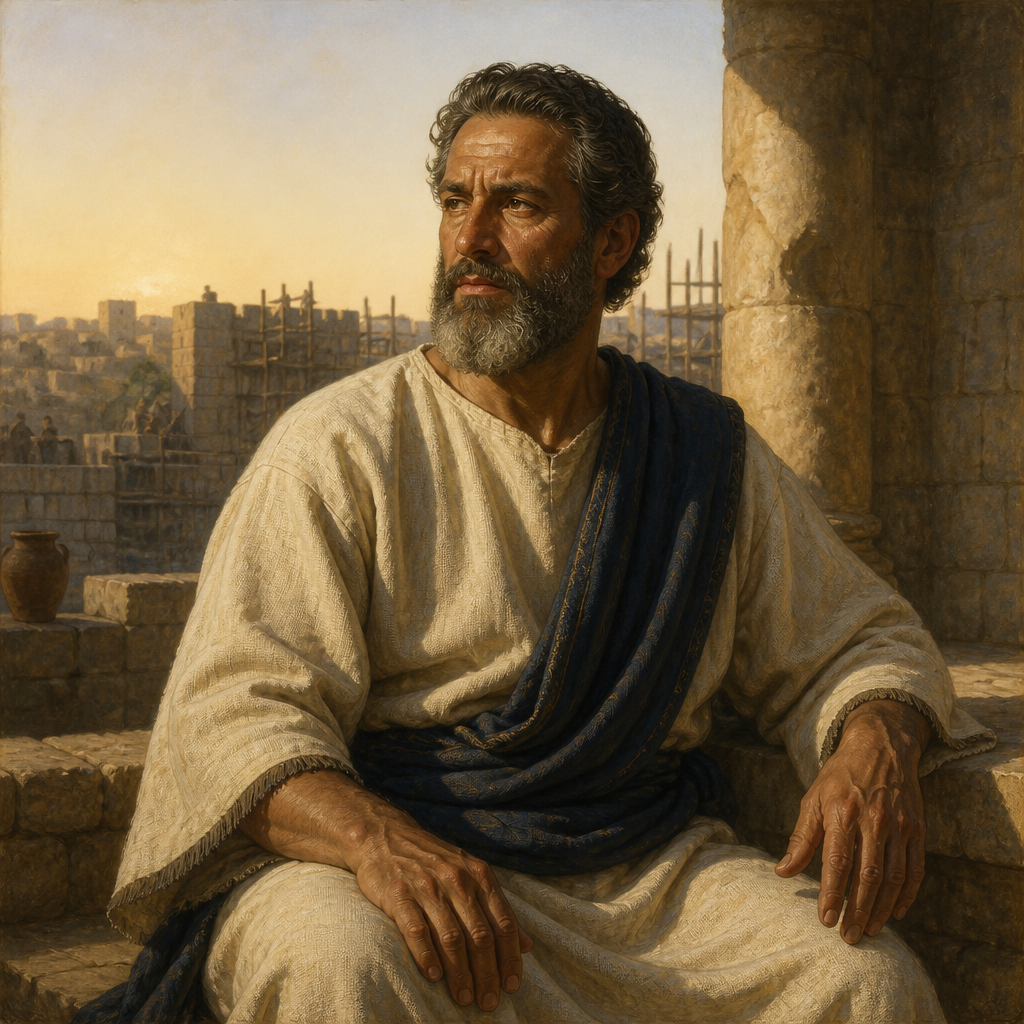
Galal was a member of the tribe of Levi who lived during the critical era of the Exile and Return. As a descendant of Jeduthun, one of the three chief musicians appointed by King David, Galal belonged to a lineage dedicated to the liturgical life of Israel. His presence in the biblical record is situated within the genealogical accounts of those who returned to Judah and Jerusalem following the Babylonian Captivity.
While personal details of his life are not extensively narrated, his inclusion in the sacred registers of 1 Chronicles and Nehemiah underscores his importance in the restoration of the covenant community. He represents the continuity of the Levitical service, ensuring that the musical and administrative traditions of the First Temple were preserved and re-established in the Second Temple era.
Background and Family
Galal was a Levite of the family of Merari, traced specifically through the line of Jeduthun. The biblical text identifies him as the son of Jeduthun (1 Chronicles 9:16), though in genealogical shorthand, this often denotes a direct ancestral link rather than immediate paternity, as Jeduthun served during the reign of David centuries earlier. Galal is further identified as the father of Shemaiah (also called Shammua in Nehemiah 11:17). Through his son, Galal’s lineage extended to prominent figures in the post-exilic community, including Obadiah (also known as Abda), who was a notable resident of Jerusalem during the time of Nehemiah.
Major Life Events
The historical context for Galal is the period of the Persian restoration. Following the decree of Cyrus the Great, the Jewish exiles returned to their ancestral lands to rebuild the Temple. Galal is listed among those Levites whose families took up residence in Jerusalem or the surrounding villages. His family specifically was associated with the villages of the Netophathites (1 Chronicles 9:16), a region traditionally settled by Levites and singers.
His primary contribution to the community was the preservation of the Levitical heritage. As a descendant of Jeduthun, his family was responsible for the musical service of the house of God. The records in Nehemiah indicate that his grandsons were instrumental in leading the public acts of thanksgiving and prayer, a role that required the rigorous genealogical proof that Galal’s records provided.
Relationship to Other Biblical Figures
Galal’s most significant relationship is his descent from Jeduthun. Jeduthun was a seer and a chief musician for King David, and he is often credited in the superscriptions of the Psalms (e.g., Psalms 39, 62, 77). By belonging to this line, Galal was part of an elite class of Levites who were tasked with "prophesying with lyres, harps, and cymbals" (1 Chronicles 25:1).
Additionally, Galal is linked to the leadership of the restoration through his son Shemaiah and his grandson Abda (or Obadiah). These men were among the "leaders of the Levites" who resided in Jerusalem to ensure the Temple functions were maintained despite the hardships of the post-exilic period.
Spiritual Significance
The significance of Galal lies in the concept of faithful continuity. During the Babylonian Exile, many Israelites lost their genealogical records or their connection to their tribal duties. Galal serves as a link in the chain that preserved the specific identity of the Jeduthunite singers. His name appears in the Bible as a testament to the fact that God preserved the holy offices even through the judgment of the Exile. In the administrative lists of the Bible, men like Galal represent the "living stones" used to rebuild the spiritual infrastructure of Israel, ensuring that the worship of Yahweh continued according to the ancient prescriptions of the Law and the Davidic mandates.
Spiritual Significance
Galal signifies the preservation of the Levitical priesthood and the musical traditions of Jeduthun through the Babylonian Exile. His genealogical placement in both 1 Chronicles and Nehemiah confirms the legitimacy of the post-exilic worship leaders, demonstrating that the restoration was not a new invention but a faithful continuation of the Davidic order. He represents the essential, though often quiet, role of lineage in maintaining the covenantal worship of Israel.
Frequently Asked Questions
Which tribe did Galal belong to?
Galal belonged to the tribe of Levi, specifically the lineage of musicians descended from Jeduthun.
What is the meaning of the name Galal?
In Hebrew, the name Galal (גָּלָל) is generally understood to mean 'influential,' 'important,' or 'rolling.'
In which books of the Bible is this Galal mentioned?
This Galal is mentioned in the genealogical records of 1 Chronicles 9:16 and Nehemiah 11:17.
Who was Galal's famous ancestor?
Galal was a descendant of Jeduthun, one of King David’s three chief musicians and a seer.
What was the role of Galal's descendants in Jerusalem?
Galal's descendants, such as his son Shemaiah and grandson Abda, were Levites who lived in Jerusalem and led the community in thanksgiving and prayer.
Connected Figures
Categories
Mentions by Book
- 1 Chronicles1
- Nehemiah1
Family & Relationships
Child
Shemaiah, Descendant of Jeduthun
1 Chronicles 9:16
Parent
Jeduthun, Ancestor of Post-Exilic Levites
1 Chronicles 9:16
Others Named Galal
Galal, Levite of the Restoration1 Chronicles 9:15
A Levite listed among the residents of Jerusalem during the post-exilic period following the return from Babylon.