Pagiel
Who was Pagiel in the Bible?
The tribal leader and prince of the tribe of Asher during the Israelite wandering in the wilderness under Moses.
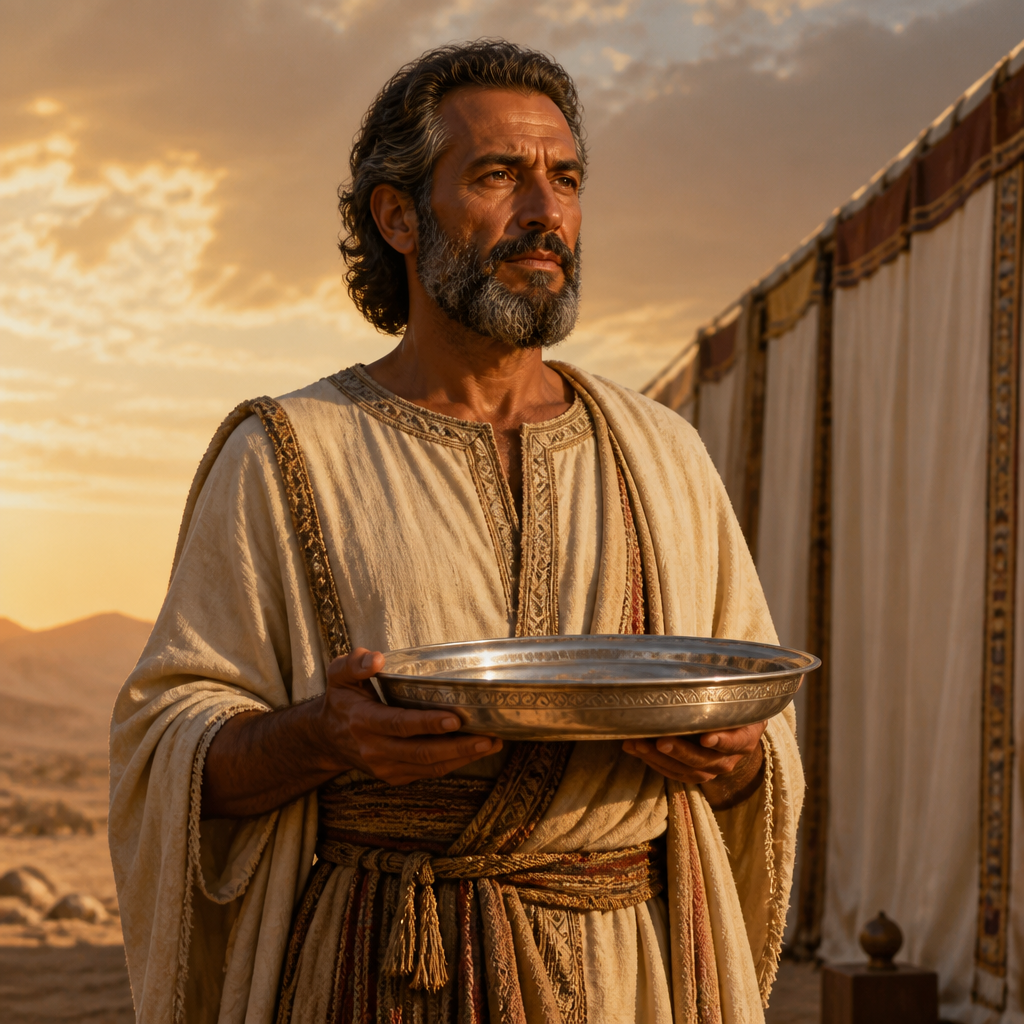
Pagiel, son of Ocran, was a high-ranking official and tribal leader (nasi) within the nation of Israel during the pivotal period of the Exodus and the subsequent wilderness wanderings. His name, which appears exclusively in the book of Numbers, translates from Hebrew to mean 'encounter with God' or 'God meets.' As the designated head of the tribe of Asher, Pagiel was one of the twelve men selected to assist Moses and Aaron in the administration of the fledgling nation.
His role was primarily administrative and ceremonial, serving as a representative for the Asherites in matters of military census, camp organization, and communal worship. Though the biblical record does not provide personal narratives or dialogue for Pagiel, his consistent presence in the official rosters of the Israelite leadership underscores his status as a figure of authority and religious devotion during the 15th century BC.
Background and Family
Pagiel is identified in the biblical record as the son of Ocran. He belonged to the tribe of Asher, one of the northern tribes of Israel descended from the eighth son of Jacob. During the Israelites' departure from Egypt, each of the twelve tribes was assigned a leader, or prince, to represent their interests and maintain order within their respective divisions. Pagiel was the man chosen for this distinction within Asher.
While the text does not elaborate on the specific life of his father, Ocran, the inclusion of the patronymic 'son of Ocran' in every mention of Pagiel serves to verify his lineage and legal standing within the tribal hierarchy. He likely rose to prominence during the final years of the Egyptian sojourn or the early months of the Exodus, demonstrating the leadership qualities necessary to govern a tribe that would eventually number over 40,000 fighting men.
Major Life Events
Pagiel’s recorded actions are centered on the formal organization of the Tabernacle and the Israelite camp at Mount Sinai. His first appearance in the biblical narrative occurs in Numbers 1:13, where he is appointed by God to assist Moses in conducting the first census of the Israelite men capable of bearing arms. This task was vital for organizing the nation into a cohesive military and migratory unit.
Following the census, Pagiel is mentioned in the context of the camp's arrangement. According to Numbers 2:27, the tribe of Asher was assigned to camp on the north side of the Tabernacle, under the standard of the camp of Dan. Pagiel was responsible for the oversight of this division, ensuring that his tribe maintained its position and moved in sync with the divine cloud that guided the nation.
One of the most significant moments in Pagiel's recorded life was his participation in the dedication of the Tabernacle altar. In Numbers 7, the leaders of the twelve tribes brought identical offerings to the sanctuary. Pagiel presented his offering on the eleventh day (Numbers 7:72). The offering was substantial and symbolic of the tribe's commitment to the Lord:
"...one silver plate weighing a hundred and thirty shekels, and one silver sprinkling bowl weighing seventy shekels... both filled with fine flour mixed with oil for a grain offering; one gold dish weighing ten shekels, filled with incense; one young bull, one ram and one male lamb a year old for a burnt offering; one male goat for a sin offering; and two oxen, five rams, five male goats and five male lambs a year old to be sacrificed as a fellowship offering." (Numbers 7:72-77)
Relationship to Other Biblical Figures
Pagiel operated under the direct authority of Moses and Aaron. He was a contemporary of other notable tribal leaders such as Nahshon of Judah and Joshua of Ephraim. While he shared the same rank as these men, his specific sphere of influence was limited to the descendants of Asher. Within the camp structure, he worked closely with Ahiezer of Dan and Enan of Naphtali, as their three tribes formed the northern military flank of the Israelite procession.
Spiritual Significance
Although the biblical account of Pagiel is brief, it serves a specific theological purpose. His inclusion in the genealogies and offering lists emphasizes the individual accountability and participation of every tribe in the covenant relationship with Yahweh. By presenting the same offering as the other tribes, Pagiel signaled that Asher was an equal partner in the worship and support of the Tabernacle. His name, 'encounter with God,' serves as a linguistic reminder of the central theme of the wilderness period: the meeting between a holy God and His redeemed people through the mediation of the Tabernacle service.
Pagiel's significance lies in his role as a representative of the tribe of Asher during the foundational years of Israel's national identity. He represents the administrative order and liturgical devotion required to maintain a community of faith in the wilderness. His presence in the text validates the historical reality of the tribal structure and the organized nature of the Israelite worship system at Sinai.
Furthermore, his participation in the census and the dedication of the altar highlights the biblical theme of 'naming and numbering'—that God knows His people by name and assigns specific roles to individuals within the larger community. Pagiel stands as a model of the 'princes of Israel' who served faithfully in the shadow of more prominent leaders like Moses.
Frequently Asked Questions
What does the name Pagiel mean?
The name Pagiel (פַּגְעִיאֵל) means 'encounter with God' or 'God has met' in Hebrew.
Which tribe did Pagiel lead?
Pagiel was the leader, or prince, of the tribe of Asher.
When did Pagiel live?
He lived during the 15th century BC, specifically during the Exodus from Egypt and the Israelite wandering in the wilderness.
What were Pagiel's main responsibilities?
He assisted Moses with the census, managed the tribal camp of Asher, and represented his tribe during the dedication of the Tabernacle.
Who was Pagiel's father?
Pagiel was the son of a man named Ocran.
Family & Relationships
Parents
 OcranFatherNumbers 1:13Stated
 PagielThis page
Connected Figures
Family
Father · Numbers 1:13
Ochran was a member of the tribe of Asher and the father of Pagiel, the tribal leader during the Israelites' journey through the wilderness.
Categories
Mentions by Book
- Numbers5
Scripture References
All 5 indexed verses, in canonical order, from the Berean Standard Bible.
Numbers · 5
- Numbers 1:13
from Asher, Pagiel son of Ocran;
- Numbers 2:27
The tribe of Asher will camp next to it. The leader of the Asherites is Pagiel son of Ocran,
- Numbers 7:72
On the eleventh day Pagiel son of Ocran, the leader of the Asherites, drew near.
- Numbers 7:77
and a peace offering of two oxen, five rams, five male goats, and five male lambs a year old. This was the offering of Pagiel son of Ocran.
- Numbers 10:26
Pagiel son of Ocran was over the division of the tribe of Asher,