Enan
Who was Enan in the Bible?
A member of the tribe of Naphtali and the father of the tribal leader Ahira during the Exodus and the Israelites' journey through the wilderness.
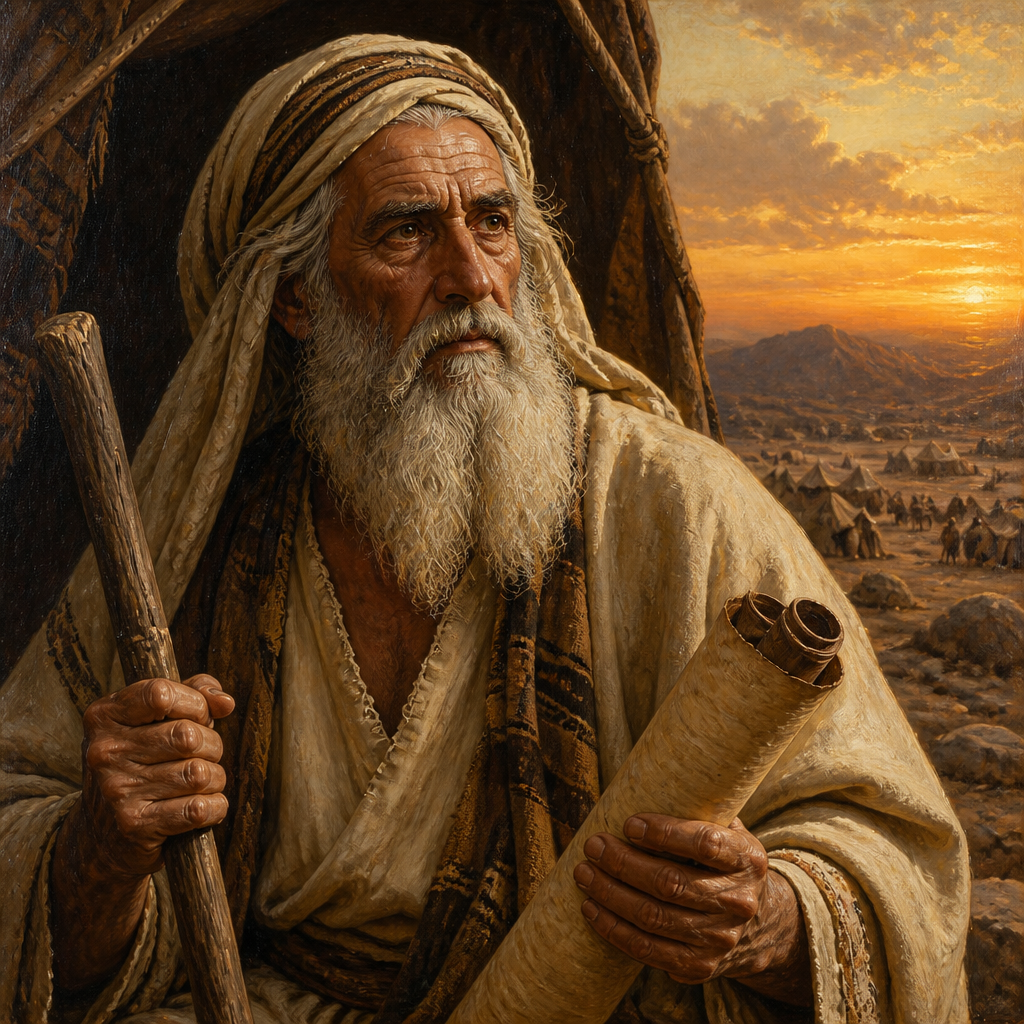
Enan was a man of the tribe of Naphtali during the pivotal period of the Egyptian Sojourn and the subsequent Exodus. While he is not depicted as performing specific leadership actions himself, his name is preserved in the biblical record as the progenitor of the house from which the tribe's primary leader, Ahira, emerged.
He lived during the time of Moses and Aaron, specifically appearing in the records of the census and the organization of the Israelite camp in the wilderness of Sinai. His lineage was significant enough to be cited five times across the first ten chapters of the Book of Numbers, establishing his status within the social and genealogical structure of ancient Israel.
Background and Family
Enan was a descendant of Naphtali, the sixth son of Jacob. Based on the chronological setting of the Book of Numbers, Enan was likely born in Egypt during the latter years of the Israelite sojourn or during the early years of the Exodus. He represents the generation that transitioned from Egyptian servitude to the formalized tribal structure of the wilderness period.
His primary genealogical contribution is his son, Ahira. Ahira is consistently identified as the "son of Enan" (Numbers 1:15), serving as the prince or leader (nasi) of the tribe of Naphtali. This designation suggests that Enan was the head of a significant house or family line within the tribe, providing the hereditary legitimacy for Ahira’s leadership position.
Major Life Events
The biblical text does not record the specific deeds or the death of Enan, but his name appears at critical junctures of Israelite organization. In Numbers 1:15, Enan is listed during the first census conducted at Mount Sinai. When Moses was commanded to count the men of Israel who were able to go to war, one man from each tribe was chosen to assist him; while Ahira was the one chosen, Enan’s name is included to identify Ahira’s lineage.
Enan is also mentioned in the context of the camp's arrangement. In Numbers 2:29, the tribe of Naphtali is assigned its position in the camp, specifically on the north side under the standard of Dan. Enan is again cited as the father of the Naphtalite leader. Furthermore, during the dedication of the Tabernacle, Enan is referenced twice (Numbers 7:78, 83) as the father of the man who brought the twelve-day offering for his tribe. Finally, in Numbers 10:27, as the Israelites broke camp to move from Sinai, Enan’s name appears one last time to identify the commander of the Naphtalite division.
Relationship to Other Biblical Figures
Enan’s primary relationship in the biblical narrative is with his son, Ahira. The frequent repetition of the phrase "Ahira son of Enan" underscores the importance of patrilineal identity in the Hebrew Bible. Through this connection, Enan is linked to the broader leadership of the Exodus, including Moses, Aaron, and the other eleven tribal princes such as Nahshon of Judah and Eliasaph of Gad.
Spiritual Significance
While the biblical record for Enan is sparse, his inclusion in the sacred text serves a specific purpose in the theology of the Pentateuch. He represents the continuity of the tribes of Israel. The meticulous recording of names like Enan reinforces the biblical theme that every individual and family had a specific, God-ordained place within the community of faith. Although he did not hold the office of prince himself, his legacy was the leadership provided by his son. In the context of the Wilderness period, Enan’s name stands as a testament to the preservation of the Naphtalite identity during the transition from slavery to nationhood.
Enan's significance lies in his role as a genealogical anchor for the tribe of Naphtali. His name appears in the official registers of the census and the Tabernacle offerings, which were crucial for establishing the legal and religious order of the nation of Israel. By being recorded in the Book of Numbers, Enan is recognized as part of the generation that witnessed the formalization of the Covenant at Sinai.
The repeated mention of Enan alongside his son Ahira highlights the Israelite emphasis on family heritage. It demonstrates that leadership was not just about individual merit but was rooted in one's place within the tribal and familial structure established during the wilderness wandering.
Frequently Asked Questions
Which tribe did Enan belong to?
Enan belonged to the tribe of Naphtali, one of the twelve tribes of Israel.
Who was Enan's son?
His son was Ahira, who served as the leader or prince of the Naphtalites during the Exodus.
In which book of the Bible is Enan mentioned?
Enan is mentioned exclusively in the Book of Numbers, appearing in chapters 1, 2, 7, and 10.
What was Enan's role in the Exodus?
The Bible does not record a specific role for Enan other than being the father of the tribal leader Ahira; he is primarily a genealogical figure.
What does the name Enan mean?
The name Enan (עֵינָן) is derived from the Hebrew word for 'eye' or 'spring,' often translated as 'having eyes' or 'fountain-man.'
Family & Relationships
 EnanThis page
Children
 AhiraSonNumbers 1:15Stated
Connected Figures
Family
Son · Numbers 1:15
Ahira, son of Enan, was the tribal leader and military commander of the Tribe of Naphtali during the Israelite wilderness wanderings following the Exodus.
Egypt and WildernessFirst: Numbers 1:155 versesMilitary CommanderNaphtali
Categories
Mentions by Book
- Numbers5
Scripture References
All 5 indexed verses, in canonical order, from the Berean Standard Bible.
Numbers · 5
- Numbers 1:15
and from Naphtali, Ahira son of Enan.”
- Numbers 2:29
Next will be the tribe of Naphtali. The leader of the Naphtalites is Ahira son of Enan,
- Numbers 7:78
On the twelfth day Ahira son of Enan, the leader of the Naphtalites, drew near.
- Numbers 7:83
and a peace offering of two oxen, five rams, five male goats, and five male lambs a year old. This was the offering of Ahira son of Enan.
- Numbers 10:27
and Ahira son of Enan was over the division of the tribe of Naphtali.