Ocran
Who was Ocran in the Bible?
Ochran was a member of the tribe of Asher and the father of Pagiel, the tribal leader during the Israelites' journey through the wilderness.
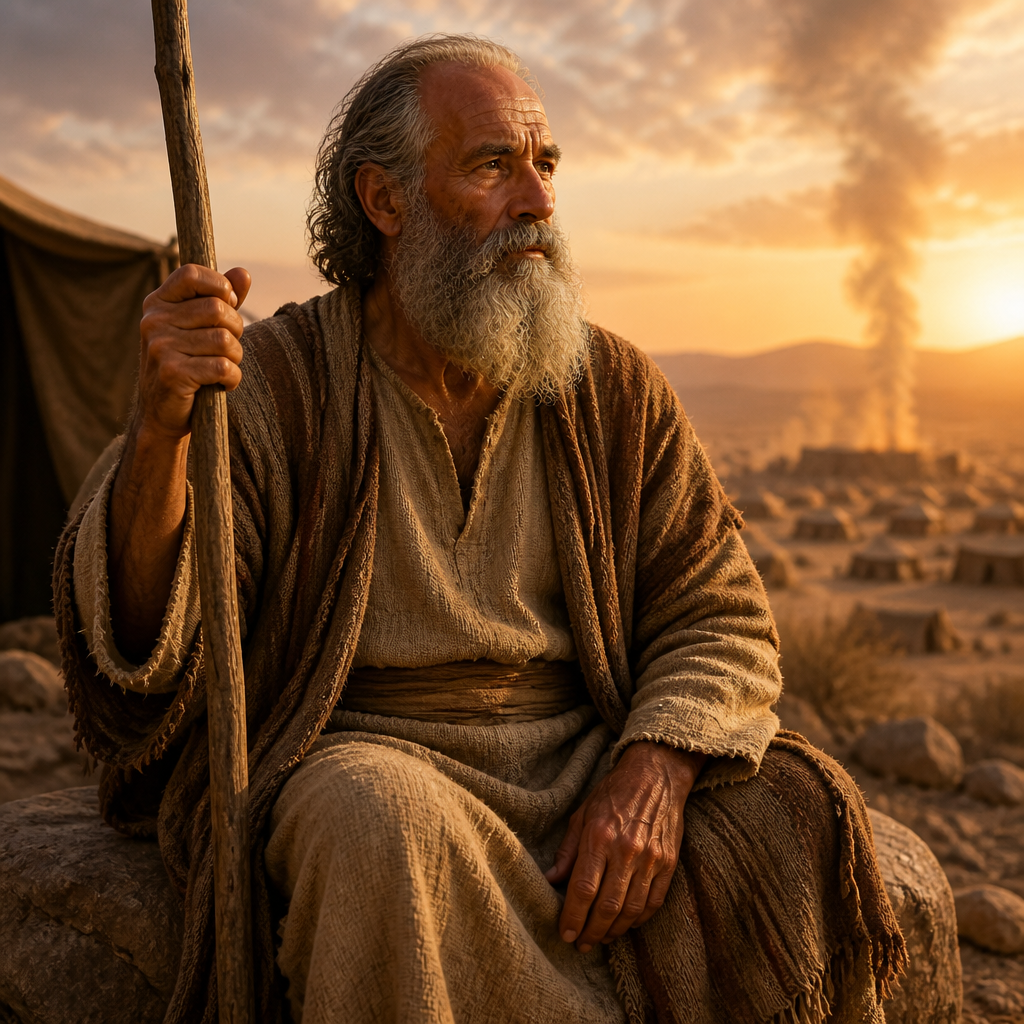
Ochran was a man of the tribe of Asher who lived during the pivotal era of the Exodus and the subsequent wilderness wanderings. While the biblical text provides no direct details regarding his personal exploits or specific occupation, his historical footprint is established through the prominence of his son, Pagiel. In the genealogical and administrative records of early Israel, Ochran serves as the patriarchal anchor for the leadership of Asher.
His name appears exclusively within the Book of Numbers, cited five times to identify Pagiel’s lineage. As the father of a tribal prince, Ochran was part of the generation that witnessed the liberation from Egypt and the establishment of the Tabernacle in the desert. His significance in the biblical narrative is rooted in the formal recognition of his family line during the organization of the camp of Israel at Mount Sinai.
Background and Family
Ochran was a descendant of Asher, the eighth son of Jacob. According to the record in Numbers 1:13, he was the father of Pagiel. The name Ochran (sometimes spelled 'Ocran') is derived from the Hebrew root ‘akar, which can be translated as 'troubled' or 'disturbed.' The specific circumstances of his birth or why he was given this name are not preserved in the biblical text. As an Asherite, he belonged to a tribe that was traditionally associated with the northern coastal regions of Canaan, though during Ochran's lifetime, the tribe was navigating the Sinai Peninsula following the departure from Egypt.
Major Life Events
The biblical record does not attribute specific actions to Ochran himself, suggesting that he may have been an elder or had already passed away by the time the census and tribal offerings were recorded in the second year after the Exodus. His name is used primarily as a patronymic identifier for his son, Pagiel, who served as the 'prince' or 'leader' (nasi) of the tribe of Asher.
Ochran’s name is first mentioned during the census conducted in the Wilderness of Sinai, where his son Pagiel was appointed to assist Moses and Aaron in numbering the men of Asher who were fit for war (Numbers 1:13). Later, when the tribes were assigned their specific camping and marching orders, Ochran’s name was again invoked to identify the leadership of the Asherite division, which was stationed on the north side of the Tabernacle under the standard of Dan (Numbers 2:27).
Relationship to Other Biblical Figures
The primary relationship defined for Ochran is his fatherhood of Pagiel. Through this connection, Ochran’s house was represented during the twelve days of dedication for the altar of the Tabernacle. On the eleventh day, Pagiel presented the tribal offering—a collection of silver, gold, grain, and livestock—on behalf of the house of Ochran (Numbers 7:72, 77). This suggests that Ochran’s lineage was one of high standing and recognized authority within the tribal structure of Israel.
Spiritual Significance
In the context of the Book of Numbers, the inclusion of Ochran’s name serves a specific theological and administrative purpose. It highlights the importance of genealogy and the continuity of the covenant promises from the patriarchs to the generation of the wilderness. Although Ochran is a minor figure in terms of narrative action, his presence in the text reinforces the idea that every family and tribe had a designated place and a specific calling within the community of God's people. His name remains a permanent part of the record of those who were counted as part of the holy assembly during the foundational years of the nation of Israel.
Ochran’s theological significance lies in the preservation of tribal identity and the structured order of the camp of Israel. As the father of Pagiel, his name is linked to the formal worship and sacrificial system established at the Tabernacle. The repeated mention of his name in the context of the tribal offerings (Numbers 7) underscores the principle that individual families were responsible for the maintenance and support of the sanctuary.
Furthermore, Ochran represents the silent majority of the Exodus generation—those who lived through the transition from slavery to nationhood. His role as a father of a leader demonstrates the biblical emphasis on legacy and the transmission of tribal responsibility from one generation to the next during Israel's formative years.
Frequently Asked Questions
Who was Ochran's son?
Ochran's son was Pagiel, who served as the leader or prince of the tribe of Asher during the wilderness wanderings.
What tribe did Ochran belong to?
Ochran was a member of the tribe of Asher, one of the twelve tribes of Israel.
In which book of the Bible is Ochran mentioned?
Ochran is mentioned exclusively in the Book of Numbers, appearing in chapters 1, 2, 7, and 10.
What does the name Ochran mean?
The name Ochran is derived from a Hebrew word meaning 'troubled' or 'disturbed.'
Did Ochran lead the tribe of Asher?
No, the biblical text identifies his son, Pagiel, as the leader of the tribe. Ochran is mentioned as the father of the leader.
Family & Relationships
 OcranThis page
Children
 PagielSonNumbers 1:13Stated
Connected Figures
Family
Son · Numbers 1:13
The tribal leader and prince of the tribe of Asher during the Israelite wandering in the wilderness under Moses.
Categories
Mentions by Book
- Numbers5
Scripture References
All 5 indexed verses, in canonical order, from the Berean Standard Bible.
Numbers · 5
- Numbers 1:13
from Asher, Pagiel son of Ocran;
- Numbers 2:27
The tribe of Asher will camp next to it. The leader of the Asherites is Pagiel son of Ocran,
- Numbers 7:72
On the eleventh day Pagiel son of Ocran, the leader of the Asherites, drew near.
- Numbers 7:77
and a peace offering of two oxen, five rams, five male goats, and five male lambs a year old. This was the offering of Pagiel son of Ocran.
- Numbers 10:26
Pagiel son of Ocran was over the division of the tribe of Asher,