Helah
Who was Helah in the Bible?
One of the two wives of Ashhur, a descendant of Judah, and the mother of four sons listed in the genealogies of the Chronicler.
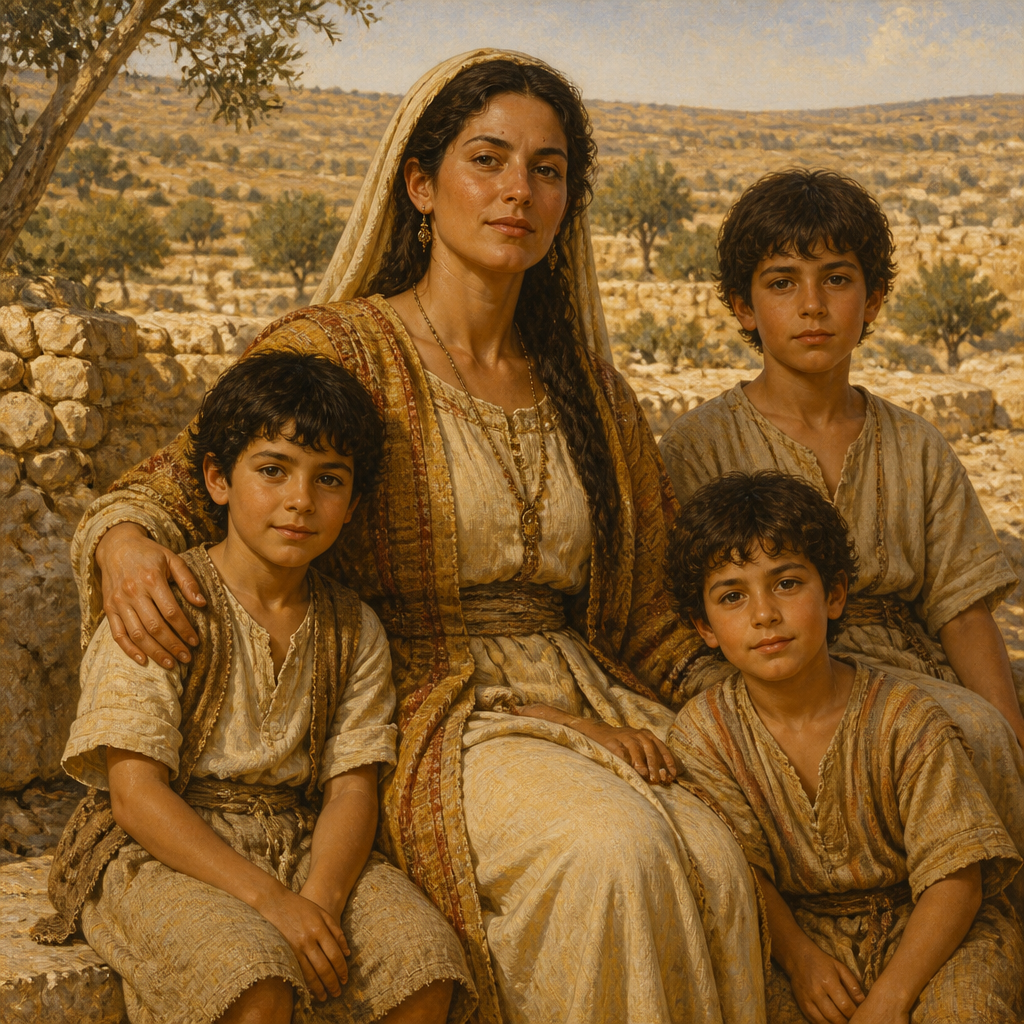
Helah is a biblical figure mentioned in the genealogical records of the tribe of Judah, specifically within the lineage of the Hezronites. She is identified as one of the two wives of Ashhur, who is described as the 'father' (or founder) of the city of Tekoa. Her inclusion in the biblical record serves to establish the ancestral lines of the Judean clans that settled in the hill country of Judah during and after the period of the Egypt and Wilderness era.
While her biographical details are sparse, Helah is notable for her documented role in the expansion of the tribe of Judah. The Chronicler preserves her name alongside her co-wife, Naarah, and lists her specific children to distinguish the various sub-clans that emerged from Ashhur's household. In the context of ancient Near Eastern genealogies, her mention signifies her importance as a matriarchal figure within a specific territorial lineage.
Background and Family
Helah appears in the opening chapters of 1 Chronicles, a book characterized by its extensive genealogical lists aimed at preserving the identity and heritage of the tribes of Israel. She is situated within the lineage of Judah, the tribe from which the Davidic kings emerged. According to 1 Chronicles 4:5, Helah was one of the two wives of Ashhur. Her husband, Ashhur, is credited as the 'father of Tekoa,' a term that in biblical genealogies often refers to the founder or the primary settler of a specific town. Tekoa was a significant Judean city located south of Bethlehem, later known as the home of the prophet Amos.
The text identifies Helah's co-wife as Naarah. The specific naming of both wives suggests that both branches of the family held legal and social standing within the community of Tekoa.
Major Life Events
The biblical record does not preserve specific narrative events from the life of Helah, such as her birth, death, or personal dialogues. Instead, her 'life events' are recorded in the form of her progeny. In 1 Chronicles 4:7, the text lists her sons: Zereth, Zohar (sometimes rendered as Izhar in various manuscripts), and Ethnan. The mention of Koz immediately follows, though the phrasing in verse 8 sometimes leads to debate among scholars as to whether Koz was also a son of Helah or a separate branch; however, the traditional reading often associates these figures as the core of Helah’s contribution to the tribe.
These names represent the heads of families or clans that would have occupied the region surrounding Tekoa. During the Egypt and Wilderness era, these family structures were the backbone of Judean society, providing the demographic stability required for the kingdom's defense and agricultural economy.
Relationship to Other Biblical Figures
Helah’s primary relationship is to her husband, Ashhur, and her children. As a member of the tribe of Judah, she is part of the broader family of Hezron (Ashhur's father, as per 1 Chronicles 2:24). This connects her to the prestigious line of Caleb and Hur. Through her husband, she is linked to the establishment of Tekoa, a location that maintains recurring significance throughout the Old Testament.
Her relationship with her co-wife, Naarah, is mentioned without commentary on their domestic dynamic. In the structure of the text, the sons of Naarah are listed first (1 Chronicles 4:6), followed by the sons of Helah. This order may reflect the birth order of the children or the relative social standing of the clans that descended from them.
Spiritual Significance
Though Helah is a minor figure, her inclusion in the Holy Scriptures carries theological weight. The genealogies of 1 Chronicles were compiled to remind the post-exilic community of their roots and God's faithfulness through the generations of the Egypt and Wilderness era. By naming Helah, the text affirms that the individual members of the tribe—including women—were essential to the fulfillment of the covenant promises made to Abraham and David.
Helah represents the quiet continuity of the Israelite people. Her significance lies in her role as a mother of clans, ensuring that the inheritance of Judah remained intact. In the biblical worldview, the preservation of one’s name through offspring was a sign of divine blessing, and Helah’s legacy lived on through the families of Zereth, Zohar, and Ethnan who inhabited the Judean wilderness.
Helah’s significance is primarily genealogical and historical. As a matriarch in the line of Judah, she represents the ancestral foundations of the Judean hill country. Her presence in the text ensures the legitimacy of the clans residing in Tekoa, providing a clear link between the land and the people during the Egypt and Wilderness era.
Theologically, Helah exemplifies the 'hidden' figures of the Bible who, while not performing miracles or leading armies, are nevertheless recorded in the eternal register of God's people. Her life underscores the importance of family and the transmission of identity within the covenant community, showing that every branch of the tribal tree was valued and remembered.
Frequently Asked Questions
Who was Helah's husband?
Helah was one of the two wives of Ashhur, who is known as the 'father' or founder of the city of Tekoa.
How many children did Helah have?
The Bible explicitly names three sons born to Helah: Zereth, Zohar (Izhar), and Ethnan. Some interpretations also include Koz as part of her lineage.
What tribe did Helah belong to?
Helah belonged to the tribe of Judah, as she is listed within the Judean genealogies in the book of 1 Chronicles.
Where did Helah's family live?
Her family was associated with the city of Tekoa, located in the tribal territory of Judah, south of Jerusalem.
What does the name Helah mean?
The Hebrew name Helah (חֶלְאָה) is often translated to mean 'rust' or 'ointment,' though its exact etymological significance in a personal context is debated.
Family & Relationships
 AshhurHusband1 Chronicles 4:5Stated
 HelahThis page
Children
 EthnanSon1 Chronicles 4:7Stated
 KozSon1 Chronicles 4:5–8Stated
 ZerethSon1 Chronicles 4:7Stated
 Zohar, Son of HelahSon1 Chronicles 4:7
Inferred
No verse names Izhar and Helah together; the mother link is carried from the surrounding genealogy and is not stated in Scripture.Evidence: 1 Chronicles 4:7
Connected Figures
Family
Husband · 1 Chronicles 4:5
Ashhur was a descendant of Judah through Hezron and the recognized founder of the settlement of Tekoa, distinguished by his large family and dual lineage.
Egypt and WildernessFirst: 1 Chronicles 2:249 versesFounder of TekoaJudah
Son · 1 Chronicles 4:7
Ethnan was a member of the Tribe of Judah, identified in the genealogical records of 1 Chronicles as a descendant of Ashhur and Helah.
Son · 1 Chronicles 4:5–8
A descendant of Judah through Ashhur, Koz was a clan leader during the Egyptian sojourn and Wilderness era whose lineage is recorded in the genealogies of 1 Chronicles.
Son · 1 Chronicles 4:7
Zereth was a descendant of the tribe of Judah, named as the firstborn son of Ashhur and Helah within the genealogical records of the Chronicler.
Son · 1 Chronicles 4:7
Izhar was a descendant of Judah through the line of Ashhur and his wife Helah, identified in the chronicler’s genealogical records of the Egypt and Wilderness era.
Egypt and WildernessFirst: 1 Chronicles 4:74 versesClan representativeJudah
Mentions by Book
- 1 Chronicles4
Scripture References
All 4 indexed verses, in canonical order, from the Berean Standard Bible.
1 Chronicles · 4
- 1 Chronicles 4:5
Ashhur the father of Tekoa had two wives, Helah and Naarah.
- 1 Chronicles 4:6Partial
Naarah bore to him Ahuzzam, Hepher, Temeni, and Haahashtari. These were the descendants of Naarah.
Cited as evidence on a family card; added so References, Key Verses and Mentions by Book share one index.
- 1 Chronicles 4:7
The sons of Helah were Zereth, Zohar, Ethnan,
- 1 Chronicles 4:8Partial
and Koz, who was the father of Anub and Zobebah and of the clans of Aharhel son of Harum.
Cited as evidence on a family card; added so References, Key Verses and Mentions by Book share one index.