Naarah
Who was Naarah in the Bible?
A woman of the tribe of Judah and one of two wives of Ashhur, the father of Tekoa, mother to four sons mentioned in the post-exilic genealogical records.
Naarah was a woman of the tribe of Judah who lived during the Egypt and Wilderness era. She is recorded in the genealogical records of 1 Chronicles, specifically within the lineage of Judah. As one of the two wives of Ashhur, she played a significant role in the expansion of the clan associated with the settlement of Tekoa.
Her inclusion in the biblical text is primarily genealogical. While her personal narrative is not detailed in the scriptures, her name is preserved as the matriarch of four specific sons: Ahuzzam, Hepher, Temeni, and Haahashtari. These descendants contributed to the strength and demographic continuity of the Judean territory during a formative period in Israel's history.
Background and Family
Naarah appears in the context of the extensive genealogical records found in the opening chapters of 1 Chronicles. This section of scripture was compiled to provide a historical and legal framework for the returning exiles, ensuring that tribal identities and land claims were maintained. Naarah is identified as one of the two wives of Ashhur, a man described as the "father of Tekoa." The term "father" in this context often refers to being the founder, primary settler, or chief of a specific town or region, in this case, Tekoa—a village located south of Bethlehem in the hill country of Judah.
Naarah shared her household with another wife named Helah. While the biblical text does not provide a narrative regarding the domestic life or the relationship between these two women, it clearly distinguishes their respective lineages. The record emphasizes that Naarah was the mother of four sons, indicating her substantial contribution to the growth of the Ashhurite clan.
Major Life Events
Because Naarah is mentioned exclusively within the genealogies of 1 Chronicles 4, there are no recorded biographical events, dialogues, or specific milestones beyond her marriage and the birth of her children. Her "life events" are effectively her contributions to the census of Israel. The birth of her four sons—Ahuzzam, Hepher, Temeni, and Haahashtari—is the primary action attributed to her in the biblical record. These sons are explicitly identified as the "descendants of Naarah" (1 Chronicles 4:6), a phrasing that grants her a level of recognition as a female progenitor in a largely patriarchal record.
Relationship to Other Biblical Figures
Naarah’s primary relationships are defined by her marriage to Ashhur and her motherhood. Ashhur is a significant figure within the Judean tribal structure, as he is linked to the establishment of Tekoa. Through her husband, Naarah is connected to the broader history of the tribe of Judah, the tribe from which the Davidic line and eventually the Messiah would emerge.
Her children represent the continuation of this line. Ahuzzam, Hepher, Temeni, and Haahashtari are not mentioned elsewhere in the biblical narrative, suggesting their importance was localized to the regional strength of the Tekoa district. Her co-wife, Helah, is also mentioned as having children, creating a parallel branch of the family tree within the same household.
Spiritual Significance
In a biblical context, the preservation of Naarah's name signifies the importance of every individual within the covenant community of Israel. Although she does not perform miracles or deliver prophecies, her presence in the inspired record serves to validate the genealogical integrity of the tribe of Judah.
For the original readers of Chronicles, Naarah would have been a link to their ancestral past and a testament to God’s fulfillment of the promise to make the descendants of Abraham numerous. Her inclusion highlights the role of women in maintaining the continuity of the covenant line during the years of the Egypt and Wilderness era, ensuring that the tribal identities remained intact for future generations.
Naarah’s significance lies in her role as a matriarch within the tribe of Judah. Her name is preserved to ensure the legal and ancestral clarity of the Judean families, particularly those settled in Tekoa.
Technically, she represents the vital. The specific mention of her name in 1 Chronicles 4:5-6 ensures that her branch of the family tree is distinguished from that of her co-wife, Helah, providing a precise record of the regional development of Judah.
Frequently Asked Questions
Who was Naarah's husband?
Naarah was one of the two wives of Ashhur, who is described as the father of Tekoa.
How many children did Naarah have?
The Bible records that Naarah had four sons: Ahuzzam, Hepher, Temeni, and Haahashtari.
To which tribe did Naarah belong?
Naarah is listed within the genealogies of the tribe of Judah.
Where is Naarah mentioned in the Bible?
She is mentioned in 1 Chronicles 4:5 and 1 Chronicles 4:6.
What does the name Naarah mean?
The Hebrew name Naarah (נַעֲרָה) generally translates to 'girl,' 'maiden,' or 'young woman.'
Family & Relationships
 AshhurHusband1 Chronicles 4:5Stated
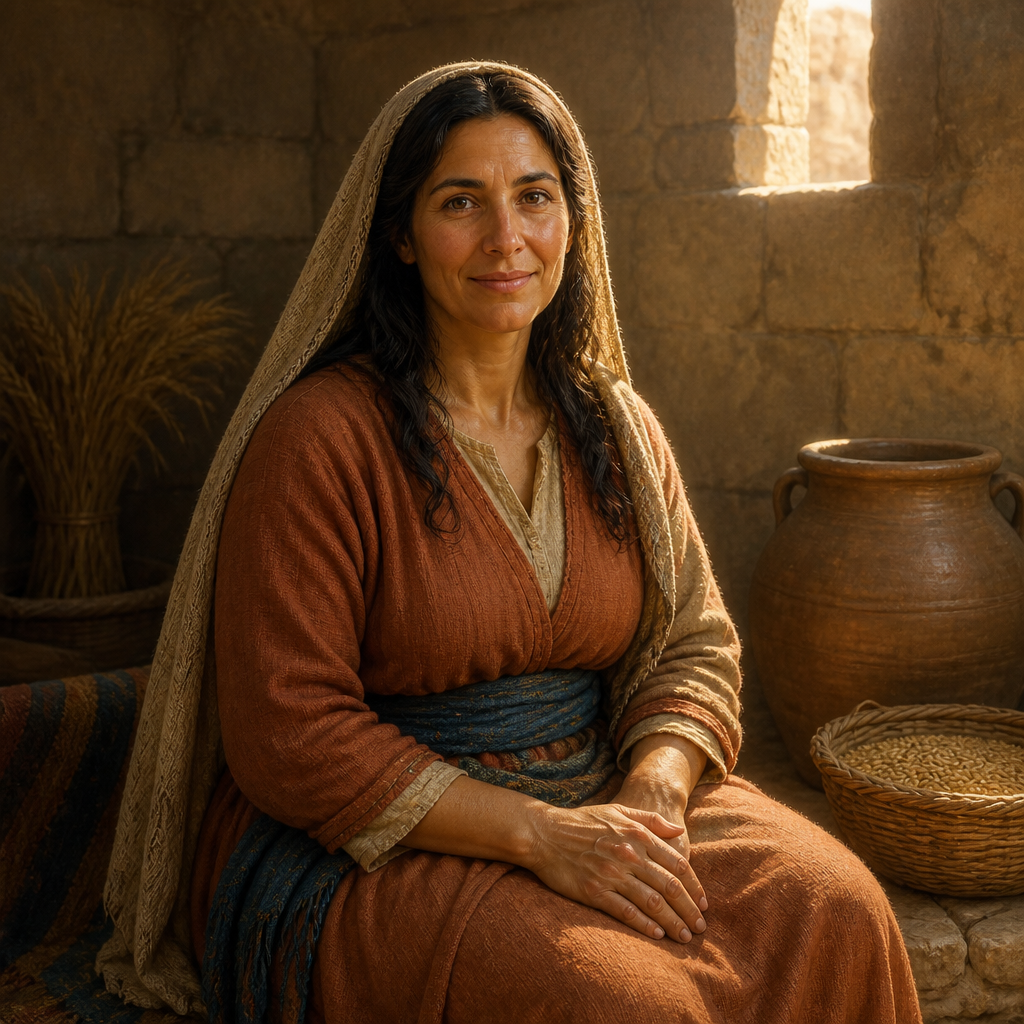 NaarahThis page
Children
 AhuzzamSon1 Chronicles 4:6Stated
 HaahashtariSon1 Chronicles 4:6Stated
 Hepher, Son of AshhurSon1 Chronicles 4:6Stated
 TemeniSon1 Chronicles 4:6Stated
Connected Figures
Family
Husband · 1 Chronicles 4:5
Ashhur was a descendant of Judah through Hezron and the recognized founder of the settlement of Tekoa, distinguished by his large family and dual lineage.
Egypt and WildernessFirst: 1 Chronicles 2:249 versesFounder of TekoaJudah
Son · 1 Chronicles 4:6
A member of the tribe of Judah and the firstborn son of Ashhur and Naarah during the Egypt and Wilderness era.
Son · 1 Chronicles 4:6
A descendant of Judah through the line of Ashhur and Naarah, listed in the post-exilic genealogies of the chronicler.
Egypt and WildernessFirst: 1 Chronicles 4:64 versesClan descendantJudah
Son · 1 Chronicles 4:6
A descendant of Judah and son of Ashhur who is recorded in the genealogical records of the Egypt and Wilderness era.
Egypt and WildernessFirst: 1 Chronicles 4:64 versesTribal descendantJudah
Son · 1 Chronicles 4:6
Temeni was a descendant of the tribe of Judah and the son of Ashhur and Naarah, recorded in the genealogies of 1 Chronicles.
Mentions by Book
- 1 Chronicles2
Scripture References
All 2 indexed verses, in canonical order, from the Berean Standard Bible.
1 Chronicles · 2
- 1 Chronicles 4:5
Ashhur the father of Tekoa had two wives, Helah and Naarah.
- 1 Chronicles 4:6Partial
Naarah bore to him Ahuzzam, Hepher, Temeni, and Haahashtari. These were the descendants of Naarah.