Bukki, Leader from the Tribe of Dan
A tribal leader of Dan appointed by God to oversee the division of the Promised Land among the Israelites.
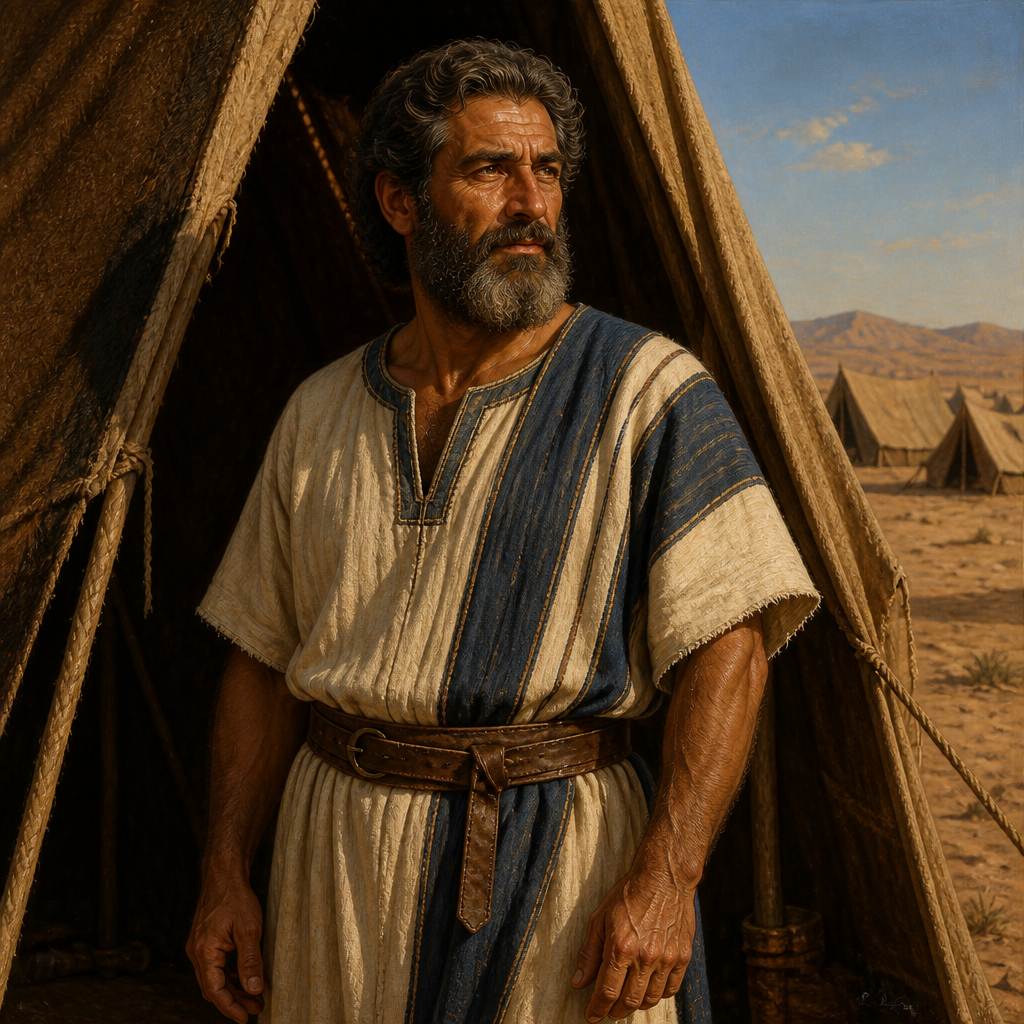
Bukki, the son of Jogli, was a prominent tribal official during the final stages of the Israelite wilderness wanderings. As a leader (nasi) representing the tribe of Dan, he was specifically designated by divine decree to assist in the formal apportionment of the land of Canaan. His service occurred shortly before the Israelites crossed the Jordan River under the transition of leadership from Moses to Joshua.
While the biblical record regarding Bukki is brief, his inclusion in the sacred text underscores the structured, legal, and orderly nature of the conquest of Canaan. He served as one of the ten tribal representatives who, alongside the High Priest and Joshua, ensured that the distribution of territory was handled with integrity and according to the lots cast before the Lord.
Background and Family
Bukki was the son of a man named Jogli. While Jogli himself is not described in detail, the mention of his name in the genealogical record of Numbers 34:22 serves to identify Bukki’s specific lineage within the tribe of Dan. As a member of the generation that survived the forty years of wandering in the wilderness, Bukki would have been a man of significant maturity and proven character by the time the Israelites reached the plains of Moab.
His status is defined by the Hebrew term nasi, often translated as "leader," "prince," or "chief." This indicates that he held an ancestral headship or an elected position of authority within the Danite community. Unlike the previous generation of leaders who perished due to lack of faith following the report of the twelve spies, Bukki belonged to the new generation prepared by God to take possession of the inheritance promised to their forefathers.
Major Life Events
The primary and only recorded event of Bukki’s life is his appointment to the commission for land distribution. In Numbers 34, the Lord spoke to Moses, providing the exact geographical boundaries of the land of Canaan. To prevent internal strife and ensure a fair distribution, God personally selected one leader from each tribe to act as a fiduciary and witness to the process.
Bukki was the representative chosen for the tribe of Dan. Along with Eleazar the priest and Joshua son of Nun, Bukki and his nine counterparts were tasked with overseeing the allocation of territory. This was not merely an administrative role; it was a sacred duty performed "before the Lord" to confirm that each tribe received the portion sovereignly ordained for them. Although the actual conquest and settlement would take years to complete, Bukki’s appointment occurred while the nation was still camped east of the Jordan, signaling the certainty of the upcoming victory.
Relationship to Other Biblical Figures
Bukki served under the dual leadership of Eleazar the High Priest and Joshua, the successor to Moses. He stood as an equal among the other nine tribal leaders mentioned in Numbers 34:18–28, including figures such as Caleb son of Jephunneh from Judah and Hanniel son of Ephod from Manasseh. His specific relationship to his father, Jogli, is the only familial bond preserved in the text, highlighting his identity as a legitimate scion of Dan.
Spiritual Significance
The spiritual significance of Bukki lies in his role as a guarantor of God’s promises. His presence on the land commission served as a physical testimony that the wandering was over and the inheritance was at hand. By naming Bukki specifically, the text emphasizes that God deals with His people not just as a mass, but through recognized, accountable individuals. Bukki represents the transition from a nomadic existence to a settled, landed life, fulfilling the covenantal requirements of tribal sovereignty within the borders of Israel.
Spiritual Significance
Bukki's significance is found in the administrative holiness of the Israelite state. He is a reminder that the division of the Promised Land was not a chaotic land grab, but a structured process overseen by divinely appointed men of high standing. His inclusion in the list of leaders validates the tribe of Dan's legal claim to their portion of the land, providing a genealogical and historical anchor for their inheritance.
Theologically, Bukki represents the 'faithful remnant' of the second generation. While his ancestors fell in the desert for their unbelief, Bukki was counted among those worthy to stand with Joshua and Eleazar to partition the gift of God. He embodies the principle that God provides specific leaders for specific seasons, ensuring that the transition from promise to possession is handled with justice.
Frequently Asked Questions
What tribe did Bukki belong to?
Bukki was a leader from the tribe of Dan.
Who was Bukki's father?
The Bible identifies Bukki as the son of Jogli.
What was Bukki's primary responsibility?
He was appointed by God to a committee of ten tribal leaders tasked with dividing the land of Canaan among the tribes of Israel.
When did Bukki live?
Bukki lived during the late 15th or 13th century BC, during the final year of the Exodus and the beginning of the conquest of Canaan.
Connected Figures
Categories
Mentions by Book
- Numbers1
Family & Relationships
Parent
Numbers 34:22
Others Named Bukki
Bukki, Levite of the Divided Monarchy1 Chronicles 6:5
A Levite priest of the line of Eleazar who served in the high priestly genealogy between the eras of the judges and the early monarchy.