Shaphat, Official of David
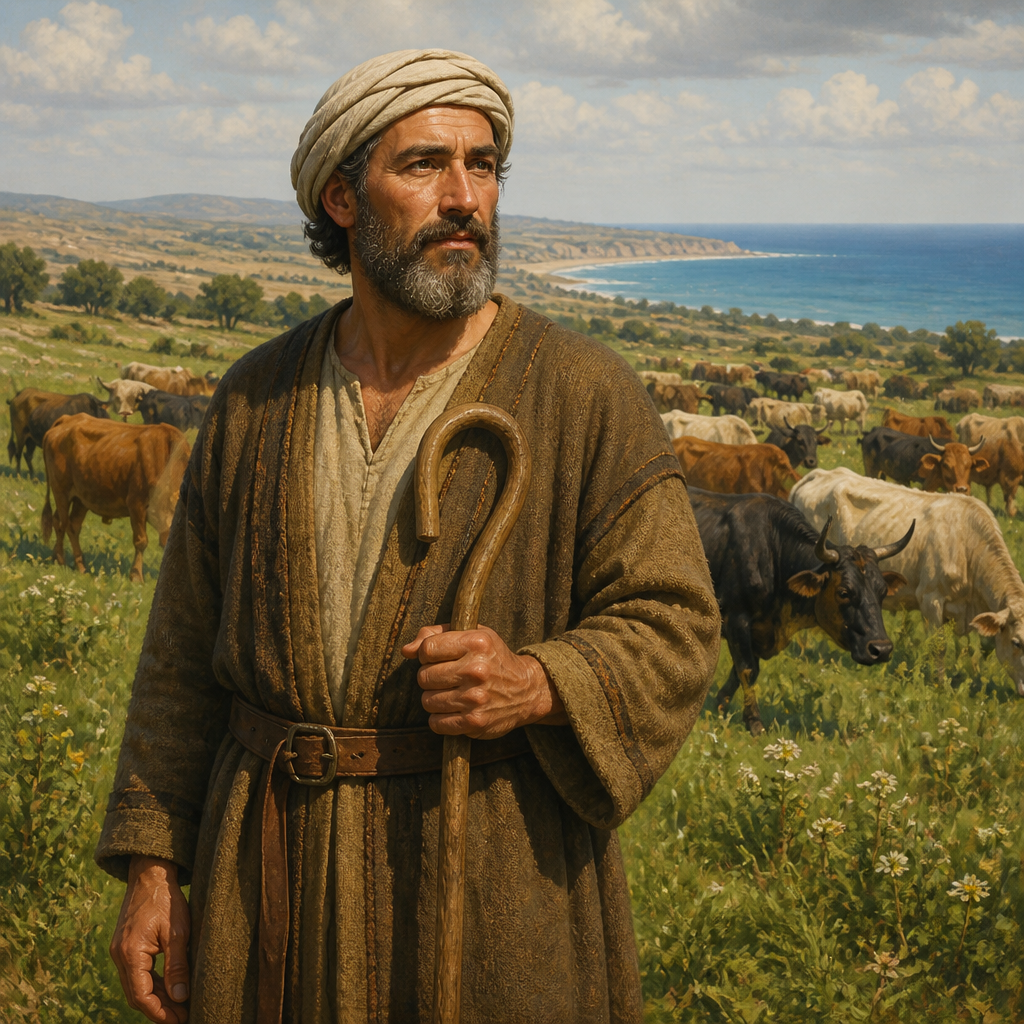
Shaphat, son of Adlai, was a high-level administrative official in King David's government responsible for the royal herds in the valleys.
Shaphat, son of Adlai, was a Judean official who served during the Divided Monarchy era, specifically within the expansive administrative structure of King David’s unified kingdom. His role was specialized and essential to the economic stability of the crown, as he was appointed to oversee the royal livestock grazing in the valley regions.
While his biblical footprint is limited to a single genealogical and administrative list in 1 Chronicles, his inclusion signifies his status among the elite stewards of the Davidic dynasty. As a royal overseer, he functioned as a branch of the king's treasury, ensuring the health and productivity of the national food and leather supplies.
Background and Family
The biblical record identifies Shaphat primarily by his lineage and his professional station. He is the son of Adlai. While the specific tribe of Adlai is not explicitly stated in the text of 1 Chronicles 27, he operated within the Hebrew monarchical system during the transition from the United to the Divided Monarchy periods. The name Shaphat itself is derived from the Hebrew root shafat, meaning "he has judged" or "judge," suggesting a family background of some social or legal standing.
Major Life Events
Shaphat’s career reached its zenith under the reign of King David. He was named as one of the chief officials in charge of the king’s property. Specifically, 1 Chronicles 27:29 records that while Shitrai the Sharonite was responsible for the herds in the Plain of Sharon, Shaphat was assigned the "herds in the valleys."
Shitrai the Sharonite was in charge of the herds grazing in Sharon. Shaphat son of Adlai was in charge of the herds in the valleys. (1 Chronicles 27:29)
This position was not merely that of a common shepherd; it was a regional directorship. The "valleys" likely refers to the fertile lowlands and wadis of the Shephelah or the Jordan rift, areas critical for large-scale agriculture and animal husbandry. Shaphat would have managed a large staff of subordinates, oversaw the protection of the animals from predators and raiders, and ensured accurate accounting for the royal tithes and trade.
Relationship to Other Biblical Figures
Shaphat served alongside a cabinet of diverse officials. His contemporary, Shitrai, managed the coastal grazing lands, indicating a division of labor based on geography and climate. He operated under the broader administration of David, which included famous figures like Joab the commander and Zadok the priest. His father, Adlai, is mentioned only to establish Shaphat's identity, providing the necessary patronymic to distinguish him from other men of the same name in different eras.
Spiritual Significance
The presence of Shaphat in the biblical canon highlights the biblical principle of stewardship. The Chronicler includes Shaphat to demonstrate that the blessing of God upon David’s kingdom extended to the organized management of natural resources. In a theological sense, Shaphat represents the "faithful servant" who manages the king's resources with diligence, contributing to the overall peace and prosperity of the Promised Land through his specialized, everyday vocation.
Spiritual Significance
Shaphat serves as a biblical example of the importance of administrative faithfulness. His inclusion in the records of 1 Chronicles 27 demonstrates that the Bible values the roles of those who work behind the scenes to maintain the infrastructure of the kingdom of God. By managing the royal herds, he supported the physical needs of the temple and the crown, showing that secular labor can be a form of sacred service when dedicated to the king.
Furthermore, his role illustrates the economic complexity of the Davidic era. The mention of specific officials for specific terrains (plains versus valleys) indicates a sophisticated level of governance and resource management that allowed Israel to flourish during the Divided Monarchy period.
Frequently Asked Questions
What was Shaphat's specific job in King David's court?
Shaphat was the overseer of the royal herds that grazed in the valleys, a high-level administrative position responsible for the king's livestock assets.
Who was Shaphat's father?
According to 1 Chronicles 27:29, Shaphat was the son of Adlai.
In which book of the Bible is this Shaphat mentioned?
This specific Shaphat is mentioned only in the book of 1 Chronicles.
What does the name Shaphat mean in Hebrew?
The name is derived from the Hebrew word for 'judge' or 'he has judged.'
Was Shaphat a soldier?
The Bible does not describe him as a soldier, but rather as a civil official in charge of agriculture and livestock.
Connected Figures

Categories
Mentions by Book
- 1 Chronicles1
Family & Relationships
Parent
1 Chronicles 27:29
Others Named Shaphat
Shaphat of Gad1 Chronicles 5:12
A leader or prominent inhabitant of the tribe of Gad who resided in the region of Bashan during the Divided Monarchy.
Shaphat, Son of Shemaiah1 Chronicles 3:22
Shaphat was a descendant of King David through the royal lineage of Solomon, identified as one of the six sons of Shemaiah in the post-exilic genealogical records of Judah.
Shaphat, Father of Elisha1 Kings 19:16
Shaphat was a man of Abel-meholah and the father of the prophet Elisha, notable for his wealth and his support of his son's prophetic call during the Divided Monarchy.
Shaphat, Spy of SimeonNumbers 13:5
A tribal leader from Simeon chosen as one of the twelve spies to scout the land of Canaan during the Israelite wilderness journey.