Jehiel, Musician of the Divided Monarchy
A Levite musician appointed to play the harp during the transport of the Ark of the Covenant to Jerusalem and its subsequent ministry.
Jehiel was a Levite official and musician who served during the pivotal transition of the Ark of the Covenant to its resting place in Jerusalem under King David. His role was not merely decorative but was a formal appointment within the ecclesiastical structure established to maintain continuous worship before the presence of God.
He is specifically noted for his skill with stringed instruments, contributing to the liturgical atmosphere of the Divided Monarchy's early spiritual foundation. As one of the 'brothers next in rank' among the Levites, Jehiel represented the specialized class of ministers dedicated to the auditory glory of the tabernacle worship.
Background and Family
The historical record of Jehiel is situated within the Chronicler’s account of the Levite reorganization during the reign of King David. While his specific parentage is not detailed in the immediate verses of 1 Chronicles 15 and 16, his classification among the 'brothers next in rank' (1 Chronicles 15:18) identifies him as a member of the tribe of Levi. This tribe was set apart for the service of the Tabernacle, and by the time of the Divided Monarchy's cultural precursors, they had been organized into specific guilds of gatekeepers, singers, and instrumentalists.
Major Life Events
Jehiel’s primary recorded contribution occurs during the grand procession of the Ark of the Covenant. After an initial failed attempt to move the Ark, David commanded the chiefs of the Levites to appoint their brothers as singers to lift up their voices with joy, accompanied by musical instruments. Jehiel was among those selected for this high-profile religious duty.
The Procession to Jerusalem
In 1 Chronicles 15:18, Jehiel is listed as part of the secondary rank of musicians. His specific technical assignment is clarified in 1 Chronicles 15:20, where he is designated to play the harp 'according to Alamoth.' In musical terms, Alamoth is generally understood to refer to a high-pitched or soprano register, suggesting that Jehiel was a specialist in a specific range of stringed accompaniment.
Permanent Ministry at the Tent
Following the successful arrival of the Ark in Jerusalem, Jehiel was not dismissed from service. Instead, 1 Chronicles 16:5 records that he was appointed by Asaph, the chief musician, to minister regularly before the Ark. He continued to play the harp and lyre, providing the sonic backdrop for the daily petitions and thanksgivings offered by the nation of Israel.
Relationship to Other Biblical Figures
Jehiel served under the leadership of Asaph, the primary worship leader appointed by David. He worked alongside other notable musicians such as Zechariah, Shemiramoth, and Benaiah. His role was collaborative; while Asaph sounded the cymbals to lead the rhythm, Jehiel and his immediate peers provided the melodic and harmonic texture of the worship through their stringed instruments.
Spiritual Significance
The inclusion of Jehiel in the biblical text highlights the importance of vocational skill in the service of God. The Chronicler emphasizes that these men were chosen because they were 'skillful' and 'next in rank,' showing an organized, disciplined approach to worship. Jehiel represents the servant who operates in the 'second rank'—essential to the harmony of the whole, yet subordinate to the primary leaders like Asaph. His life illustrates the transition of Israel’s worship from a nomadic, occasional practice to a structured, institutionalized pillar of the national identity during the monarchy.
Spiritual Significance
Jehiel’s presence in the biblical narrative underscores the formalization of music as a core component of Hebrew liturgy. By naming specific instrumentalists like Jehiel, the text validates the artistic vocation as a divinely sanctioned ministry, essential for facilitating the presence of God among His people. His role in playing 'according to Alamoth' specifically suggests a sophisticated level of musical theory and practice was present in the early monarchy's religious life.
Frequently Asked Questions
What instrument did Jehiel play?
Jehiel played the harp (also translated as the psaltery or lyre) specifically in the 'Alamoth' style, which likely refers to a soprano or high-pitched register.
When did Jehiel live?
Jehiel lived during the era of the Divided Monarchy's formation, specifically during the reign of King David and the establishment of the Jerusalem cultus.
What tribe did Jehiel belong to?
He was a Levite, belonging to the tribe set apart by God for the care of the Tabernacle and the leadership of worship.
Who was Jehiel’s supervisor?
He served under Asaph, the chief musician appointed by King David to lead the Levites in praise before the Ark.
Why is Jehiel mentioned in the Bible?
He is mentioned to document the specific individuals appointed to the sacred task of bringing the Ark of the Covenant to Jerusalem and maintaining its worship services.
Connected Figures
Asaph
Chief Musician and Supervisor
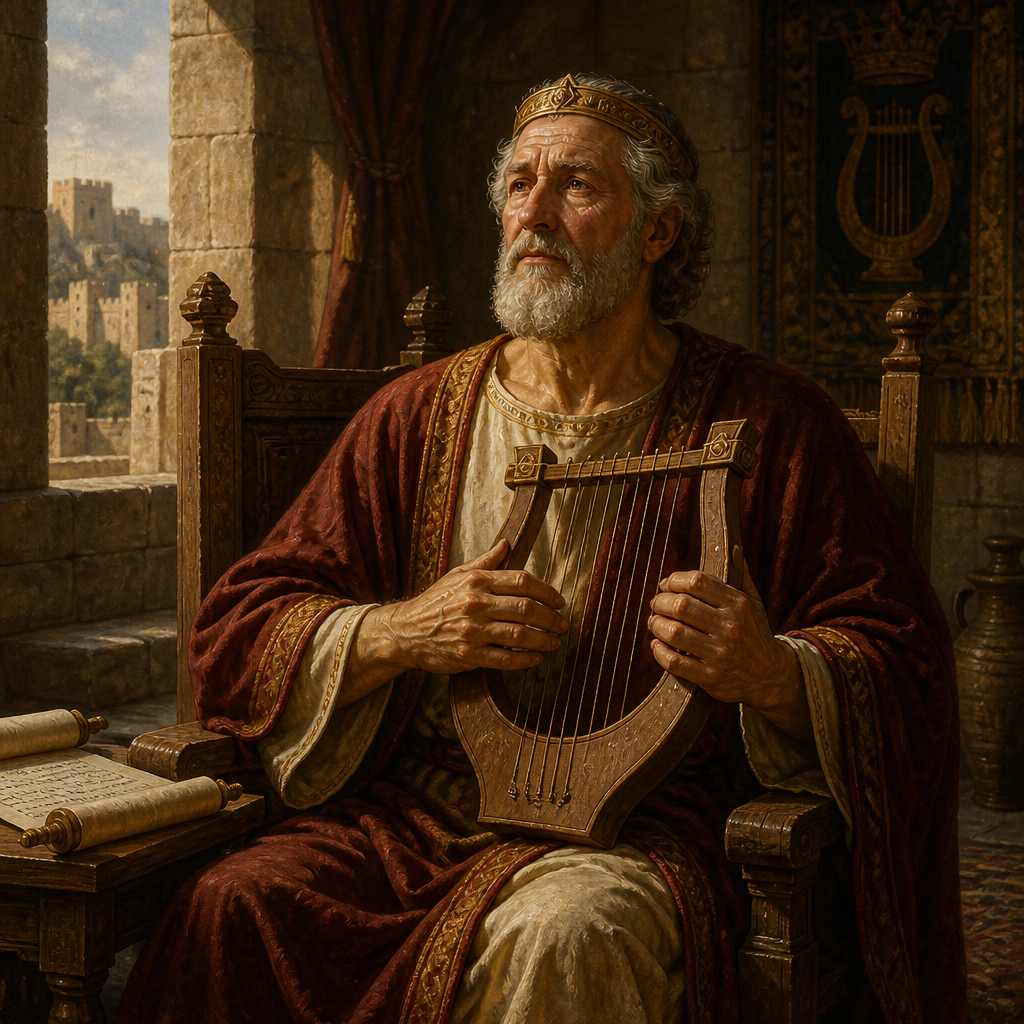
David
King who appointed him
Zechariah
Musical colleague
Shemiramoth
Musical colleague
Categories
Mentions by Book
- 1 Chronicles3
Others Named Jehiel
Jehiel, Descendant of ElamEzra 10:26
A descendant of Elam during the post-exilic period who was identified among those who had married foreign women in violation of the Mosaic Law.
Jehiel, Temple Overseer under Hezekiah2 Chronicles 31:13
A Levite or temple official appointed by King Hezekiah to supervise the storage and distribution of sacred contributions and tithes in Jerusalem.
Jehiel, Father of ShecaniahEzra 10:2
An Elamite living during the Post-Exilic Period whose son, Shecaniah, confessed the community's sin of intermarriage to Ezra.
Jehiel, Son of Jehoshaphat2 Chronicles 21:2
A prince of Judah and son of King Jehoshaphat who lived during the Divided Monarchy.
Jehiel, Father of ObadiahEzra 8:9
A descendant of Joab whose son, Obadiah, served as a leader during the second wave of exiles returning from Babylon to Jerusalem under the leadership of Ezra.
Jehiel, Attendant to the Royal Sons1 Chronicles 27:32
A trusted royal official and educator who attended to the sons of King David during the era of the Divided Monarchy's foundations.
Jehiel the Gershonite1 Chronicles 23:8
A prominent Levite of the Gershonite clan who served as a chief officer over the temple treasury during the reign of King David.
Jehiel, Descendant of HarimEzra 10:21
A member of the priestly line of Harim who lived during the post-exilic period and was among those who had married foreign women.
Jehiel, Administrator of the House of God2 Chronicles 35:8
A high-ranking official and administrator of the temple during the reign of King Josiah who provided generous offerings for the Great Passover.