Jehiel, Administrator of the House of God
A high-ranking official and administrator of the temple during the reign of King Josiah who provided generous offerings for the Great Passover.
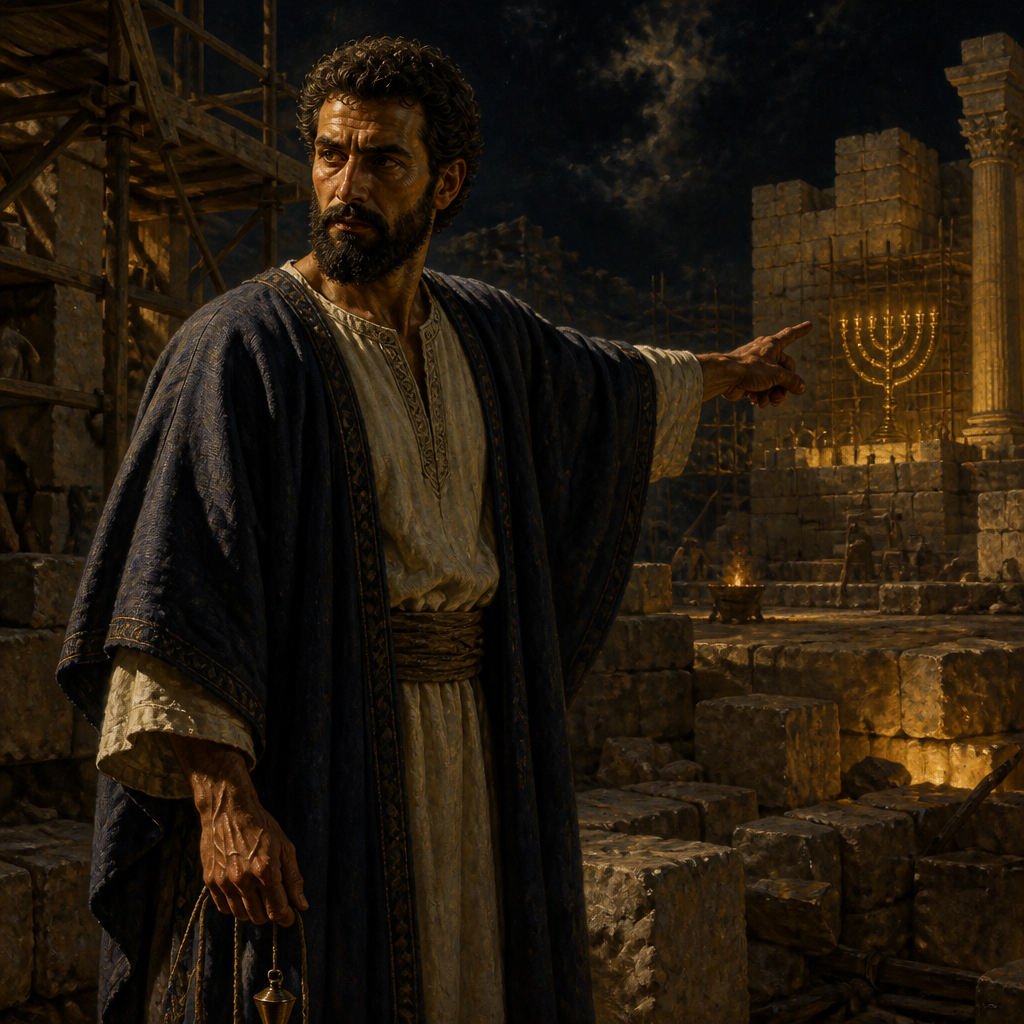
Jehiel was a prominent official in the kingdom of Judah during the late 7th century BC. He served during the spiritual reformation led by King Josiah, a period marked by a return to Mosaic Law and the restoration of temple worship. Jehiel is specifically identified as one of the 'administrators of the house of God,' a title signifying his high status and oversight within the ecclesiastical structure of the Jerusalem Temple.
His primary biblical appearance occurs during the preparations for the Great Passover, an event described as more significant than any celebrated since the days of Samuel the prophet. Along with other high-ranking officials, Jehiel demonstrated his commitment to the national revival by providing substantial livestock for the sacrificial needs of the priests and the people.
Background and Family
The biblical record for Jehiel is focused entirely on his administrative role during the Divided Monarchy, specifically within the reign of King Josiah (c. 640–609 BC). While his lineage is not explicitly stated in the immediate context of 2 Chronicles 35:8, his title as a 'ruler' or 'administrator' (Hebrew: nagid) of the house of God places him in the highest tier of temple leadership. This position often involved the oversight of temple logistics, finances, and the maintenance of the sanctuary.
Major Life Events
The single recorded event involving Jehiel is the centralized Passover celebration in Jerusalem. As King Josiah sought to purge Judah of idolatry, he commanded the restoration of the Passover according to the Book of the Law. This required a massive influx of clean animals for sacrifice.
Jehiel, alongside his colleagues Hilkiah and Zechariah, contributed to this effort with notable generosity. The text records:
"Hilkiah, Zechariah, and Jehiel, the administrators of the house of God, gave the priests 2,600 Passover offerings and 300 bulls." (2 Chronicles 35:8)
This act was critical for the success of the festival, ensuring that the priesthood was properly supplied with the required elements for the atonement and celebratory meals of the nation. His involvement underscores the collaborative nature of Josiah's reforms, where the king's vision was facilitated by the resources and dedication of the temple hierarchy.
Relationship to Other Biblical Figures
Jehiel is listed alongside Hilkiah and Zechariah. Hilkiah is widely recognized as the High Priest who discovered the Book of the Law in the temple, which sparked the Josianic reform. The mention of Jehiel in such company suggests he was a key peer in the religious administration of the time. Together, these three men acted as the executive force managing the temple's transition from a neglected site of mixed worship to the purified center of Judean life.
Spiritual Significance
Jehiel serves as an example of stewardship and institutional support for spiritual renewal. While Josiah provided the royal decree, it was administrators like Jehiel who turned the decree into reality through logistical planning and personal sacrifice. His contribution of thousands of livestock highlights the intersection of material wealth and spiritual devotion, showing that the maintenance of the 'House of God' required both liturgical faithfulness and practical resource management.
Spiritual Significance
Jehiel is significant as a representative of the faithful administrative class during the Divided Monarchy. His presence in the biblical text validates the historical reality of Josiah's reforms, demonstrating that the revival was supported not just by the king, but by the established leaders of the temple. His generous contribution is recorded as a testimony to his willingness to facilitate worship for the entire nation.
In a broader theological sense, Jehiel represents the 'silent' service of those who manage the house of God. Though his personal history is not explored, his actions contributed to one of the most important religious milestones in the history of the Southern Kingdom, proving that logistical leadership is essential for corporate worship and national repentance.
Frequently Asked Questions
What was Jehiel's role in the temple?
Jehiel was an 'administrator of the house of God,' a position of high authority responsible for the management and logistics of the Jerusalem Temple.
When did Jehiel live?
He lived during the Divided Monarchy, specifically during the reign of King Josiah in the late 7th century BC.
What did Jehiel contribute to the Passover?
Along with two other officials, he provided 2,600 Passover offerings (likely lambs or goats) and 300 bulls for the sacrificial rituals.
Who were Jehiel's associates?
The Bible mentions him alongside Hilkiah, the High Priest, and Zechariah, another temple administrator.
Where is Jehiel mentioned in the Bible?
He is mentioned in 2 Chronicles 35:8, during the account of King Josiah’s Passover celebration.
Connected Figures
Josiah
King who oversaw Jehiel's service
Hilkiah
Fellow administrator and High Priest
Zechariah
Fellow administrator of the temple
Categories
Mentions by Book
- 2 Chronicles1
Others Named Jehiel
Jehiel, Descendant of ElamEzra 10:26
A descendant of Elam during the post-exilic period who was identified among those who had married foreign women in violation of the Mosaic Law.
Jehiel, Temple Overseer under Hezekiah2 Chronicles 31:13
A Levite or temple official appointed by King Hezekiah to supervise the storage and distribution of sacred contributions and tithes in Jerusalem.
Jehiel, Father of ShecaniahEzra 10:2
An Elamite living during the Post-Exilic Period whose son, Shecaniah, confessed the community's sin of intermarriage to Ezra.
Jehiel, Son of Jehoshaphat2 Chronicles 21:2
A prince of Judah and son of King Jehoshaphat who lived during the Divided Monarchy.
Jehiel, Father of ObadiahEzra 8:9
A descendant of Joab whose son, Obadiah, served as a leader during the second wave of exiles returning from Babylon to Jerusalem under the leadership of Ezra.
Jehiel, Attendant to the Royal Sons1 Chronicles 27:32
A trusted royal official and educator who attended to the sons of King David during the era of the Divided Monarchy's foundations.
Jehiel the Gershonite1 Chronicles 23:8
A prominent Levite of the Gershonite clan who served as a chief officer over the temple treasury during the reign of King David.
Jehiel, Musician of the Divided Monarchy1 Chronicles 15:18
A Levite musician appointed to play the harp during the transport of the Ark of the Covenant to Jerusalem and its subsequent ministry.
Jehiel, Descendant of HarimEzra 10:21
A member of the priestly line of Harim who lived during the post-exilic period and was among those who had married foreign women.