Elkanah, Son of Shaul
A Levite of the Divided Monarchy period who served in the lineage of the Kohathites as the son of Shaul and father of Amasai.
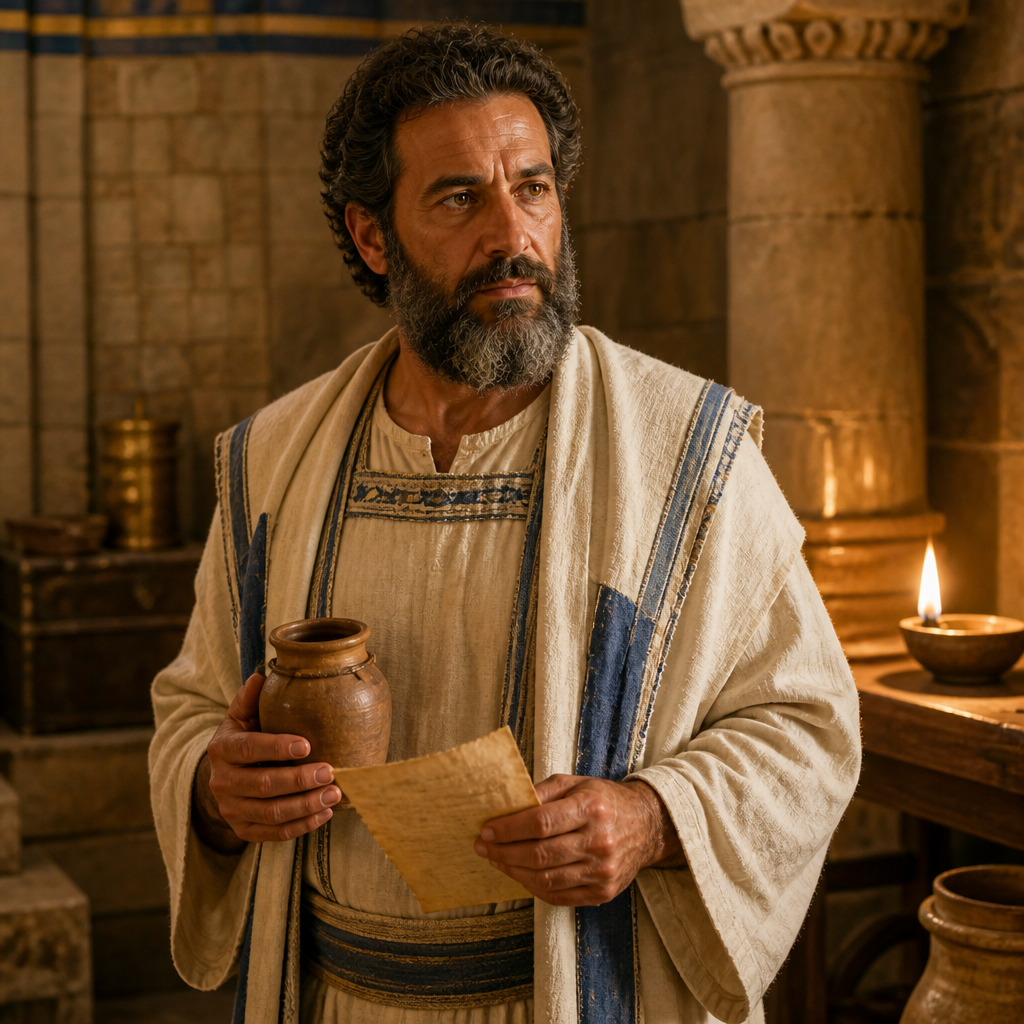
Elkanah was a member of the tribe of Levi, specifically belonging to the Kohathite branch, one of the three primary divisions of Levitical service. His place in history is preserved within the genealogical records of the book of Chronicles, which serve to validate the ancestral lines of those serving in the Temple during the Divided Monarchy. He is identified as the son of Shaul and the father of Amasai and Ahimoth.
While he is one of several men to bear this name in the Old Testament, his identity is clearly defined by his specific placement within the hereditary structure of the Levites. His life is situated during the era of the Divided Monarchy, a period marked by the split between the northern Kingdom of Israel and the southern Kingdom of Judah. As a Levite, his life and that of his descendants were centered on the maintenance of the religious traditions and the sacrificial system established under the Mosaic Law.
Background and Family
Elkanah appears in the genealogical records of 1 Chronicles 6, a chapter dedicated to detailing the lineage of the tribe of Levi. According to the text, Elkanah was the son of Shaul (1 Chronicles 6:36). He belonged to the Kohathites, the descendants of Kohath, who was one of the sons of Levi. The Kohathites were historically assigned the most sacred duties regarding the tabernacle and later the temple, including the care of the Ark of the Covenant and other holy vessels.
The biblical record identifies Elkanah as a pivotal link in this specific family line. He was the father of Amasai and Ahimoth (1 Chronicles 6:25). By recording these names, the Chronicler emphasizes the continuity of the Levitical priesthood and service, even during the tumultuous years of the Divided Monarchy when the political landscape of Israel was fractured.
Major Life Events
The scriptural record does not provide a narrative account of Elkanah’s specific deeds, speeches, or personal exploits. Instead, his presence in the Bible is strictly genealogical. During the Divided Monarchy, the role of a Levite remained essential for the spiritual health of the nation, even as the northern tribes often fell into apostasy.
Elkanah’s life would have been governed by the strictures of the Torah. As a Levite, he was not granted a territorial inheritance like the other tribes but was instead supported by the tithes of the people and lived in designated Levite cities. His primary contribution to the biblical narrative is the preservation of the holy line, ensuring that his son, Amasai, could take his place in the service of Yahweh.
Relationship to Other Biblical Figures
Elkanah's primary relationships are defined by his immediate family: his father, Shaul, and his sons, Amasai and Ahimoth. The inclusion of his name in two separate lists within the same chapter (1 Chronicles 6:25 and 6:36) underscores his importance in establishing the pedigree of the Levite singers and workers.
In the broader context of 1 Chronicles 6, Elkanah is listed among the ancestors of Heman the singer, a prominent musician in the time of David and subsequent kings. While Elkanah lived later, during the Divided Monarchy, his lineage connected the ongoing temple worship to the ancient foundations laid by the patriarchs.
Spiritual Significance
The spiritual significance of Elkanah lies in his role as a faithful link in the chain of Levitical service. In the theology of the book of Chronicles, genealogy is not merely a list of names but a testimony to God's faithfulness to His covenant. By maintaining his identity and raising sons like Amasai to follow in the Levitical tradition, Elkanah contributed to the survival of the true worship of God during an era of widespread idolatry.
His inclusion in the holy text serves as a reminder that every individual within the tribal structure played a role in the corporate worship of the nation. Though he is not credited with great miracles or political power, his life was foundational to the continuity of the priesthood, which remained the primary mediator between God and the people of Judah and Israel.
Spiritual Significance
Elkanah represents the essential continuity of the Levitical priesthood during the Divided Monarchy. His inclusion in the genealogies of 1 Chronicles ensures that the lines of authority and service remained unbroken despite the political instability of the era. He serves as a representative of the many Levites who performed their duties and passed on their heritage without the need for public acclaim or recorded narrative.
Theologically, Elkanah's presence in the text reinforces the importance of heritage and the meticulous nature of God's requirements for those who ministered in His presence. As a Kohathite, his lineage was bound to the most sacred elements of Israelite worship, highlighting the ongoing preservation of the law and the sacrificial system during the monarchy.
Frequently Asked Questions
Who was Elkanah’s father?
Elkanah was the son of Shaul, as recorded in the Levite genealogies of 1 Chronicles 6:36.
Which tribe did Elkanah belong to?
Elkanah belonged to the Tribe of Levi, specifically the Kohathite branch.
Who were Elkanah’s children?
According to 1 Chronicles 6:25, Elkanah was the father of Amasai and Ahimoth.
During which era of biblical history did this Elkanah live?
He lived during the Divided Monarchy period.
What is the primary biblical source for information on this Elkanah?
The primary source is the book of 1 Chronicles, specifically chapter 6, verses 25 and 36.
Connected Figures
Categories
Mentions by Book
- 1 Chronicles2
Family & Relationships
Child
Amasai, Levite of the Divided Monarchy
1 Chronicles 6:25
Parent
Shaul, Levite of the Divided Monarchy
1 Chronicles 6:24
Others Named Elkanah
Elkanah, Official of the Divided Monarchy2 Chronicles 28:7
High-ranking official in the court of King Ahaz of Judah, designated as 'second to the king' before his death during the Syro-Ephraimite War.
Elkanah, Warrior of the Divided Monarchy1 Chronicles 12:6
A Korahite warrior and skilled archer who joined David’s forces at Ziklag during the transition of the Israelite monarchy.
Elkanah, Father of Samuel1 Samuel 1:1
A devout Levite of the United Monarchy era, known as the husband of Hannah and the father of the prophet Samuel.
Elkanah, Son of KorahExodus 6:24
A Levite during the era of the Exodus and son of Korah who served as a progenitor of the Korahite clans.
Elkanah, Ancestor of Heman1 Chronicles 6:26
A Levite of the United Monarchy period who appears in the Kohathite genealogical records as the son of Ahimoth and father of Zuph.
Elkanah, Levite of the Exile and Return1 Chronicles 9:16
A Levite whose descendants returned from the Babylonian Exile to inhabit the rural villages surrounding Jerusalem.
Elkanah, Guardian of the Ark1 Chronicles 15:23
A man appointed as a gatekeeper and guardian for the Ark of the Covenant during the Divided Monarchy.