Eliehoenai, Levite of the Divided Monarchy
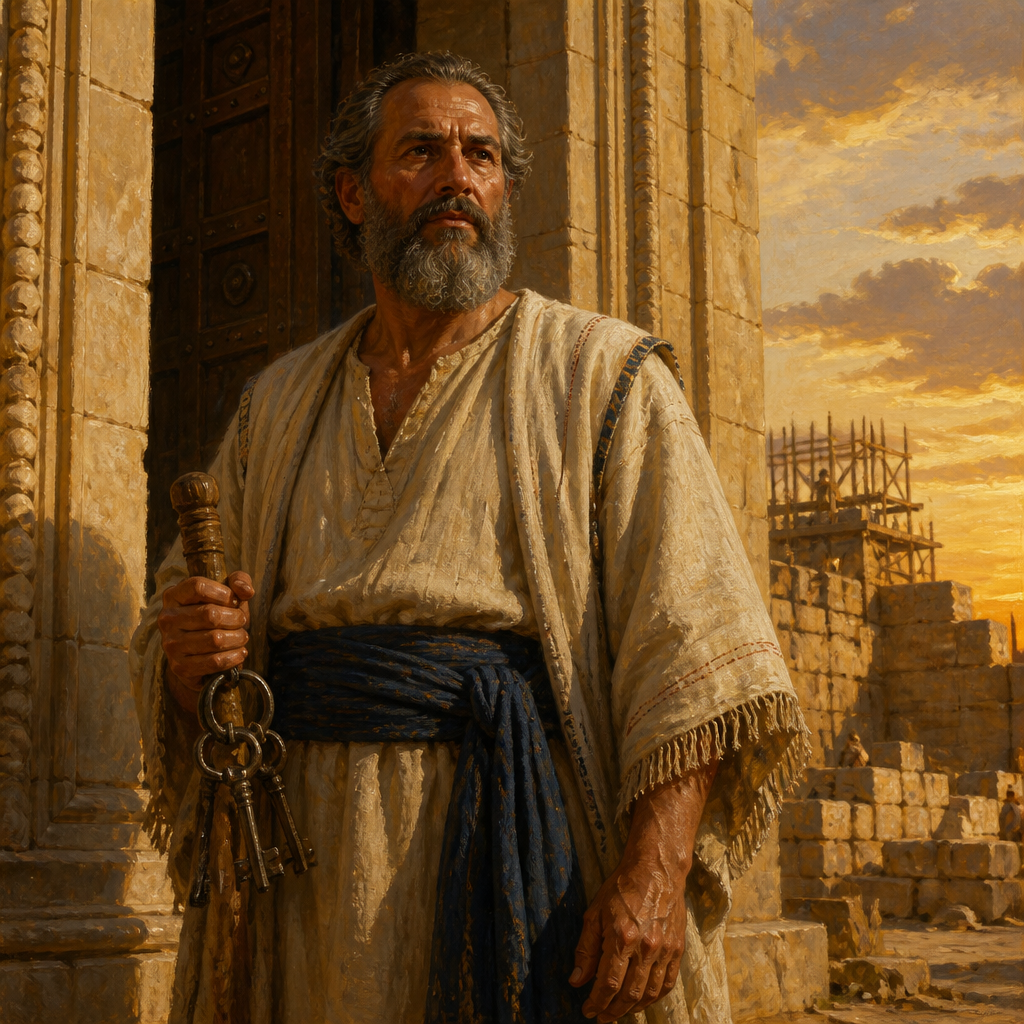
A Korahite Levite and the seventh son of Meshelemiah, appointed as a gatekeeper for the tabernacle during the reign of King David.
Eliehoenai was a member of the tribe of Levi who served during the transition toward the height of the Divided Monarchy era's organizational structure. As a descendant of Korah, he belonged to a lineage specifically set apart for the sacred task of guarding the entrances to the sanctuary. His family served under the administration of King David, who organized the Levites into specific divisions to ensure the orderly worship of Yahweh.
He is recorded as the youngest of seven brothers, all sons of Meshelemiah. The inclusion of his name in the genealogical records of the Chronicler underscores the importance of his specific family line in maintaining the sanctity of the religious site. Though his personal deeds are not detailed, his placement within the seventh position of his father’s house marks him as a participant in a vital cultic duty.
Background and Family
Eliehoenai was a Levite of the Korahite clan, a family with a complex history within the Israelite priesthood and service ranks. He was the son of Meshelemiah (also known as Shelemiah), a prominent gatekeeper. According to the record in 1 Chronicles 26, Eliehoenai was the seventh and final son born to Meshelemiah. His brothers included Zechariah (the firstborn and a wise counselor), Jediael, Zebadiah, Jathniel, Elam, and Jehohanan.
As a Levite, Eliehoenai’s life was defined by his ancestral obligation to the Tabernacle and the eventual Temple. The Korahites, despite their ancestors' rebellion in the wilderness, were restored to positions of significant trust, specifically as the "keepers of the thresholds."
Major Life Events
The biblical record for Eliehoenai is concentrated within the administrative lists of King David. During the latter part of David's reign, the King organized the Levites, priests, and gatekeepers into courses to ensure that the service of God would continue seamlessly under his successor, Solomon. Eliehoenai was officially numbered among these gatekeepers (Hebrew: shoerim).
These gatekeepers were not merely janitors; they were military-style sentries responsible for the security of the sanctuary. They controlled access to the holy precincts, prevented the ritually unclean from entering, and guarded the storehouses containing the dedicated offerings. Eliehoenai’s appointment to this role indicates his status as a "capable man" within his tribe.
Relationship to Other Biblical Figures
Eliehoenai’s identity is defined largely through his relationship to his father, Meshelemiah, and his six brothers. His eldest brother, Zechariah, is highlighted in the text as a "wise counselor," suggesting that the family held intellectual and spiritual influence as well as physical duties. As part of this sibling group, Eliehoenai functioned within a domestic unit that took collective responsibility for the northern and western aspects of the sanctuary's security, as was the custom for the Korahites.
Spiritual Significance
While Eliehoenai appears in only one verse, his inclusion in the Holy Scripture serves a specific theological purpose. In the post-exilic context in which Chronicles was written, lists like these were essential for validating the claims of returning families to their ancestral offices. Eliehoenai represents the continuity of the Levitical service. His role as a gatekeeper highlights the biblical theme that every task within the house of God—whether the high priesthood or the guarding of a door—is a position of honor and divine appointment. As the seventh son, a number often associated with completeness in Hebrew thought, he rounds out the house of Meshelemiah, illustrating a full and blessed lineage dedicated to the service of the Lord.
Spiritual Significance
Eliehoenai’s significance lies in his role as a gatekeeper, a position described in the Psalms as being preferable to dwelling in the tents of wickedness. His presence in the genealogical record of 1 Chronicles 26 validates the legitimate succession of the Korahite gatekeepers, ensuring that the service of the sanctuary was conducted by those divinely authorized.
Furthermore, he exemplifies the 'capable men' of Levi who provided the necessary infrastructure for Israel’s worship. His life demonstrates that faithfulness in a specific, assigned task contributes to the overall spiritual health and order of the community of faith.
Frequently Asked Questions
Who was Eliehoenai’s father?
Eliehoenai was the son of Meshelemiah, a Korahite Levite who served as a gatekeeper.
What was Eliehoenai’s job in the Bible?
He was a gatekeeper (sentry) for the sanctuary, responsible for guarding the entrances and maintaining the order and sanctity of the religious site.
Which tribe did Eliehoenai belong to?
He belonged to the tribe of Levi, specifically the clan of the Korahites.
How many brothers did Eliehoenai have?
He had six brothers: Zechariah, Jediael, Zebadiah, Jathniel, Elam, and Jehohanan. He was the seventh son.
In which book of the Bible is this Eliehoenai mentioned?
He is mentioned exclusively in 1 Chronicles 26:3.
Connected Figures
Categories
Mentions by Book
- 1 Chronicles1
Family & Relationships
Sibling
1 Chronicles 26:3
Sibling
1 Chronicles 26:3
Sibling
1 Chronicles 26:3
Sibling
1 Chronicles 26:3
Sibling
Elam, Levite of the Divided Monarchy
1 Chronicles 26:3
Sibling
Jehohanan, Levite of the Divided Monarchy
1 Chronicles 26:3
Sibling
Elam, Levite of the Divided Monarchy
1 Chronicles 26:3
Parent
1 Chronicles 9:21
Sibling
1 Chronicles 26:2
Sibling
1 Chronicles 26:2
Sibling
Jehohanan, Levite of the Divided Monarchy
1 Chronicles 26:3
Sibling
1 Chronicles 26:2
Sibling
1 Chronicles 9:21
Others Named Eliehoenai
Eliehoenai, Son of ZerahiahEzra 8:4
A leader and descendant of Pahath-Moab who returned from the Babylonian exile to Jerusalem under the leadership of Ezra.