Asaiah, Servant of King Josiah
A high-ranking royal official and 'servant of the king' under Josiah, tasked with inquiring of the Lord after the rediscovery of the Book of the Law.
Asaiah was a prominent royal official during the reign of King Josiah in the late 7th century BC. He is specifically identified by the title 'servant of the king' (ebed hammelek), a designation that denoted a high-ranking minister of the Judean court rather than a domestic laborer. His presence in the biblical record is tied directly to one of the most transformative spiritual periods in the history of the Southern Kingdom of Judah.
Asaiah served as part of an elite delegation hand-picked by the king to navigate a national crisis. When the high priest Hilkiah discovered the 'Book of the Law' during renovations of the Temple, the contents of the scroll caused Josiah to tear his clothes in repentance. In response to the king's distress, Asaiah was commissioned as one of five men sent to seek prophetic guidance regarding the future of Judah and the consequences of their ancestors' disobedience.
Background and Family
Asaiah lived during the Divided Monarchy period, specifically during the final decades of the Kingdom of Judah. While the biblical text does not provide his genealogy, his status is clearly defined by his title, "servant of the king." In the context of the Judean monarchy, this was a formal administrative office. Archaeological evidence, such as bullae (seal impressions) found in Jerusalem, often features this title, suggesting that men like Asaiah were responsible for high-level governance and served as personal conduits for the king's authority.
Major Life Events
The primary record of Asaiah's life occurs in 622 BC, during the eighteenth year of King Josiah’s reign. The Temple in Jerusalem was undergoing significant repairs when Hilkiah the high priest recovered a scroll—likely a portion of Deuteronomy. After the scribe Shaphan read the scroll to the king, Josiah was struck by the severity of the warnings regarding Israel's covenant unfaithfulness.
King Josiah immediately appointed a five-man commission to "inquire of the Lord" for him and for the people. This delegation consisted of Hilkiah the priest, Ahikam, Achbor (called Abdon in Chronicles), Shaphan the scribe, and Asaiah. The inclusion of Asaiah in this group indicates he was one of the king's most trusted advisors and perhaps a liaison between the palace and the religious leadership.
Following the king's orders, Asaiah and his companions went to the Second District of Jerusalem to consult Huldah the prophetess. They presented the king's concerns to her, and she delivered a message of both judgment and mercy: while Judah would eventually face the consequences of its idolatry, Josiah’s heart was tender, and he would be gathered to his grave in peace before the disaster arrived. Asaiah and the delegation returned to the king with this word, which subsequently triggered Josiah’s widespread religious reforms.
Relationship to Other Biblical Figures
Asaiah worked alongside the highest-ranking leaders of the era. He is grouped with Hilkiah, the priest who found the Law, and Shaphan, the scribe who managed the kingdom's records. He is also associated with Ahikam, the son of Shaphan, whose family would later play a crucial role in protecting the prophet Jeremiah. Asaiah's relationship with King Josiah was one of direct service; he was a subordinate official who carried out the king’s most sensitive religious and political inquiries.
Spiritual Significance
Though Asaiah’s role in the text is brief, he represents the administrative support necessary for spiritual revival. As a member of the delegation to Huldah, he was a witness to the divine confirmation of the written Word. His participation highlights that the discovery of the Law was not merely a private religious matter for the priests, but a state-level event that required the attention of the king’s civil servants. Asaiah stands as a figure of the 'Divided Monarchy' who participated in the last great efforts to return Judah to the worship of Yahweh before the Babylonian exile.
Spiritual Significance
Asaiah’s significance lies in his role as a royal witness to the authenticity of the rediscovered Law. By participating in the inquiry to Huldah the prophetess, he served as a bridge between the king's throne and the prophetic word, validating the gravity of the scriptural findings. His presence in the list of officials underscores the unified effort of the Judean court to address the spiritual decline of the nation during Josiah's reform.
Frequently Asked Questions
What does the title 'servant of the king' mean for Asaiah?
The title 'servant of the king' (ebed hammelek) was a high-ranking official office in the Judean government. It was not a role of menial labor, but one of significant political authority and proximity to the monarch.
Why did Josiah send Asaiah to Huldah the prophetess?
Josiah sent Asaiah as part of a delegation to seek a word from the Lord after hearing the warnings of judgment in the rediscovered Book of the Law. The king wanted to know if the promised punishments could be averted.
Which king did Asaiah serve?
Asaiah served King Josiah of Judah during the 7th century BC.
In which books of the Bible is Asaiah mentioned?
Asaiah is mentioned in the parallel accounts of Josiah's reforms in 2 Kings 22 and 2 Chronicles 34.
Connected Figures
Josiah
King and master
Hilkiah
Associate and High Priest
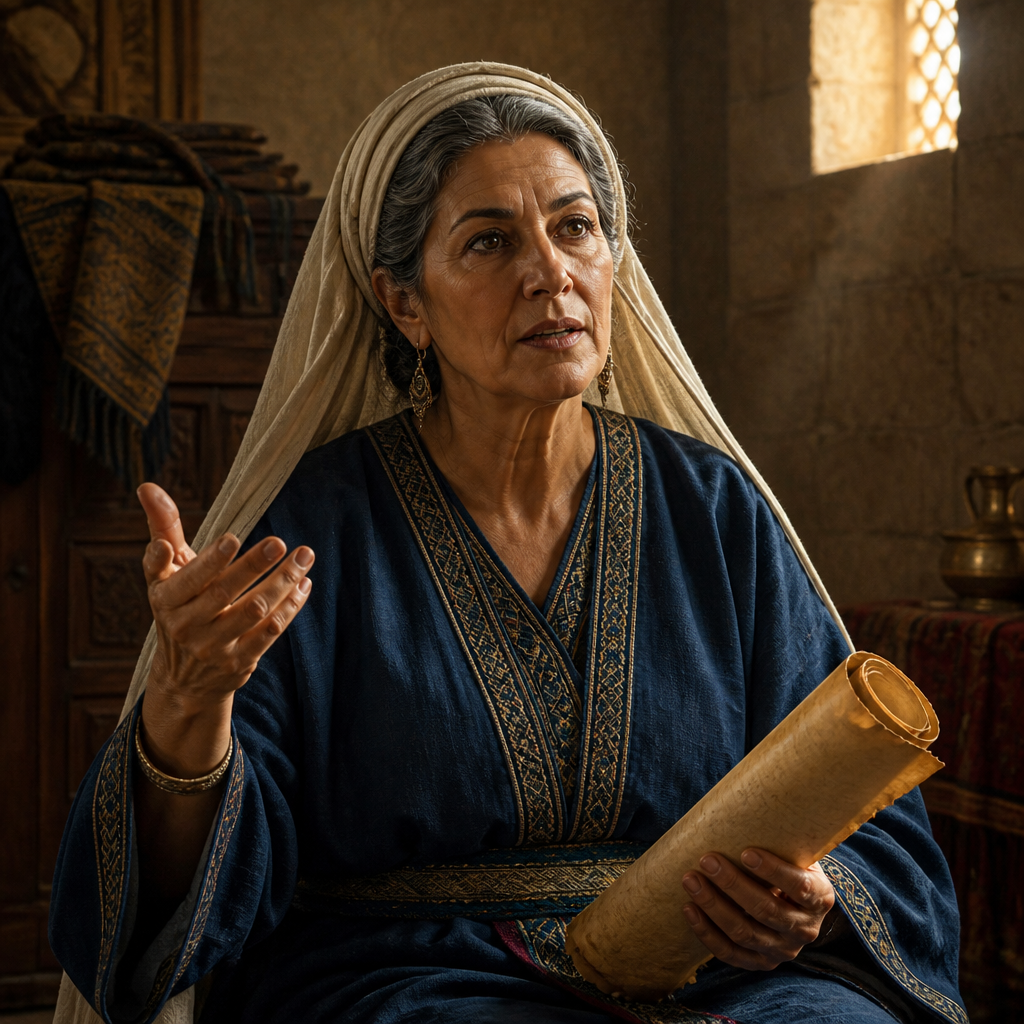
Huldah
Prophetess consulted by Asaiah
Shaphan
Associate and Scribe
Categories
Mentions by Book
- 2 Kings2
- 2 Chronicles1
Others Named Asaiah
Asaiah, Shilonite of the Return1 Chronicles 9:5
Asaiah was a firstborn descendant of Shelah who resettled in Jerusalem during the Post-Exilic period after the Babylonian captivity.
Asaiah, Simeonite Prince of the Divided Monarchy1 Chronicles 4:36
Asaiah was a leader within the tribe of Simeon during the Divided Monarchy whose lineage is preserved in the genealogical records of 1 Chronicles.
Asaiah, son of Haggiah1 Chronicles 6:30
A Levite of the Merarite clan during the Divided Monarchy, identified in the genealogical records of the chronicler as the son of Haggiah.
Asaiah, Merarite Chief of the Divided Monarchy1 Chronicles 15:6
A prominent Levite and chief of the Merarite clan who assisted King David in the solemn transport of the Ark of the Covenant to Jerusalem.