Bohan
Bohan was a son of Reuben whose name is associated with a landmark stone used to delineate the tribal boundaries of Judah and Benjamin.
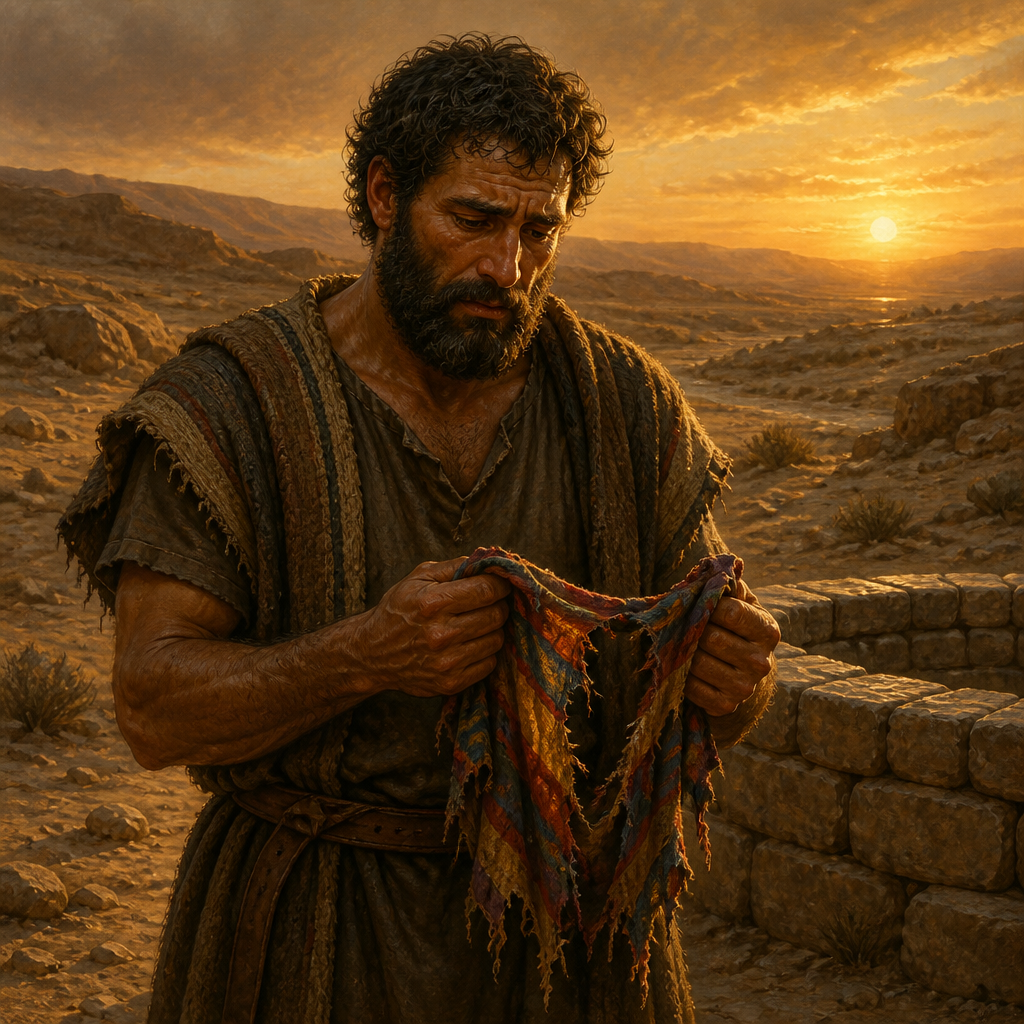
Bohan appears in the biblical record during the period of the Conquest under Joshua. While he is not depicted as an active participant in the military narratives of the era, his identity is preserved through a specific geographical landmark: the 'Stone of Bohan.' This stone served as a crucial border marker during the division of the Promised Land among the tribes of Israel.
According to the biblical text, Bohan was the son of Reuben, the firstborn of the patriarch Jacob. His legacy is tied to the topography of the Judean wilderness and the Jordan Valley, where his name was immortalized in a physical monument that functioned as a legal and territorial boundary for generations of Israelites.
Background and Family
Bohan is identified in the Masoretic Text as the 'son of Reuben.' As Reuben was the eldest son of Jacob and Leah, Bohan belongs to the first generation of the Reubenite lineage. However, the biblical record does not provide a specific genealogy that places Bohan within the primary list of Reuben's immediate sons (Hanoch, Pallu, Hezron, and Carmi) as seen in Genesis 46:9 or Numbers 26:5. This has led some scholars to suggest that Bohan may have been a later descendant or a figure whose specific familial placement was preserved primarily through the landmark that bore his name.
Major Life Events
There are no narrative accounts of Bohan’s life, actions, or death recorded in the Bible. His historical presence is established entirely through the 'Stone of Bohan' (Eben Bohan). This stone is mentioned twice in the Book of Joshua during the formal description of tribal allotments.
The Boundary of Judah
In Joshua 15, the text describes the northern border of the territory assigned to the tribe of Judah. The boundary moved from the Salt Sea (Dead Sea) northward toward Beth-hoglah and Beth-arabah, eventually reaching the Stone of Bohan.
"...went up to Beth-hoglah, proceeded north of Beth-arabah, and went up to the Stone of Bohan son of Reuben." (Joshua 15:6)
The Boundary of Benjamin
In Joshua 18, the Stone of Bohan appears again, this time defining the southern border of the tribe of Benjamin. The stone is situated near the 'Ascent of Adummim,' a strategically important pass between Jerusalem and Jericho.
"From there it curved northward and proceeded to En-shemesh and on to Geliloth facing the Ascent of Adummim, and continued down to the Stone of Bohan son of Reuben." (Joshua 18:17)
Relationship to Other Biblical Figures
Bohan's primary relationship is to his father, Reuben. Because he is linked to a landmark in the territory of Judah and Benjamin—rather than the Transjordanian territory where the tribe of Reuben eventually settled—it suggests that Bohan may have been a warrior who died or performed a notable deed on the western side of the Jordan during the initial years of the Conquest. His name, which means 'thumb' or 'big toe' in Hebrew, has also led to various etymological interpretations regarding the shape of the stone or a physical characteristic of the man.
Spiritual Significance
While Bohan is a minor figure, his inclusion in the sacred text highlights the precision of God's promise to Israel regarding the land. The Stone of Bohan represents the transition from a nomadic existence to a settled, ordered society governed by divine decree. The preservation of his name in the border descriptions ensures that his contribution to the nation's history, though quiet, was recognized by the community of faith.
Spiritual Significance
Bohan’s significance lies in the role his name played in the legal geography of Israel. The 'Stone of Bohan' was not merely a rock but a witness to the fulfillment of the Abrahamic covenant as the land was partitioned among the tribes. It served as a permanent marker for the legal inheritance of Judah and Benjamin.
Furthermore, the mention of a Reubenite marker within the heart of the Cisjordan (western) territories suggests a shared history and unity among the tribes during the Conquest, reminding the people that though the Reubenites settled east of the Jordan, their presence and heritage remained vital to the whole of Israel.
Frequently Asked Questions
What does the name 'Bohan' mean?
In Hebrew, the name Bohan (*Bohan*) literally translates to 'thumb' or 'big toe.' It is unclear if this referred to a physical trait of the man or the shape of the stone monument named after him.
Where was the Stone of Bohan located?
The stone was located in the Jordan Valley area, north of the Dead Sea and near the Ascent of Adummim, serving as a boundary marker between the tribes of Judah and Benjamin.
Was Bohan one of Reuben's immediate sons?
The Bible calls him the 'son of Reuben,' but he is not listed among the four sons of Reuben mentioned in Genesis or Numbers. He may have been a grandson or a later descendant referred to as a 'son' in the broader sense.
Why is a Reubenite stone in Judah's territory?
Though the tribe of Reuben settled east of the Jordan, the Reubenite warriors fought alongside the other tribes in the west. The stone likely marks the site of a specific event or the burial of Bohan during those campaigns.
Connected Figures
Reuben
Father
Joshua
Leader during the time the Stone of Bohan was recorded
Categories
Mentions by Book
- Joshua2