Boaz
A prominent landowner from Bethlehem and a kinsman-redeemer who married Ruth, becoming a pivotal ancestor in the Davidic line and the genealogy of Jesus Christ.
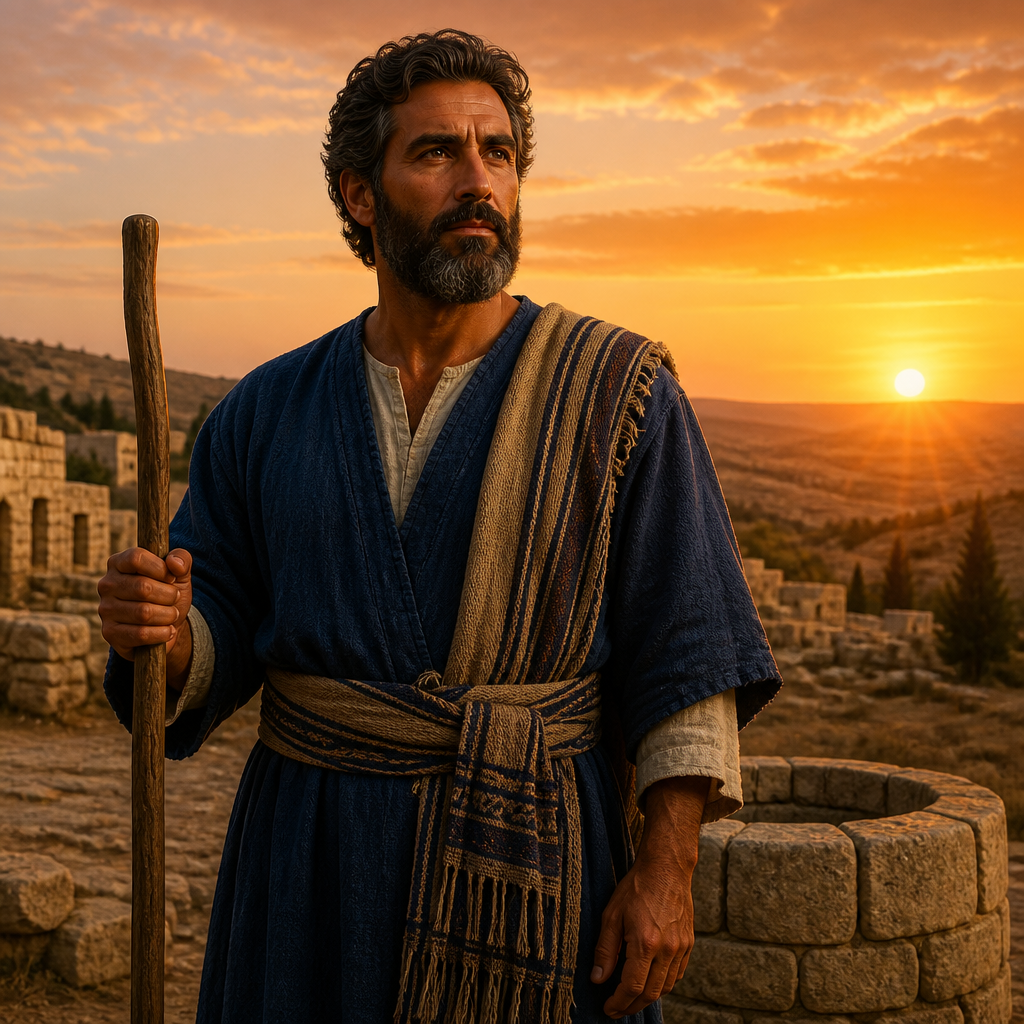
Boaz was a wealthy and noble landowner of the tribe of Judah who lived in Bethlehem during the era of the Judges. Characterized by his adherence to the Mosaic Law and his compassionate nature, he is best known for his role in the Book of Ruth. He is described as a 'prominent man of noble character' (Ruth 2:1), a description that encompasses both his social standing and his moral integrity. His interactions with Ruth, a Moabite widow, demonstrate a commitment to social justice and familial duty that transcended ethnic boundaries.
Beyond his personal narrative, Boaz holds a significant place in biblical history as the great-grandfather of King David. By assuming the role of the 'go'el' or kinsman-redeemer, Boaz preserved the inheritance of his deceased relative Elimelech. This act of redemption not only provided for Ruth and her mother-in-law Naomi but also secured the lineage that would eventually lead to the Messiah, according to the New Testament genealogies in Matthew and Luke.
Background and Family
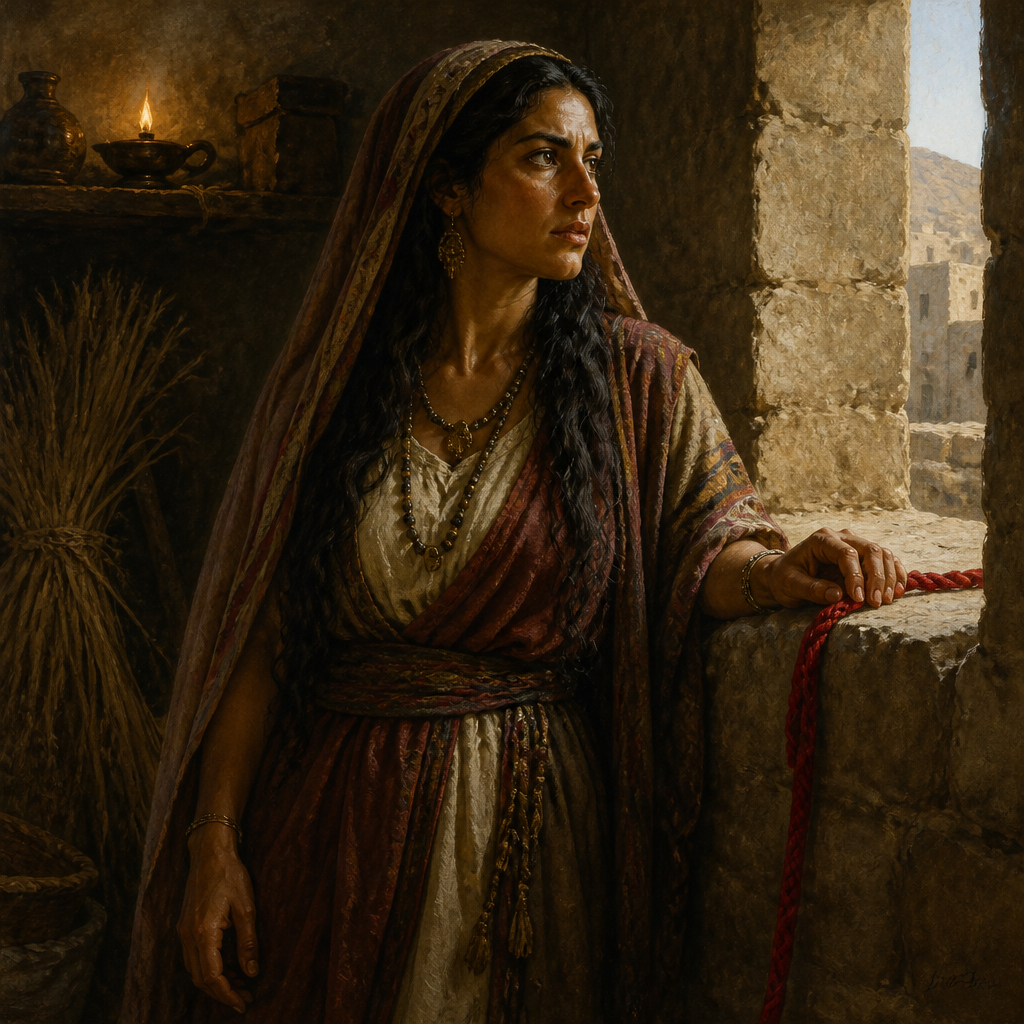
Boaz was born into the tribe of Judah during a period of significant social and political upheaval in Israel. According to the genealogies provided in the Book of Ruth, 1 Chronicles, and the Gospel of Matthew, he was the son of Salmon and Rahab (Matthew 1:5). This parentage is noteworthy, as Rahab was the Canaanite woman of Jericho who aided the Israelite spies, suggesting that Boaz grew up in a household that had already experienced the integration of a faithful foreigner into the covenant community.
As a resident of Bethlehem, Boaz rose to prominence as a 'man of wealth' and 'noble character' (Ruth 2:1). He was a relative of Elimelech, the husband of Naomi, which placed him within the inner circle of those responsible for the clan’s ancestral land and welfare. His status in the community was such that he sat among the elders at the city gates, the traditional site for legal and social arbitration.
Major Life Events
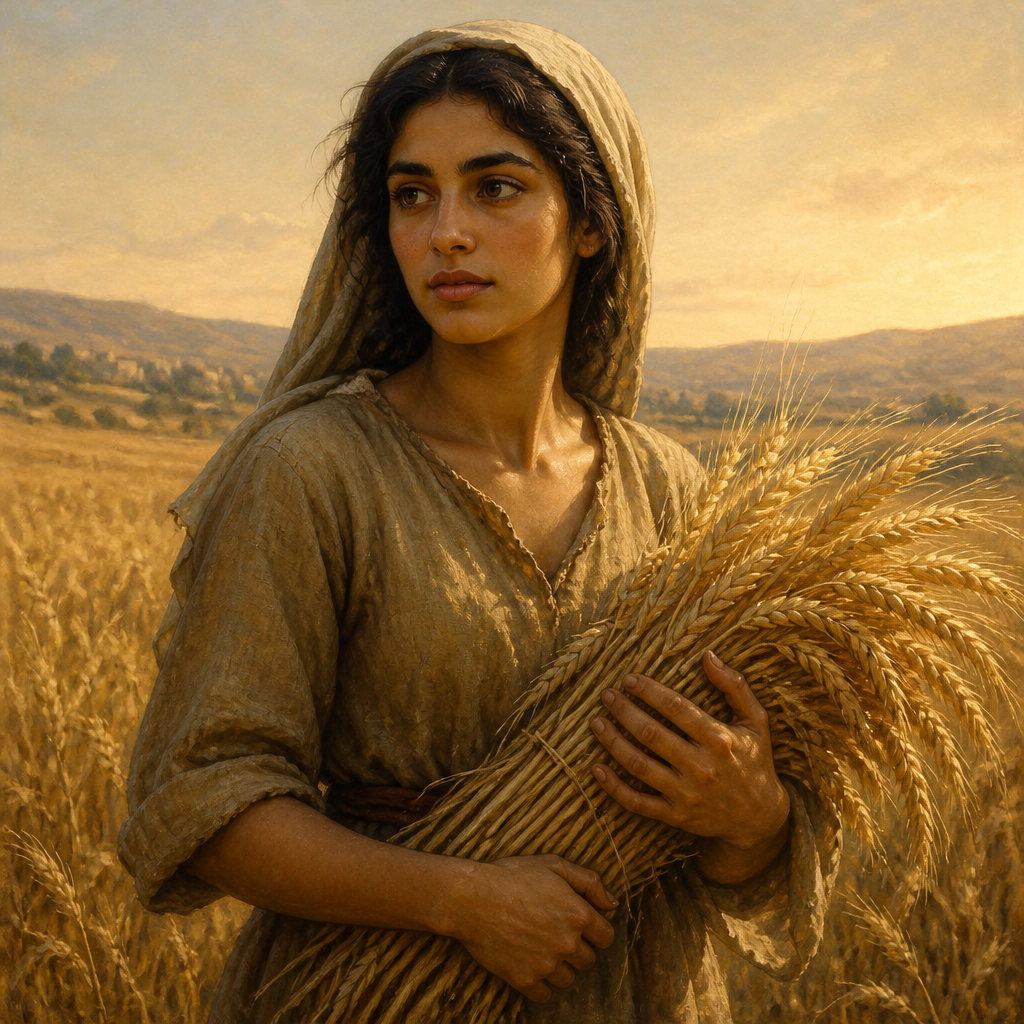
The primary narrative of Boaz’s life unfolds during the barley harvest in Bethlehem. While his laborers were reaping the fields, Boaz encountered Ruth, the Moabite daughter-in-law of Naomi, who had returned to Israel in a state of poverty. Ruth was 'gleaning'—a practice protected by the Mosaic Law that allowed the poor to collect the grain left behind by harvesters. Boaz’s first recorded actions show him to be a devout man; he greeted his workers with the blessing, 'The LORD be with you' (Ruth 2:4).
Upon learning of Ruth’s identity and her loyalty to Naomi, Boaz exhibited extraordinary generosity. He provided her with physical protection, instructed his workers to leave extra grain for her, and invited her to share in his provisions. His kindness was not merely charitable but was rooted in a recognition of her faith, as he prayed that she would be fully rewarded by the 'God of Israel, under whose wings you have come to take refuge' (Ruth 2:12).
The narrative reaches its climax when Naomi sought a more permanent security for Ruth. Following the custom of the time, Ruth approached Boaz at the threshing floor during the night to request that he act as her kinsman-redeemer (Ruth 3). Boaz, though moved by her request, maintained strict legal protocol. He acknowledged that while he was a close relative, there was another man with a prior claim. The following day, Boaz convened a legal assembly at the city gate. He offered the closer relative the chance to redeem Elimelech’s land, but the man declined when he realized that the redemption also required marrying Ruth to preserve the name of the deceased. Boaz then publicly assumed the role, purchasing the land and taking Ruth as his wife.
Relationship to Other Biblical Figures
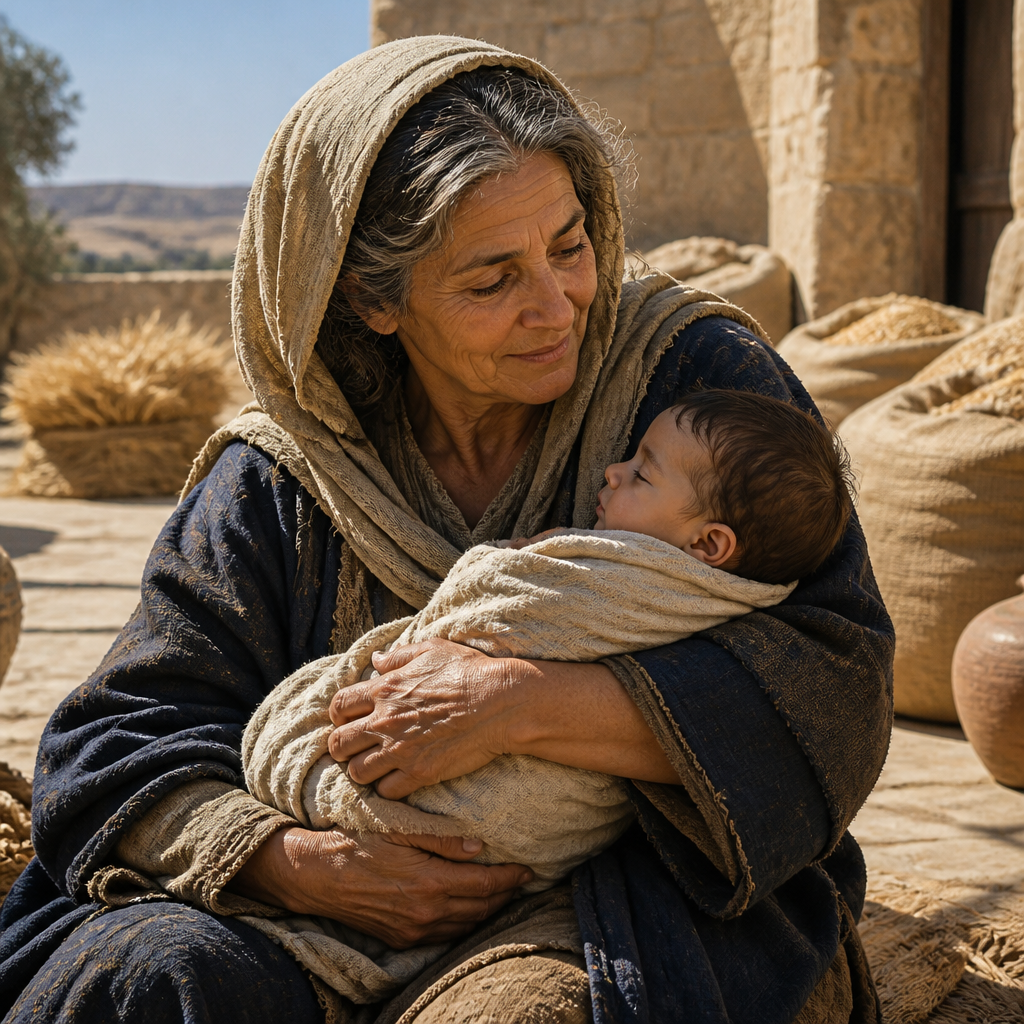
Boaz’s life is defined by his relationships with Ruth and Naomi. Through his marriage to Ruth, he became the father of Obed. This connection is vital to the biblical narrative because Obed became the father of Jesse, who was the father of David, the greatest king of Israel (Ruth 4:21–22). Consequently, Boaz is a direct ancestor of Jesus Christ, as confirmed in the New Testament genealogies of Matthew 1 and Luke 3.
His role as a 'kinsman-redeemer' (Hebrew: go’el) is one of the most significant typological relationships in the Old Testament. The go'el was responsible for redeeming a relative from slavery, avenging a relative's death, or, as in the case of Boaz, reclaiming family land that had been lost to poverty. Boaz’s willingness to pay the price for redemption and his care for a foreign widow reflect the character of God’s own redemptive work.
Spiritual Significance
Spiritually, Boaz serves as a model of the 'righteous man' (tzaddik). He lived out the spirit of the Law rather than just its letter. Where the Law required landowners to allow the poor to glean, Boaz exceeded the requirement by ensuring Ruth’s safety and abundance. His integrity is further highlighted by his refusal to circumvent the rights of the closer kinsman, choosing instead to resolve the matter through transparent legal channels.
In Christian theology, Boaz is frequently viewed as a type of Christ. Just as Boaz redeemed the destitute Ruth and brought her into a new family and inheritance, Christ is seen as the redeemer of humanity, bringing those who were 'far off' into the family of God. The transition from the 'famine' at the beginning of the Book of Ruth to the 'fullness' at the end is mediated through the character and actions of Boaz.
Spiritual Significance
Boaz is theologically significant as the quintessential kinsman-redeemer, a role that illustrates the biblical concept of redemption through sacrifice, law, and love. His marriage to Ruth, a Moabitess, further emphasizes the theme of God's grace extending beyond the borders of Israel to include all who seek refuge in Him. Historically, Boaz is a crucial link in the Davidic covenant; without his intervention, the line of Judah through Elimelech might have been extinguished, affecting the messianic lineage.
Furthermore, Boaz represents the ideal of the godly Israelite during the dark days of the Judges. While the Book of Judges often records Israel's moral and spiritual decay, the story of Boaz provides a counter-narrative of faithfulness, kindness, and adherence to God's commands. His legacy is one of restoration, showing how the faithfulness of one man can result in a blessing that impacts all of human history through his descendants.
Frequently Asked Questions
Who were the parents of Boaz?
Boaz was the son of Salmon and Rahab (Matthew 1:5).
What tribe did Boaz belong to?
Boaz belonged to the tribe of Judah.
What is a kinsman-redeemer?
A kinsman-redeemer (go'el) is a male relative who had the privilege or responsibility to act on behalf of a relative in trouble, danger, or need, specifically regarding the restoration of land or lineage.
Why did Boaz have to talk to another relative before marrying Ruth?
According to the Law, the nearest male relative had the first right to redeem a deceased man's property and marry his widow. Boaz was a close relative, but another man was even closer, so Boaz had to gain his legal waiver first.
How is Boaz related to King David?
Boaz was the great-grandfather of King David. Boaz fathered Obed, who fathered Jesse, who fathered David.
Connected Figures
Categories
Mentions by Book
- Ruth18
- 1 Chronicles2
- 1 Kings1
- Luke1
- Matthew1
Family & Relationships
Child
Ruth 2:1
Spouse / partner
Ruth 2:1
Parent
Ruth 4:20
Parent
Joshua 2:1
Spouse / partner
Ruth 1:4