Sisera, Commander of Hazor
The commander of King Jabin's Canaanite army who led nine hundred iron chariots against Israel and was defeated by Barak and Jael.
Sisera was a formidable military leader during the period of the Judges, serving as the commander of the forces of Jabin, the King of Canaan who reigned in Hazor. Operating from his stronghold in Harosheth-hagoyim, Sisera maintained a brutal twenty-year oppression of the Israelites. His military dominance was primarily rooted in his possession of nine hundred chariots of iron, a technological advantage that initially rendered the Israelite infantry powerless in the plains.
His role in biblical history is defined by the Battle of Mount Tabor, where he faced the combined forces of the tribes of Naphtali and Zebulun under the leadership of Barak and the prophetess Deborah. Despite his overwhelming military superiority, Sisera’s defeat was absolute, leading to his ignominious death at the hands of Jael, a Kenite woman. His downfall served as a divine judgment against the Canaanite oppressors and secured forty years of peace for the land of Israel.
Background and Military Command
Sisera appears in the biblical narrative during a time when Israel had "again done evil in the sight of the LORD" following the death of the judge Ehud. As a consequence, the Israelites were subjected to the rule of Jabin, a Canaanite king. Sisera, however, is the primary antagonist of the account in Judges 4 and 5, acting as the tactical and operational head of the Canaanite military. He resided in Harosheth-hagoyim, a location traditionally identified as a fortified site in the Galilee region near the Kishon River.
Sisera’s military strength was centered on his nine hundred iron chariots. In the context of the Late Bronze and Early Iron Age, chariotry represented the pinnacle of warfare technology. The "iron" likely refers to iron-reinforced fittings or scythes, which made these vehicles devastating against foot soldiers on level ground. For twenty years, Sisera used this advantage to harshly oppress the children of Israel, effectively controlling the valleys and trade routes.
The Battle of Mount Tabor
The turning point in Sisera’s career occurred when the prophetess Deborah summoned Barak to lead an insurrection. Sisera, alerted that Barak had gathered ten thousand men at Mount Tabor, mobilized his entire force, including all nine hundred chariots, to the River Kishon. This move was intended to draw the Israelites into the plain where the chariots could maneuver effectively.
However, the biblical record in Judges 5:20 indicates a cosmic and environmental intervention: "From the heavens the stars fought; from their courses they fought against Sisera." This is interpreted as a sudden, torrential rainstorm that caused the River Kishon to flood, turning the battlefield into a quagmire. Sisera’s iron chariots, his greatest asset, became a liability as they bogged down in the mud. Seeing his army routed by the sword of Barak’s men, Sisera abandoned his chariot—a high-status symbol—and fled on foot to save his own life.
Death at the Hand of Jael
Sisera sought refuge in the encampment of Heber the Kenite, with whom King Jabin had a peace treaty. He approached the tent of Jael, Heber’s wife, seeking sanctuary and water. Jael welcomed him with deceptive hospitality, offering him curdled milk (or yogurt) instead of water and covering him with a blanket. Exhausted from the battle and his flight, Sisera fell into a deep sleep.
While he slept, Jael took a tent peg and a workman’s hammer. The text records that she drove the peg through his temple and into the ground. When Barak arrived in pursuit, Jael showed him the body of the commander. This fulfillment of Deborah’s prophecy—that the LORD would sell Sisera into the hand of a woman—stripped Barak of the ultimate glory of the victory.
The Lament of Sisera’s Mother
A unique literary feature of the Song of Deborah (Judges 5) is the psychological insight into Sisera’s household. The poem depicts Sisera’s mother peering through a lattice window, wondering why her son’s chariot is delayed. Her attendants offer comforting, albeit cruel, suggestions that he is merely busy dividing the spoil of war, including colorful garments and captive women. This stark juxtaposition between the mother’s expectation of triumph and the reality of Sisera’s violent death underscores the total reversal of fortunes brought about by divine intervention.
Spiritual Significance
Sisera is presented in scripture not merely as a human enemy, but as a symbol of the pride and technological arrogance of those who oppose God. His defeat at the Kishon is cited centuries later in Psalm 83:9 as a model for how God deals with the enemies of His people. The prophet Samuel also mentions Sisera in his farewell address (1 Samuel 12:9), using him as a historical reminder of what happens when Israel forgets the LORD and is subsequently delivered into the hands of foreign oppressors. Sisera’s fall illustrates the biblical theme that human military might is no match for divine will, especially when God chooses to use the "weak" elements of the world—such as a flooded river and a woman with a tent peg—to confound the mighty.
Spiritual Significance
Sisera serves as the quintessential example of the Canaanite threat during the era of the Judges, representing a level of military sophistication that Israel could not overcome through natural means. His presence in the narrative highlights the cycle of sin, oppression, and deliverance that characterizes the book of Judges. Theologically, his defeat emphasizes that victory belongs to the LORD, regardless of the disparity in armaments or social status. By being defeated by a non-combatant woman (Jael), Sisera’s end serves as a narrative device to humble the pride of both the Canaanite military and the hesitant Israelite leadership represented by Barak.
Furthermore, Sisera’s legacy in later books like Psalms and 1 Samuel reinforces his role as a prototypical enemy of God. His name becomes synonymous with the sudden and complete destruction of those who harshly treat the vulnerable. The inclusion of his mother’s perspective in the Song of Deborah adds a layer of tragic irony, contrasting the domestic expectations of a ruling class with the devastating consequences of their colonial oppression.
Frequently Asked Questions
Who was Sisera?
Sisera was the commander of the army of Jabin, the Canaanite king of Hazor. He oppressed Israel for twenty years with nine hundred iron chariots.
How did Sisera die?
After his army was defeated in battle, Sisera fled to the tent of Jael, the wife of Heber the Kenite. While he was sleeping, Jael killed him by driving a tent peg through his temple.
Why did Sisera flee on foot if he had chariots?
During the battle at the River Kishon, the LORD routed Sisera's army. The Song of Deborah suggests the river flooded, likely miring the heavy iron chariots in mud and forcing Sisera to abandon his vehicle to escape the pursuing Israelite soldiers.
What was the prophecy concerning Sisera's death?
The prophetess Deborah told the Israelite leader Barak that because he insisted she accompany him to battle, the honor of the victory would not be his; instead, the LORD would deliver Sisera into the hands of a woman.
Where did Sisera live?
Sisera lived in a place called Harosheth-hagoyim, which served as his military headquarters.
Connected Figures
Jabin
King of Canaan and Sisera's ruler
Deborah
Prophetess and Judge who commanded the battle against him

Barak
Israelite military leader who defeated Sisera's army
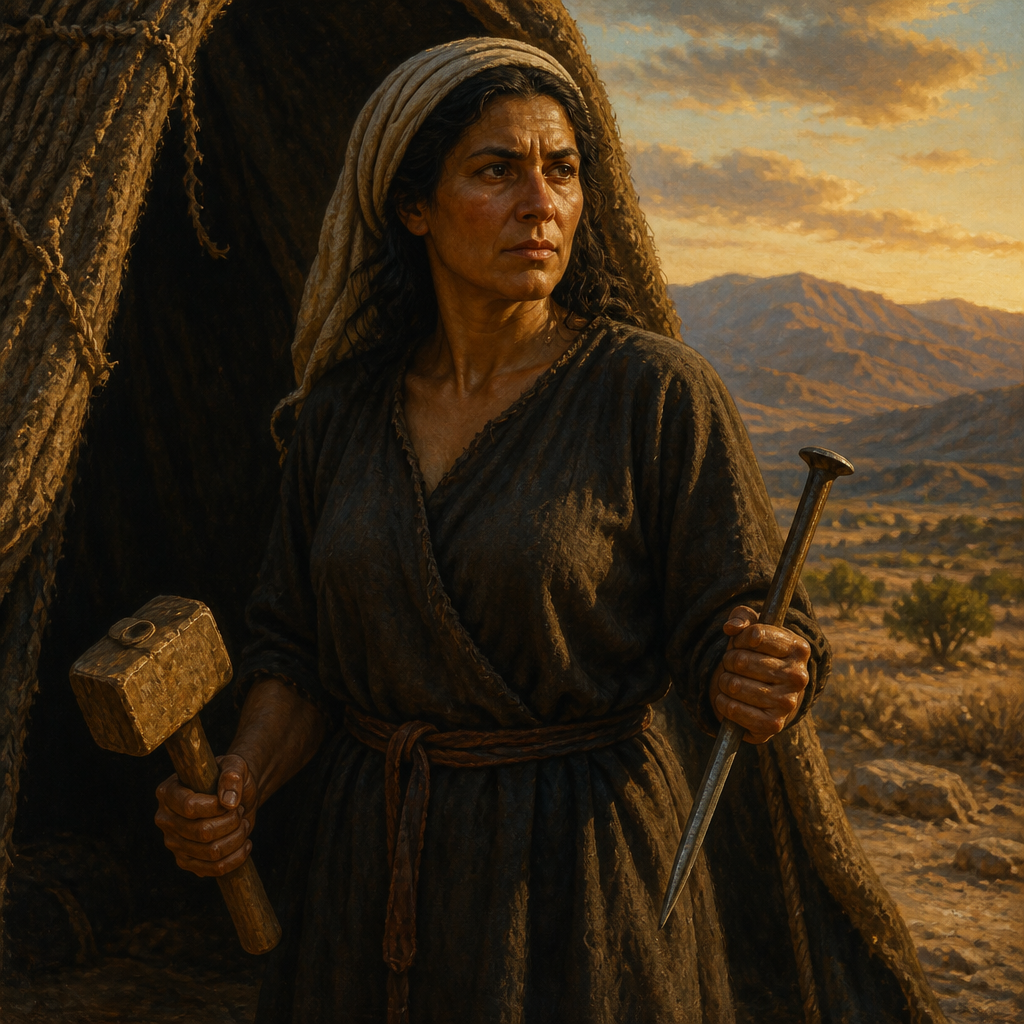
Jael
The woman who killed Sisera in her tent
Categories
Mentions by Book
- Judges15
- 1 Samuel1
- Psalms1
Others Named Sisera
Sisera, Nethinim of the ReturnEzra 2:53
A patriarch of the Nethinim whose descendants returned from the Babylonian Exile with Zerubbabel to serve in the reconstructed Temple.