Meraioth
Who was Meraioth in the Bible?
Meraioth was a Levite priest of the line of Eleazar, recorded as a crucial link in the high-priestly genealogy.
Meraioth was a member of the tribe of Levi and a descendant of the high-priestly line of Aaron through Eleazar. He lived during the era of the conquest and the judges, occupying a chronological position in the ancestral records between the era of the Judges and the establishment of the early Davidic priesthood. As a son of Zerahiah and the father of Amariah, Meraioth represents the continuation of the legitimate priestly succession at a time when the religious infrastructure of Israel was undergoing significant structural shifts.
While the biblical text does not provide a narrative account of Meraioth’s personal deeds or specific priestly service, his presence in the genealogical records of 1 Chronicles, Ezra, and Nehemiah underscores his importance. He is part of the 'golden chain' of the Zadokite priesthood. His name, which appears in several key administrative and genealogical lists, serves as a bridge between the wandering of the tabernacle and the eventual centralization of worship in Jerusalem.
Background and Family
Meraioth belonged to the tribe of Levi, the tribe set apart by God for religious service and the maintenance of the Tabernacle and, eventually, the Temple. According to the genealogical records found in 1 Chronicles 6:6-7, he was the son of Zerahiah and the father of Amariah. His lineage is traced directly back to Phinehas and Eleazar, the son of Aaron, establishing his status within the high-priestly family.
The period in which Meraioth lived corresponds to the transition and early years of the era of the conquest and the judges. As a descendant of the line of Phinehas, Meraioth carried the weight of the 'covenant of a lasting priesthood' promised in Numbers 25:13.
Major Life Events
Because the biblical record regarding Meraioth is strictly genealogical, there are no specific narrative events—such as battles, miracles, or speeches—attributed to him. However, his inclusion in the formal records of the nation constitutes his primary 'event' in the biblical canon.
He appears in the priestly list of 1 Chronicles 6:52, which focuses on the descendants of Aaron. Later, his name is utilized by Ezra the scribe to validate his own priestly credentials. In Ezra 7:3, Meraioth is listed as an ancestor of Ezra, divinely sanctioned heritage. Furthermore, in Nehemiah 11:11 and 1 Chronicles 9:11, Meraioth is cited in the ancestry of Azariah (or Seraiah), who is described as the 'chief official of the house of God.' This suggests that Meraioth’s branch of the family remained prominent and influential in Temple administration for centuries.
Relationship to Other Biblical Figures
Meraioth’s significance is defined almost entirely by his relationships. He is the grandson of Uzzi and the father of Amariah. Notably, he is an ancestor of Zadok, the high priest who remained loyal to David during Adonijah’s rebellion and eventually anointed Solomon. This makes Meraioth a foundational figure in the 'Zadokite' line, which would become the standard for priestly legitimacy in the eyes of the prophets and the returning exiles.
In the broader biblical context, his relationship to Ezra is the most significant for the New Testament era. By appearing in Ezra’s genealogy, Meraioth provides the legal and spiritual bridge that allowed Ezra to reform the law and the priesthood in Jerusalem around 458 BC.
Spiritual Significance
Although Meraioth is a silent figure in the biblical narrative, his spiritual significance lies in the concept of continuity and faithfulness. In the ancient Near East, and specifically within Israelite theology, a name in a genealogy was a testimony to God’s providence across generations. Meraioth’s inclusion in the records of 1 Chronicles, Ezra, and Nehemiah—books written or compiled after the Babylonian exile—shows that even in times of national judgment and displacement, God preserved the specific families he had chosen for service.
For the original readers of the Chronicles, Meraioth was a reminder that the priesthood was not an office one could simply claim; it was an inheritance based on divine election. His life reflects a quiet obedience to the inherited role of the Levite, contributing to a lineage that would eventually produce the leaders who rebuilt the spiritual walls of Jerusalem after the exile. The repetition of his name across three different books indicates that the biblical authors viewed his placement in the high-priestly line as essential data for the restoration of Israel’s worship.
Meraioth's primary theological importance is his role in the preservation of the Aaronic priesthood. In the biblical worldview, the legitimacy of the Temple service depended entirely on the purity of the priestly line. By being recorded as the son of Zerahiah and the father of Amariah, Meraioth ensures the unbroken link from the Tabernacle in the wilderness to the Temple in Jerusalem. His name serves as a vital marker for later leaders like Ezra to claim their rightful authority to teach the Law and lead the people.
Furthermore, Meraioth illustrates the biblical theme that God works through long, often hidden, successions of individuals. While he is not credited with any specific miracle, his existence was necessary for the eventual rise of Zadok and the subsequent Zadokite priesthood. He represents the faithful 'middle generations' who maintain the traditions and biological lines required for God's redemptive plan to progress toward the promised restoration.
Frequently Asked Questions
Who was Meraioth's father?
According to 1 Chronicles 6:6, Meraioth was the son of Zerahiah.
What tribe did Meraioth belong to?
Meraioth belonged to the tribe of Levi, specifically the sub-branch of the Kohathites through the line of Eleazar, the son of Aaron.
Which famous priest is a descendant of Meraioth?
Ezra the scribe is a direct descendant of Meraioth, as recorded in the genealogy found in Ezra 7:3.
In which books of the Bible is Meraioth mentioned?
Meraioth is mentioned in 1 Chronicles (chapters 6 and 9), Ezra (chapter 7), and Nehemiah (chapter 11).
What was Meraioth's role in the Israelite community?
Meraioth was a priest. While his specific daily duties are not described, his inclusion in the high-priestly genealogies indicates he was part of the elite leadership of the Levites.
Family & Relationships
Parents
 Zerahiah, Priest in the Line of EleazarFather1 Chronicles 6:6Stated
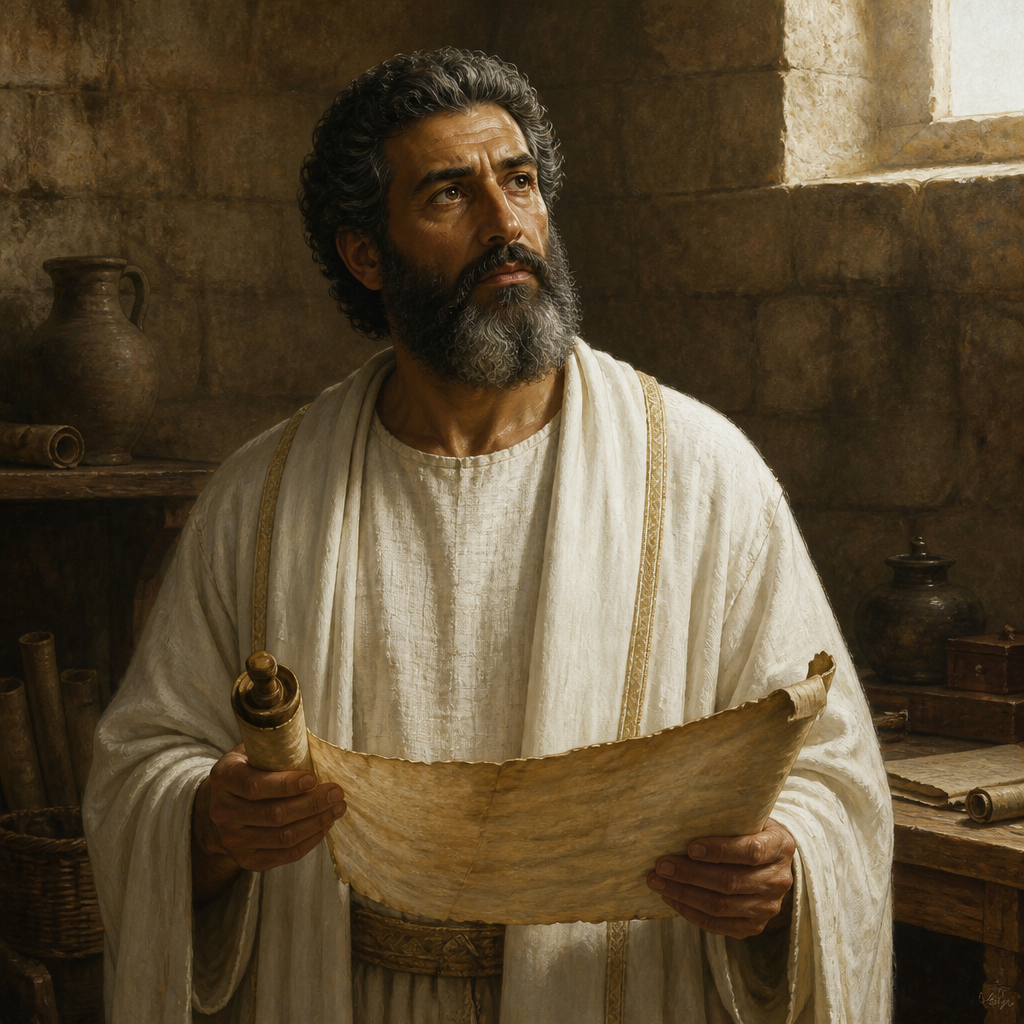 MeraiothThis page
Children
 Amariah, Priest of the United MonarchySon1 Chronicles 6:7Stated
Extended family
 Ezra, Priest of the First ReturnDescendant1 Chronicles 6:6
Inferred
No verse names Ezra and Meraioth together; the ancestor link is carried from the surrounding genealogy and is not stated in Scripture.Evidence: 1 Chronicles 6:6
Connected Figures
Family
Father · 1 Chronicles 6:6
A Levite priest of the line of Eleazar who served in the high priestly genealogy during the era of the conquest and the judges.
Conquest and JudgesFirst: 1 Chronicles 6:65 versesPriestLevi
Son · 1 Chronicles 6:7
A Levite priest of the high-priestly line of Eleazar during the era of the conquest and the judges, serving as the father of Ahitub and grandfather of Zadok.
Conquest and JudgesFirst: 1 Chronicles 6:74 versesPriestLevi
Descendant · 1 Chronicles 6:6
A prominent priest who returned to Jerusalem from Babylonian exile alongside Zerubbabel and Jeshua during the late 6th century BC.
Mentions by Book
- 1 Chronicles4
- Ezra1
- Nehemiah2
Scripture References
All 7 indexed verses, in canonical order, from the Berean Standard Bible.
1 Chronicles · 4
- 1 Chronicles 6:6
Uzzi was the father of Zerahiah, Zerahiah was the father of Meraioth,
- 1 Chronicles 6:7
Meraioth was the father of Amariah, Amariah was the father of Ahitub,
- 1 Chronicles 6:52
Meraioth his son, Amariah his son, Ahitub his son,
- 1 Chronicles 9:11
Azariah son of Hilkiah, the son of Meshullam, the son of Zadok, the son of Meraioth, the son of Ahitub, the chief official of God’s temple;
Ezra · 1
- Ezra 7:3
the son of Amariah, the son of Azariah, the son of Meraioth,
Nehemiah · 2
- Nehemiah 11:11
Seraiah son of Hilkiah, the son of Meshullam, the son of Zadok, the son of Meraioth, the son of Ahitub, the chief official of the house of God;
- Nehemiah 12:1Partial
Now these are the priests and Levites who went up with Zerubbabel son of Shealtiel and with Jeshua: Seraiah, Jeremiah, Ezra,
Cited as evidence on a family card; added so References, Key Verses and Mentions by Book share one index.