Jashar
The eponymous figure or title associated with the 'Book of Jashar,' an ancient collection of Hebrew poetry and heroic songs documenting Israel's early military and national history.
Jashar (often referred to as 'Jasher') is a figure primarily recognized through the literary work that bears his name: The Book of Jashar. While the Bible provides no genealogical data or biographical details for Jashar himself, his name is inextricably linked to two of the most significant moments in the early history of Israel—the conquest of Canaan under Joshua and the establishment of the monarchy under David. The name Jashar is derived from the Hebrew root meaning 'upright' or 'just,' leading many scholars to debate whether Jashar was a specific individual, such as a court poet or scribe, or if the name served as a title for the 'Book of the Upright.'
Within the biblical record, Jashar is mentioned exclusively in the context of citation. His work served as an authoritative source for poetic descriptions of miraculous events and national laments. The references suggest that Jashar's writings were well-known to the biblical authors and the people of Israel during the eras of the Judges and the early United Monarchy, acting as a preserved repository for the 'heroic age' of the nation.
Background and Family
The biblical record is silent regarding the parentage, tribe, or specific dates of Jashar’s life. Unlike many figures in the Conquest and Judges period whose lineages are meticulously traced to one of the twelve tribes of Israel, Jashar exists only as a name attached to a lost manuscript. The Hebrew term Sefer ha-Yashar (Book of the Upright) suggests that if Jashar was a man, he was regarded as a paragon of integrity or a chronicler of those who were 'upright' before Yahweh.
Because his work is cited in both the Book of Joshua and the Second Book of Samuel, it is clear that he—or the collection of writings attributed to him—spanned several centuries of Israelite history, from at least 1400 BC to 1000 BC. This has led some scholars to suggest that Jashar may not have been a single person, but rather a designation for a guild of singers or a continuous national archive.
Major Life Events
While there are no recorded personal events for Jashar, his impact is felt through the historical moments he documented. The first mention of his work occurs during the Battle of Gibeon. As Joshua led the Israelites against the Amorite coalition, he commanded the sun and moon to stand still to allow for a total victory. The author of Joshua pauses the narrative to validate this miracle by referencing Jashar’s account:
"So the sun stood still and the moon stopped until the nation took vengeance upon its enemies. Is this not written in the Book of Jashar? 'So the sun stopped in the middle of the sky and delayed going down about a full day.'" (Joshua 10:13)
This indicates that Jashar was present for, or at least the primary poet of, the conquest era. The second mention occurs centuries later, following the death of King Saul and his son Jonathan on Mount Gilboa. King David, in his grief, composed a dirge known as the "Song of the Bow" and commanded that it be taught to the people of Judah. The text notes that this song was formally recorded by Jashar:
"and he ordered that the sons of Judah be taught the Song of the Bow. It is written in the Book of Jashar:" (2 Samuel 1:18)
Relationship to Other Biblical Figures
Jashar’s primary relationship to other biblical figures is that of a contemporary observer and historian. He is linked to Joshua, the successor of Moses, through the recording of the Long Day at Gibeon. He is also linked to King David through the preservation of David’s poetic lament. If Jashar was a single individual, he would have been a respected scribe or 'official poet' whose work was deemed accurate and divinely inspired enough to be quoted alongside the sacred narrative of the Hebrew Bible.
Spiritual Significance
The existence of Jashar and his book highlights the importance of oral and written tradition in early Israel. Though the Book of Jashar itself is now lost to history (extant books by that name today are generally considered medieval forgeries or later compositions), its citation in Scripture demonstrates that God utilized the cultural and literary tools of the time to preserve the memory of His works. Jashar represents the 'upright' witness who records God’s intervention in human affairs, ensuring that future generations would know of the miracles of the Conquest and the deep emotions of the Davidic era.
Spiritual Significance
The significance of Jashar lies in his role as a witness to the miraculous and the monumental. By quoting the Book of Jashar, the biblical writers provided a secondary 'witness' to events as extraordinary as the sun standing still, adhering to the principle that a matter is established by two or three witnesses. It demonstrates that the early Israelites maintained a rich tradition of poetry and historical documentation that predates the final compilation of the historical books of the Old Testament.
Theologically, the name Jashar ('Upright') serves as a reminder of the standard expected of the covenant people. Whether a person or a title, it signifies that the history of Israel was not merely a list of facts, but a narrative of 'uprightness'—or the lack thereof—before God. The inclusion of his work in the inspired canon confirms the value God places on the artistic and poetic expression of faith and national identity.
Frequently Asked Questions
What is the Book of Jashar?
It was an ancient non-canonical Hebrew book, now lost, that contained a collection of poems and songs regarding the heroes and major events of Israel's early history.
Was Jashar a real person?
The Bible refers to the 'Book of Jashar,' which could imply a person named Jashar was the author, or it could be a title meaning 'The Book of the Upright One.'
Does the Book of Jashar still exist today?
The original book mentioned in Joshua and 2 Samuel is lost. Several books with this title exist today, but scholars generally identify them as much later medieval productions, not the original biblical source.
What events did Jashar record?
He is specifically cited as recording the sun standing still in Joshua 10 and King David’s 'Song of the Bow' in 2 Samuel 1.
Connected Figures
Joshua
Subject of Jashar's historical recording
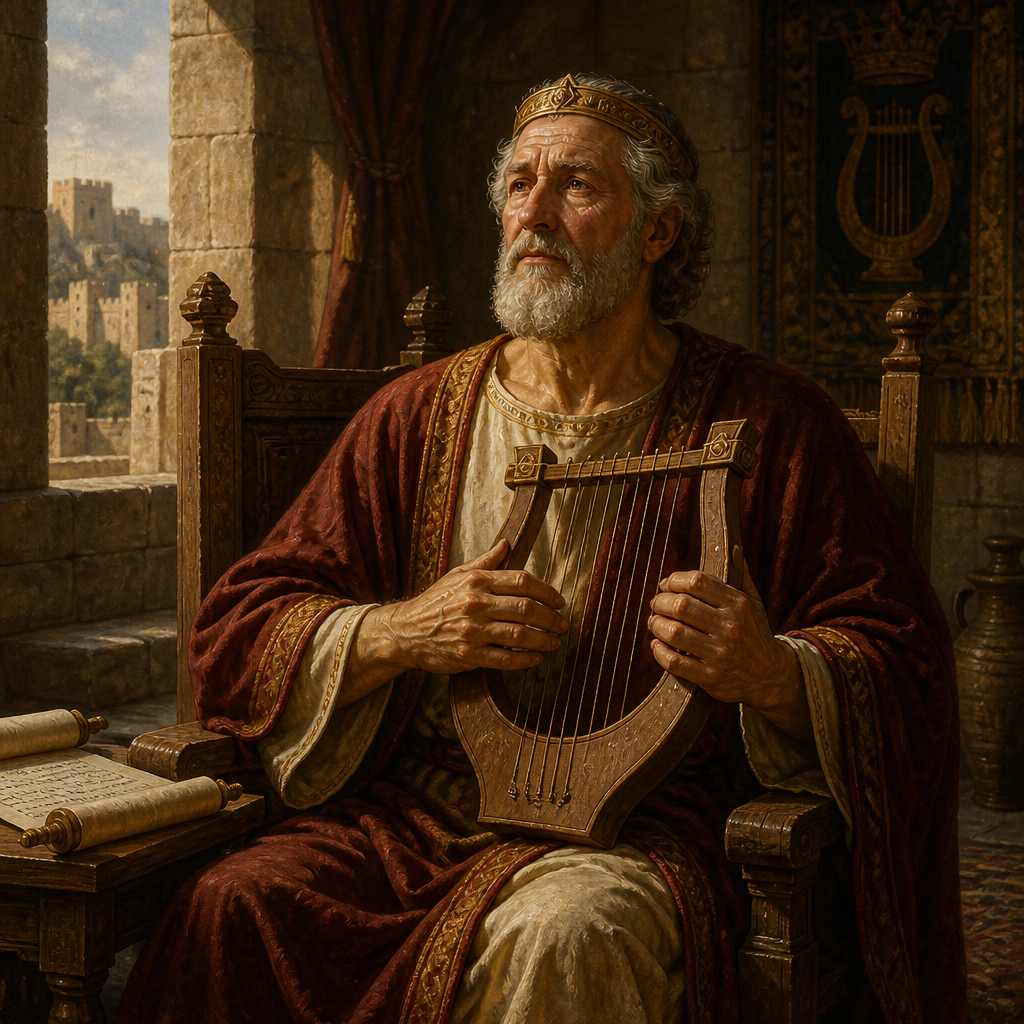
David
Whose lament was recorded in the Book of Jashar
Jonathan
Subject of the lament recorded by Jashar