Elimelech
Who was Elimelech in the Bible?
A man of Bethlehem in Judah who moved his family to Moab during a famine, serving as the patriarchal head of the family featured in the Book of Ruth.
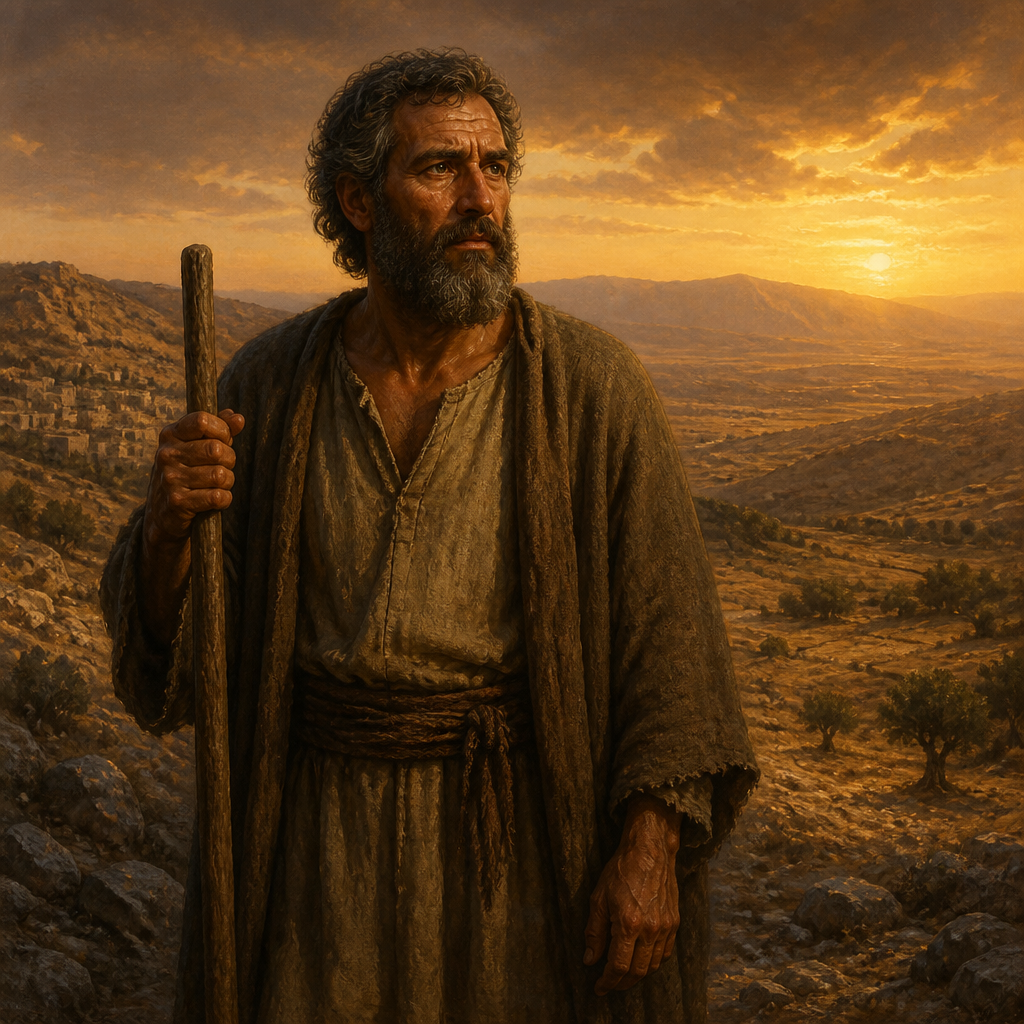
Elimelech was an Ephrathite from Bethlehem in the territory of Judah during the turbulent Period of the Judges. As the husband of Naomi and the father of Mahlon and Chilion, he is the central patriarchal figure whose initial decisions set the stage for the narrative of the Book of Ruth. His name, which translates from Hebrew as 'My God is King,' stands in stark contrast to the historical context of his era, a time when the biblical record notes that 'everyone did what was right in his own eyes.'
Facing a severe famine in the land of Israel, Elimelech led his family across the Jordan River to the plains of Moab. While his presence in the biblical text is brief, his legal and genealogical legacy is profound. His death in a foreign land left his widow and sons in a precarious social position, eventually leading to the providential union between his kinsman Boaz and his daughter-in-law Ruth, which secured Elimelech’s name within the lineage of King David and Jesus Christ.
Background and Family
Elimelech was a member of the tribe of Judah, specifically from the clan of the Ephrathites in Bethlehem. According to the genealogical records found in the Book of Ruth, he was the son of Salma (also rendered as Salmon). This lineage places him within a prominent family line in Judah. He was married to Naomi, and together they had two sons, Mahlon and Chilion. As a landowner in Bethlehem, Elimelech held a degree of status and inheritance, which later becomes a pivotal plot point regarding the redemption of his property.
His identification as an 'Ephrathite' signifies his deep roots in the Bethlehem region. The name Bethlehem-Ephrathah was used to distinguish the town from other locations with similar names, marking Elimelech as part of the ancestral core of the tribe of Judah.
Major Life Events
The primary event recorded in Elimelech’s life is his migration from the Promised Land. During a period of severe famine—a recurring motif in the patriarchal narratives—Elimelech decided to leave Judah. He relocated his household to the fields of Moab, a neighboring nation that was often at odds with Israel.
The man’s name was Elimelech, his wife’s name was Naomi, and the names of his two sons were Mahlon and Chilion. They were Ephrathites from Bethlehem in Judah, and they entered the land of Moab and settled there. (Ruth 1:2)
Scripture does not provide the specific duration of Elimelech's life in Moab, but it records that he died shortly after the move, leaving Naomi a widow in a foreign land. His death was followed by the eventual deaths of his two sons, who had married Moabite women. This series of tragedies left the family name on the brink of extinction, as there were no male heirs to carry on Elimelech’s line or claim his ancestral land in Bethlehem.
Relationship to Other Biblical Figures
Though Elimelech dies early in the narrative, his relationships define the legal framework of the Book of Ruth. His widow, Naomi, remains the primary protagonist who seeks to honor his memory by securing the family’s future. His kinsman, Boaz, is described as a 'prominent man of noble character from the clan of Elimelech.'
In the final chapter of Ruth, the legal proceedings at the city gate center entirely on Elimelech’s estate. Boaz negotiates with a closer relative for the right to redeem the land that belonged to 'our brother Elimelech.' By marrying Ruth, the widow of Elimelech’s son Mahlon, Boaz ensured that the name of the dead would not be blotted out from among his brothers. Consequently, Elimelech is legally recognized as the patriarchal ancestor of Obed, the grandfather of King David.
Spiritual Significance
Theological interpretations of Elimelech’s life often focus on the irony of his name and his choice to leave the land of Israel. While his name proclaims 'My God is King,' his departure from the land of promise during a famine is sometimes viewed by scholars as a lack of faith in God’s provision, though the biblical text itself offers no explicit condemnation of his move.
His primary significance lies in the concept of the 'kinsman-redeemer.' The restoration of his property and the continuation of his lineage serve as a powerful Old Testament type of redemption. Even in death, Elimelech’s identity as a man of Judah remains vital to the fulfillment of the Messianic promise, as his legal line leads directly to the house of David. His life illustrates the transition from the chaotic Period of the Judges to the established monarchy of Israel.
Elimelech serves as the catalyst for one of the Bible's most significant genealogies. His move to Moab and subsequent death create the 'crisis of the empty house' that God eventually fills through Ruth and Boaz. His legacy demonstrates the importance of the levirate marriage and land redemption laws in ancient Israel, ensuring that an Israelite's inheritance remained within his tribe.
Furthermore, Elimelech’s lineage is essential to the New Testament understanding of Jesus Christ. As a direct ancestor of David, Elimelech is part of the royal line through which the Messiah was born. His story reflects the theme of God’s providence working through human tragedy and displacement to accomplish a greater redemptive purpose.
Frequently Asked Questions
What does the name Elimelech mean?
The name Elimelech (אֱלִימֶ֫לֶךְ) means 'My God is King' or 'God is King' in Hebrew.
Why did Elimelech leave Bethlehem?
According to Ruth 1:1, Elimelech left Bethlehem because there was a severe famine in the land of Israel.
Who were Elimelech's sons?
His sons were Mahlon and Chilion, both of whom accompanied him to Moab and died there after marrying Moabite women.
How was Boaz related to Elimelech?
Boaz was a close relative and a 'prominent man of noble character' from the clan of Elimelech, though the exact degree of cousinship is not specified.
What happened to Elimelech's land?
After his death, his land was eventually redeemed by Boaz in a legal transaction at the city gate of Bethlehem, ensuring the property stayed within Elimelech's family line.
Family & Relationships
Parents
 SalmaFatherRuth 1:2
Inferred
No verse names Elimelech and Salma together; the father link is carried from the surrounding genealogy and is not stated in Scripture.Evidence: Ruth 1:2
 NaomiWifeRuth 1:2Stated
 ElimelechThis page
Children
 ChilionSonRuth 1:2
Inferred
Ruth 1:2 names Chilion and Elimelech in the same verse but does not state a father tie between them; the link rests on the surrounding narrative.Evidence: Ruth 1:2
 MahlonSonRuth 1:2
Inferred
Ruth 1:2 names Mahlon and Elimelech in the same verse but does not state a father tie between them; the link rests on the surrounding narrative.Evidence: Ruth 1:2
Extended family
 RuthDaughter-in-lawRuth 2:3
Inferred
Ruth 2:3 names Ruth and Elimelech in the same verse but does not state a father-in-law tie between them; the link rests on the surrounding narrative.Evidence: Ruth 2:3
Connected Figures
Family
Father · Ruth 1:2
A prominent leader of the tribe of Judah and son of Hur, recognized as the 'father' or founder of the settlement of Bethlehem.
Egypt and WildernessFirst: 1 Chronicles 2:517 versesfounder of BethlehemJudah
Wife · Ruth 1:2
The wife of Elimelech and mother-in-law of Ruth, Naomi returned to Bethlehem after a decade in Moab, eventually securing her family's lineage through the kinsman-redeemer Boaz.
Conquest and JudgesFirst: Ruth 1:222 versesMatriarchJudah
Son · Ruth 1:2
Chilion was a man of the tribe of Judah who migrated to Moab during a famine and became the husband of Orpah.
Conquest and JudgesFirst: Ruth 1:25 versesSettlerJudah
Son · Ruth 1:2
Mahlon was a Judean from Bethlehem and the first husband of Ruth, whose death in Moab set the stage for the redemption of Elimelech's family line.
Conquest and JudgesFirst: Ruth 1:26 versesNone recordedJudah
Daughter-in-law · Ruth 2:3
A Moabite widow who demonstrated profound loyalty to her mother-in-law Naomi and became the great-grandmother of King David.
Categories
Mentions by Book
- Ruth6
- 1 Chronicles1
Scripture References
All 7 indexed verses, in canonical order, from the Berean Standard Bible.
Ruth · 6
- Ruth 1:2
The man’s name was Elimelech, his wife’s name was Naomi, and the names of his two sons were Mahlon and Chilion. They were Ephrathites from Bethlehem in Judah, and they entered the land of Moab and settled there.
- Ruth 1:3
Then Naomi’s husband Elimelech died, and she was left with her two sons,
- Ruth 2:1
Now Naomi had a relative on her husband’s side, a prominent man of noble character from the clan of Elimelech, whose name was Boaz.
- Ruth 2:3
So Ruth departed and went out into the field and gleaned after the harvesters. And she happened to come to the part of the field belonging to Boaz, who was from the clan of Elimelech.
- Ruth 4:3
And he said to the kinsman-redeemer, “Naomi, who has returned from the land of Moab, is selling the piece of land that belonged to our brother Elimelech.
- Ruth 4:9
At this, Boaz said to the elders and all the people, “You are witnesses today that I am buying from Naomi all that belonged to Elimelech, Chilion, and Mahlon.
1 Chronicles · 1
- 1 Chronicles 2:51Partial
Salma the father of Bethlehem, and Hareph the father of Beth-gader.
Cited as evidence on a family card; added so References, Key Verses and Mentions by Book share one index.