The Rich Man (Dives)
An unnamed character in a parable of Jesus who experiences a reversal of fortune in the afterlife due to his neglect of the poor.
The Rich Man is the central antagonist in the Parable of the Rich Man and Lazarus, recorded exclusively in the Gospel of Luke. Traditionally often referred to as 'Dives' (the Latin word for 'rich man'), he is depicted as a figure of extreme material wealth and luxury, characterized by his fine purple clothing and daily feasts. Despite his abundance, he is defined by his profound indifference toward a suffering beggar named Lazarus who lay at his gates, hoping for scraps from the man's table.
Following his death, the Rich Man undergoes a dramatic transition from comfort to torment. The narrative shifts the setting from a terrestrial gate to the spiritual realm of Hades. Here, the man's earthly status affords him no privilege, as he finds himself in agony and separated by a 'great chasm' from the peace of Abraham's side. His story serves as a cautionary discourse on the dangers of wealth-induced blindness and the finality of divine judgment.
Background and Family
The biblical record does not provide a specific name, lineage, or tribe for the Rich Man, emphasizing his role as a representative archetype rather than a historical biography. He is introduced in Luke 16:19 as a man who dressed in "purple and fine linen," materials that in the 1st century AD were indicative of extreme wealth and royal-level status. Purple dye, derived from Murex snails, was one of the most expensive commodities in the ancient world, and fine linen (byssus) was a luxury import usually reserved for the elite or the priesthood.
While his immediate household is not detailed during his lifetime, the Rich Man mentions his family during his dialogue with Abraham in the afterlife. He specifically references having five brothers and a "father's house." This detail suggests he belonged to a large, prosperous family unit that shared his lifestyle and, presumably, his spiritual apathy. The mention of his brothers serves a narrative purpose, highlighting his belated concern for others only after he has experienced the consequences of his own choices.
Major Life Events
The life of the Rich Man is characterized by "joyous splendor" lived out each day. His existence was one of sensory indulgence and isolation from the suffering surrounding him. The primary conflict of his life was not an active cruelty, but a passive neglect: he allowed the beggar Lazarus to lie at his very gate, covered in sores and hungry, without offering him even the crumbs from his table.
Upon his death, the Rich Man is "buried," a detail that implies a formal, likely expensive funeral befitting his status. However, the narrative immediately contrasts this earthly honor with his spiritual reality. In Hades, he is in a state of "agony" and "torment" in fire. From this position, he looks up and sees the patriarch Abraham far off, with Lazarus—the man he once ignored—comforted at Abraham's side.
In a desperate plea, the Rich Man calls out to "Father Abraham," requesting that Lazarus be sent to dip the tip of his finger in water to cool his tongue. When this request is denied due to the fixed chasm between them, he shifts his plea to his living family. He begs Abraham to send Lazarus back to the world of the living to warn his five brothers, hoping to spare them from the same fate. The request is ultimately denied on the grounds that they already possess the testimony of "Moses and the prophets."
Relationship to Other Biblical Figures
The Rich Man's most significant interaction is with Abraham, the patriarch of Israel. His address to Abraham as "Father" suggests that he considers himself a descendant of the covenant, yet Abraham’s response—calling him "Child" while maintaining the necessity of justice—indicates that physical lineage did not exempt him from the consequences of his actions.
His relationship with Lazarus is one of proximity without community. During his life, Lazarus was a fixture at his gate, yet the Rich Man treated him as invisible. Even in the afterlife, the Rich Man continues to view Lazarus as a subordinate, asking Abraham to "send" Lazarus as a messenger or a servant to bring him water, showing that his perspective on status had not fully transformed even in torment.
Spiritual Significance
The story of the Rich Man is a profound commentary on the ethics of wealth and the nature of revelation. It serves as the climax of a series of teachings in Luke regarding stewardship and the heart's devotion to Mammon. The Rich Man’s sin is not identified as the acquisition of wealth itself, but the callousness that wealth produced, leading him to ignore the clear commands of the Law regarding the care of the poor.
Furthermore, the Rich Man’s dialogue with Abraham highlights a crucial Lukan theme: the sufficiency of Scripture. The Rich Man believes a miraculous sign—someone rising from the dead—would cause his brothers to repent. Abraham’s final rebuttal, "If they do not listen to Moses and the prophets, they will not be persuaded even if someone rises from the dead," emphasizes that true repentance comes from a heart aligned with God's revealed Word rather than a response to spectacular signs. This underscores the theological point that the Rich Man’s judgment was not due to a lack of evidence, but a refusal to obey the truth he already possessed.
Spiritual Significance
The Rich Man serves as a vital theological warning regarding the 'great reversal' that characterizes the Kingdom of God, where the first become last and the last become first. His torment in Hades provides a rare biblical glimpse into the concepts of immediate post-mortem existence and the finality of the state of the soul after death. The 'great chasm' described in the text establishes the doctrine that the consequences of one's earthly spiritual condition become unchangeable upon death.
Theologically, he represents the danger of religious complacency. As a 'son of Abraham' who knew the Law, his failure to act on the ethical requirements of that Law resulted in his exclusion from the blessings of the covenant. The narrative stresses that social responsibility and the use of one's resources are not optional extras to faith but are central to the judgment of the soul.
Frequently Asked Questions
Does the Rich Man have a name in the Bible?
No, the Bible does not give him a name. He is often called 'Dives,' but this is simply the Latin word for 'rich man' used in the Vulgate translation of Luke 16.
What was the Rich Man's specific sin?
While the text doesn't list a specific crime, his sin was the neglect of the poor (Lazarus) and a lifestyle of self-indulgence that ignored the commands of Moses and the prophets to show mercy.
Why did Abraham refuse to send Lazarus to the Rich Man's brothers?
Abraham stated that they already had 'Moses and the prophets' (the Scriptures). He argued that if they would not listen to God's Word, they would not be convinced even by a miraculous resurrection.
Where did the Rich Man go after he died?
The text states he went to Hades, where he was in a state of torment and fire, separated from Abraham and Lazarus.
How many brothers did the Rich Man have?
He mentions having five brothers, for whom he expressed concern while he was in torment.
Connected Figures
Lazarus of the Parable
The beggar at his gate

Abraham
Spiritual father and interlocutor in the afterlife
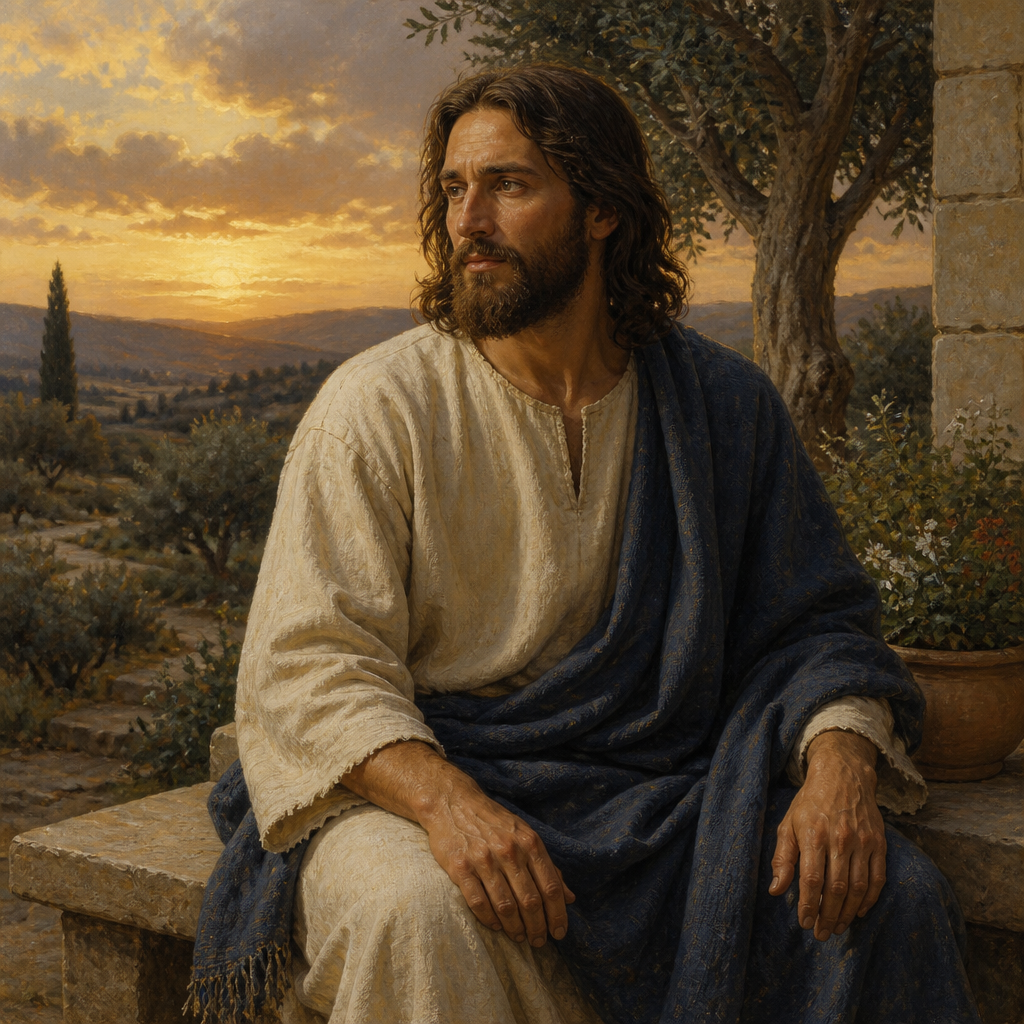
Jesus
The narrator of his story
Categories
Mentions by Book
- Luke13