Rufus, Son of Simon of Cyrene
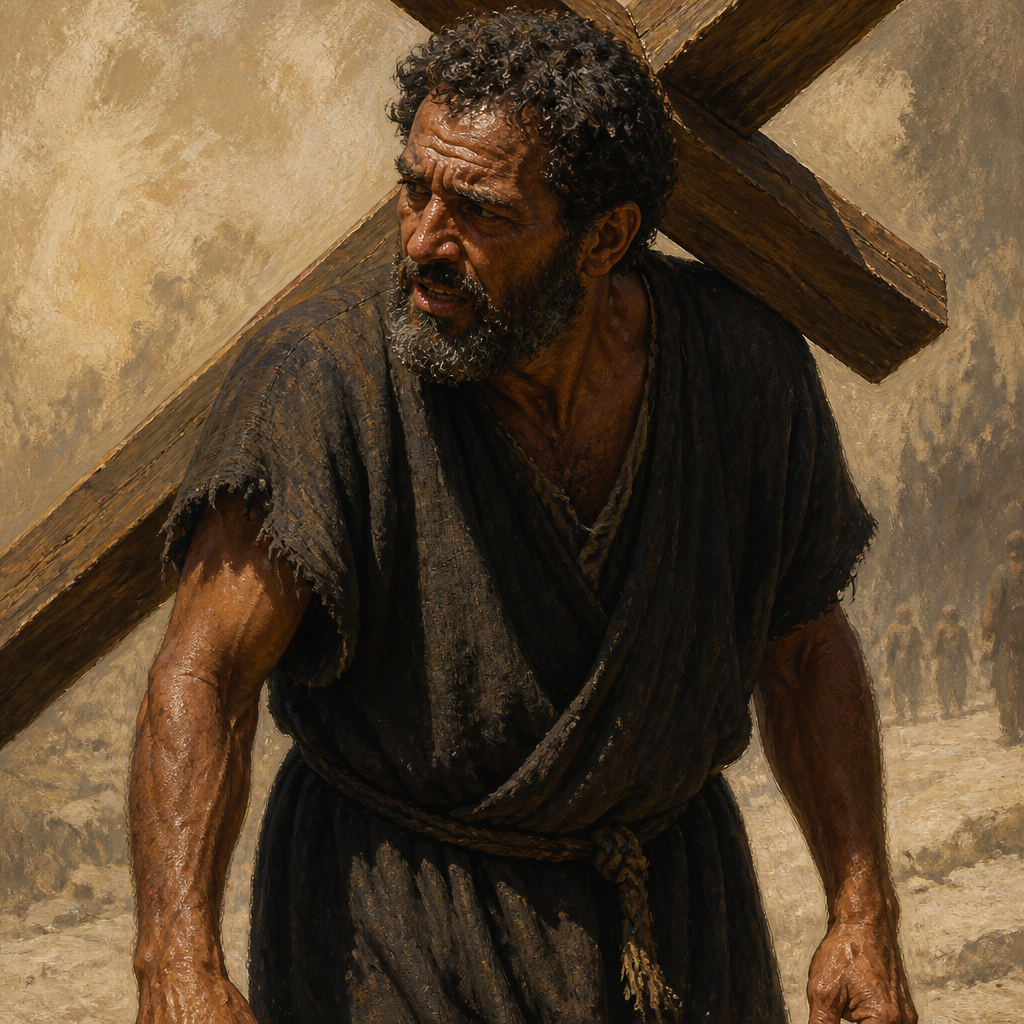
Rufus was the son of Simon of Cyrene, the man famously conscripted by Roman soldiers to carry the cross of Jesus Christ during the procession to Golgotha.
Rufus is a figure mentioned in the Gospel of Mark within the context of the Passion of Jesus. He is identified specifically as the son of Simon of Cyrene and the brother of Alexander. His inclusion in the narrative serves as a vital historical and genealogical marker for the early Christian community, particularly those to whom the Gospel of Mark was originally addressed.
While Rufus himself does not participate in the dialogue of the New Testament, his presence in the text is significant. He represents the immediate family of a man who played a literal, physical role in the final hours of Jesus' life. The brief mention in Mark 15:21 suggests that Rufus was a person known to the readers of the Gospel, likely a member of the early church in Rome during the 1st century AD.
Background and Family
Rufus is identified in the New Testament solely through his relationship to his father, Simon of Cyrene. The text in Mark 15:21 specifies that Simon was "the father of Alexander and Rufus." The mention of Cyrene indicates a North African heritage, as Cyrene (modern-day Libya) was a prominent Greek city with a significant Jewish population.
As the son of a man coming "in from the country" during the Passover festival, Rufus was part of a family that had traveled to Jerusalem for the high holy days. While the text does not explicitly state Rufus’s age or location at the exact moment of the crucifixion, the phrasing suggests he and his brother Alexander were well-known figures to the audience for whom Mark was writing.
Major Life Events
The primary mention of Rufus occurs during the Way of the Cross. As Jesus was being led to His execution at Golgotha, he became physically unable to carry the horizontal beam (patibulum) of the cross. The Roman soldiers seized Simon of Cyrene and forced him into service.
Mark’s Gospel is unique in naming Simon’s children, Alexander and Rufus. This detail distinguishes Mark’s account from the Synoptic parallels in Matthew and Luke. Scholars generally agree that Mark included these names because the sons were active, recognizable members of the Christian community at the time of the Gospel's composition (c. 60–70 AD). Rufus, therefore, lived through the aftermath of the crucifixion and likely transitioned from a witness of his father's forced labor into a believer in the burgeoning Jesus movement.
Relationship to Other Biblical Figures
Rufus is explicitly linked to two other individuals: his father, Simon of Cyrene, and his brother, Alexander. There are no further details regarding his occupation, his marriage, or his specific actions within the Jerusalem or Roman church. His identity is entirely defined by his father’s unique encounter with Christ. Unlike many other figures in the Passion narrative who are defined by their office (like Pilate) or their discipleship (like Peter), Rufus is defined by his lineage and his family’s proximity to a central event in Christian history.
Spiritual Significance
The inclusion of Rufus in the biblical canon highlights the personal nature of the Gospel accounts. By naming the children of the man who carried the cross, the author provides a "living link" to the events of the Passion. For the early readers, Rufus was not a distant historical figure but a contemporary whose father had literally walked behind Jesus. This suggests that the impact of Simon's encounter with Jesus had a multi-generational effect, leading to the conversion and prominence of his sons within the faith. Rufus stands as a testament to the fact that the witnesses of the crucifixion were real people with families who continued to tell the story of the cross long after the event took place.
Spiritual Significance
The significance of Rufus lies in his role as a historical anchor. By naming Rufus and his brother Alexander, Mark provides his audience with verifiable witnesses to the crucifixion. The mention suggests that the family of Simon of Cyrene had become prominent members of the early church, transforming a moment of Roman compulsion into a legacy of faith.
Furthermore, Rufus represents the international reach of the early church. Coming from a Cyrenian background, his presence in the Gospel narrative underscores that the message of Christ was already being embraced by Jews of the Diaspora and their families shortly after the resurrection.
Frequently Asked Questions
Who was Rufus's father?
Rufus was the son of Simon of Cyrene, the man forced by Roman soldiers to carry the cross of Jesus.
Does Rufus speak in the Bible?
No, Rufus does not have any recorded dialogue in the Bible. He is mentioned only as a point of reference to identify his father.
In which book of the Bible is this Rufus mentioned?
This Rufus is mentioned exclusively in the Gospel of Mark (Mark 15:21).
Who was Rufus's brother?
Rufus had a brother named Alexander, who is also mentioned in Mark 15:21.
Connected Figures
Categories
Mentions by Book
- Mark1
Family & Relationships
Sibling
Alexander, Son of Simon of Cyrene
Mark 15:21
Sibling
Alexander, Son of Simon of Cyrene
Mark 15:21
Parent
Matthew 27:32
Others Named Rufus
Rufus, Member of the Roman ChurchRomans 16:13
A prominent Christian in the early Roman church whom the Apostle Paul described as 'chosen in the Lord.'