Alexander, Son of Simon of Cyrene
The son of Simon of Cyrene and brother of Rufus, mentioned in the Gospel of Mark as a relative of the man forced to carry the cross of Jesus.
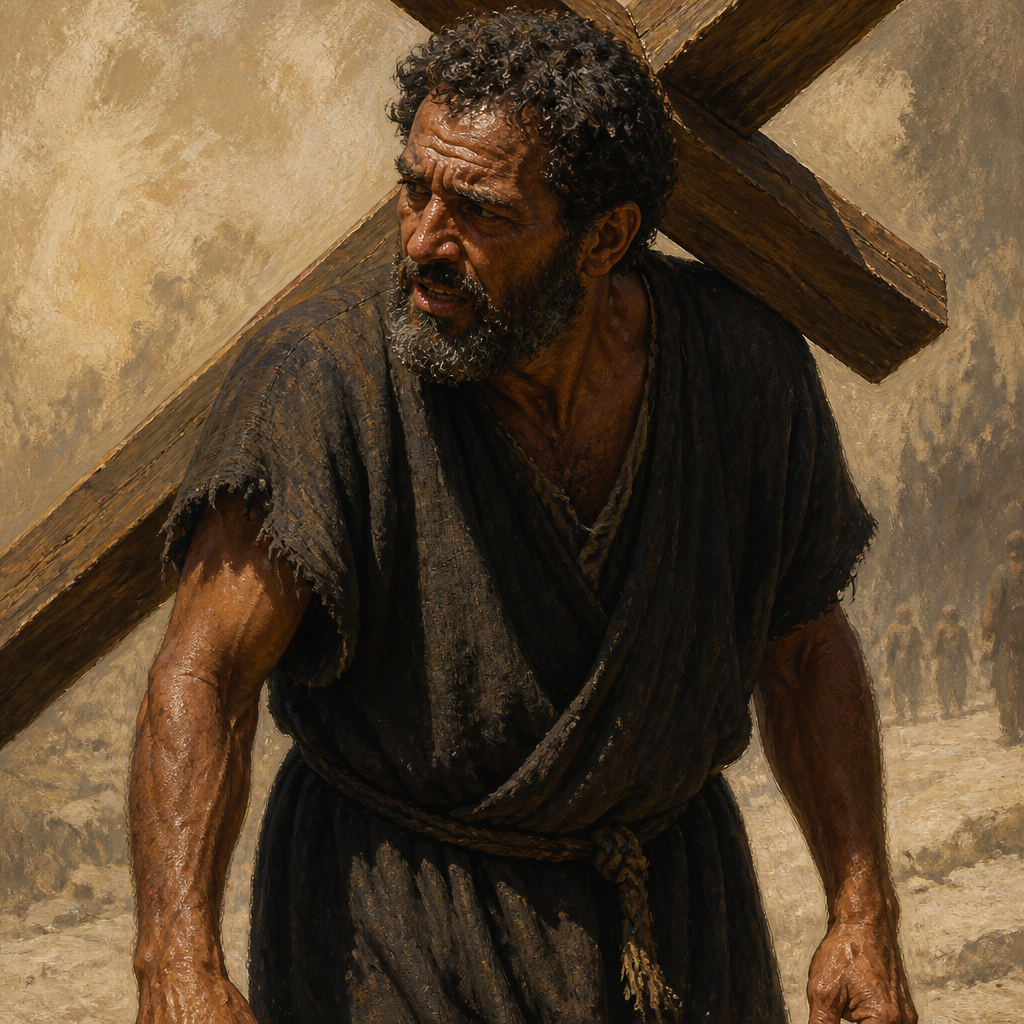
Alexander is a figure briefly identified in the New Testament within the context of the Passion of Jesus. He is specifically noted as one of the sons of Simon of Cyrene, the man who was compelled by Roman soldiers to carry the cross of Christ toward Golgotha. The mention of Alexander occurs only in the Gospel of Mark, which suggests he was a person known to the early Christian community for whom Mark wrote.
While the biblical record provides no details regarding Alexander's specific actions, his inclusion serves as a vital historical and personal link between the events of the crucifixion and the first-century church. By naming Alexander and his brother Rufus, the Gospel writer appeals to living witnesses who could verify the testimony of their father’s encounter with Jesus.
Background and Family
Alexander appears in the biblical narrative during the final hours of the life of Jesus. According to the account in Mark 15:21, his father, Simon of Cyrene, was "passing by on his way in from the country" when he was seized by Roman soldiers to assist in the crucifixion. Alexander is identified alongside his brother, Rufus, as a son of this Cyrenian man.
Cyrene was a Greek city in North Africa (modern-day Libya) with a significant Jewish population. The fact that Alexander is named implies that, by the time the Gospel of Mark was composed and circulated, Alexander and Rufus were likely recognizable members of the early Christian movement. Scholars often suggest that while Simon was the one physically present at the crucifixion, his sons became the enduring legacy of that event within the church.
Major Life Events
The biblical record for Alexander is limited to a single specific event: the trial and execution of Jesus. He is not described as being present at the scene, but his identity is used to anchor the historical reality of the event.
Now Simon of Cyrene, the father of Alexander and Rufus, was passing by on his way in from the country, and the soldiers forced him to carry the cross of Jesus. (Mark 15:21)
This specific identification is unique to Mark’s Gospel. While Matthew and Luke also mention Simon of Cyrene, they omit the names of his children. This omission suggests that Alexander held a particular status or familiarity within the specific community (traditionally thought to be Rome) that first received Mark’s writing.
Relationship to Other Biblical Figures
Alexander’s primary relationship in the text is to his father, Simon, and his brother, Rufus. Some biblical scholars have attempted to identify his brother Rufus with the Rufus mentioned by the Apostle Paul in Romans 16:13, though the text of Mark does not explicitly confirm this connection. If this link is accurate, it would place Alexander in a prominent family within the early Roman church. Aside from these familial ties, Alexander’s significance is defined entirely by his father's forced service to Jesus Christ during the walk to Calvary.
Spiritual Significance
The theological significance of Alexander lies in the transition from an accidental encounter to a generational faith. Simon of Cyrene’s encounter with Jesus was involuntary; however, the naming of Alexander suggests that this moment led to the conversion and active participation of his family in the Gospel mission. Alexander serves as a testament to the way the events of the Passion impacted not only the direct witnesses but their immediate descendants, establishing a living link between the historical Jesus and the growing body of believers in the mid-first century AD.
Spiritual Significance
Alexander serves as a historical anchor in the Gospel narrative. By naming him, the author of Mark provides a 'pointer' to a contemporary witness who could vouch for the details of the crucifixion. His inclusion suggests that the family of Simon of Cyrene became active participants in the early church, demonstrating the reach of the Gospel from an accidental encounter in Jerusalem to the wider Mediterranean world.
Frequently Asked Questions
Where is Alexander mentioned in the Bible?
Who was Alexander's father?
Did Alexander have any siblings?
Was Alexander present at the crucifixion?
Why is Alexander mentioned by name if he doesn't speak?
Connected Figures

Categories
Mentions by Book
- Mark1
Family & Relationships
Sibling
Mark 15:21
Sibling
Mark 15:21
Parent
Matthew 27:32
Others Named Alexander
AlexanderActs 4:6
A member of the high-priestly family in Jerusalem and a relative of Annas and Caiaphas who participated in the trial of the apostles Peter and John.
AlexanderActs 19:33
A Jewish spokesman in Ephesus who attempted to defend the Jewish community during the riotous demonstrations against the Apostle Paul and his companions.