Herod, Persecutor of the Early Church
A grandson of Herod the Great who executed the apostle James and imprisoned Peter in an effort to suppress the early Christian movement in Judea.
Herod, often identified by historians as Herod Agrippa I, was a prominent ruler during the mid-first century AD whose brief but violent interaction with the Jerusalem church is recorded in the Book of Acts. As a king with significant ties to the Roman administration, he sought to solidify his political standing among the Judean leadership by actively persecuting the followers of Jesus Christ. His reign was characterized by an attempt to maintain traditional Jewish favor while exercising absolute royal authority.
His role in the biblical narrative is defined by his sudden and aggressive campaign against the apostles. Unlike previous administrative tensions, Herod’s actions were targeted at the leadership of the church, resulting in the first apostolic martyrdom. His life ended abruptly in Caesarea following a public display of hubris, an event the biblical text attributes to divine judgment.
Background and Family
The Herod appearing in the Book of Acts during the era of the Early Church was a member of the Herodian dynasty, a family of Idumaean descent that ruled Judea under Roman oversight. The biblical record notes his familial ties, identifying him as the parent of Agrippa (historically Agrippa II) and the sibling of Herodias. His lineage placed him in a unique position of power, bridging the gap between the Roman imperial court and the religious sensitivities of the Judean people. Though his family was of Canaanite/Idumaean extraction, he presented himself as a champion of Jewish traditions to secure his domestic influence.
Major Life Events
Persecution of the Apostles
Around 44 AD, Herod began a targeted campaign to "harm some who belonged to the church" (Acts 12:1). This was not a general persecution of all Christians but a strategic strike against its pillars. He successfully executed James, the brother of John, with the sword. Seeing that this execution pleased the Judean leadership, Herod proceeded to arrest Simon Peter during the Feast of Unleavened Bread.
The Imprisonment and Escape of Peter
Herod took extreme precautions to ensure Peter did not escape, placing him under the guard of four squads of four soldiers each. Peter was bound with two chains and slept between two soldiers. Herod intended to bring him to public trial after the Passover to further his political standing. However, the biblical narrative records a miraculous intervention where an angel rescued Peter from "Herod’s grasp" (Acts 12:11). When Herod discovered the escape, he conducted a futile search, cross-examined the guards, and summarily ordered their execution before departing for Caesarea.
The Dispute with Tyre and Sidon
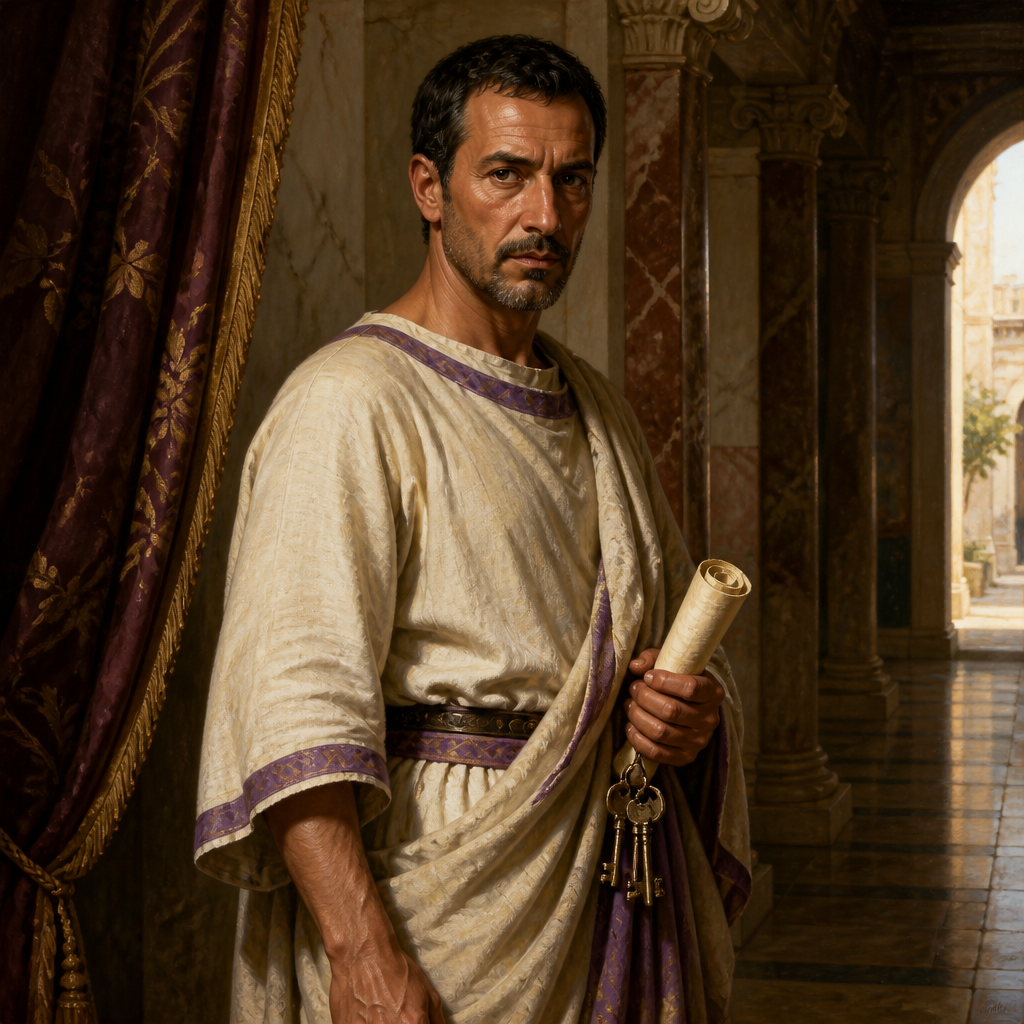
While residing in Caesarea, Herod became embroiled in a diplomatic conflict with the coastal cities of Tyre and Sidon. The inhabitants of these regions, fearing a cutoff of vital food supplies from the king’s territories, sought a peaceful resolution. They gained the favor of Blastus, the king’s chamberlain, to secure an audience with Herod. This geopolitical tension serves as the backdrop for Herod’s final public appearance.
Death at Caesarea
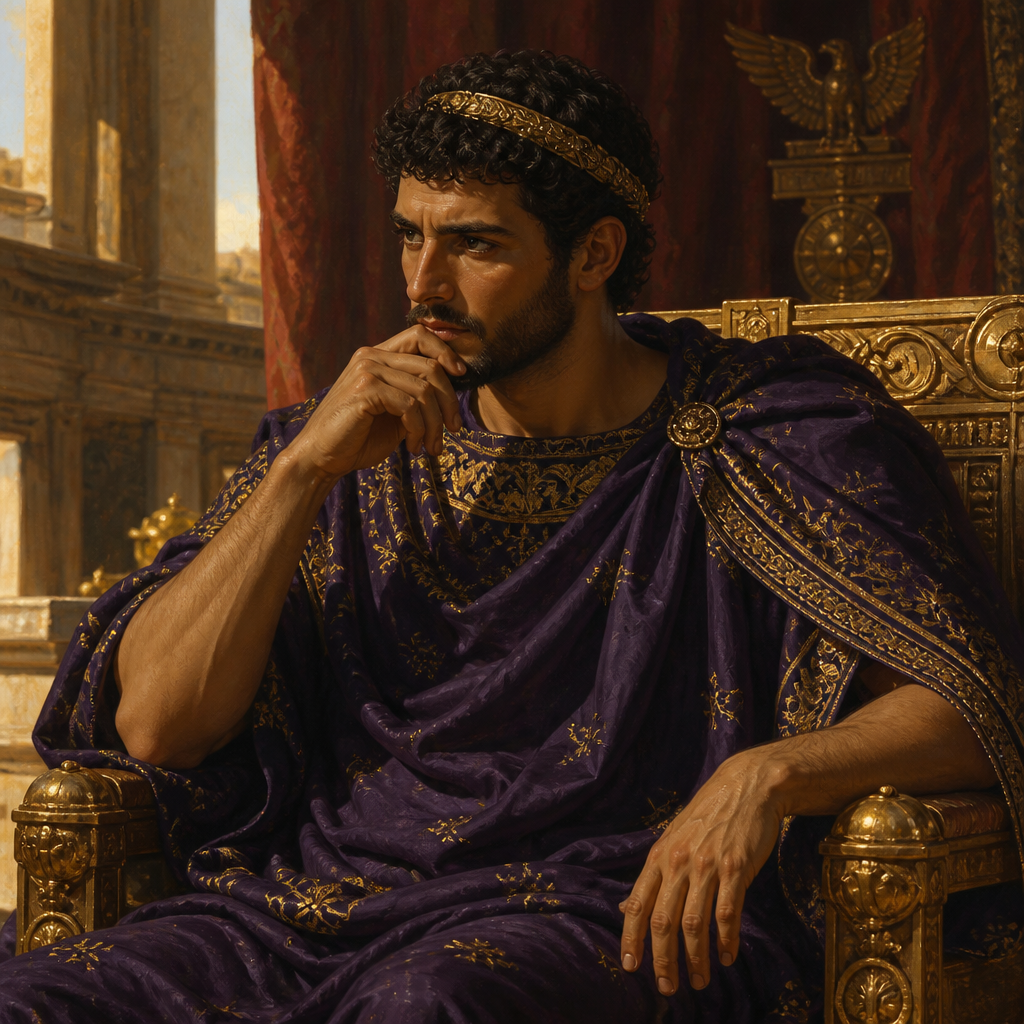
The account of Herod’s life concludes in Acts 12:21-23. On an appointed day, Herod donned his royal apparel and sat upon his throne to deliver a formal address to the people. The assembly, seeking to flatter him, shouted, "This is the voice of a god, not of a man!" The biblical text records that because Herod did not give praise to God but accepted this divine adulation, he was immediately struck down. The account specifies he was "eaten by worms and died."
Relationship to Other Biblical Figures
Herod’s primary interactions in the New Testament are adversarial. His relationship with the Apostle Peter was one of captor and intended executioner, while his relationship with James was that of a judge and executioner. Domestically, he is linked to his son Agrippa and his sister Herodias. His administrative interactions included his chamberlain, Blastus, who acted as a mediator between the king and the regional representatives of Tyre and Sidon.
Spiritual Significance
In the context of the Early Church, Herod represents the height of worldly opposition to the gospel. His actions demonstrate the vulnerability of the early believers to state-sanctioned violence, yet his failure to contain Peter serves as a narrative proof of divine sovereignty over political power. His death functions as a cautionary tale regarding pride and the usurpation of divine glory. The contrast between his royal robes and his ignominious end highlights the biblical theme that God opposes the proud but gives grace to the humble. Despite Herod's attempts to destroy the church, the passage concludes with the note that "the word of God continued to spread and flourish" (Acts 12:24).
Spiritual Significance
Herod’s significance lies in his role as the first state-level persecutor to execute one of the Twelve Apostles (James). His narrative in Acts 12 serves to demonstrate that while the church may suffer under political tyranny, the ultimate authority rests with God rather than earthly monarchs. His miraculous failure to execute Peter and his sudden death in Caesarea are portrayed as direct divine interventions to protect the nascent Christian movement.
Theologically, Herod embodies the 'Anti-Christ' archetype in the sense of a ruler who accepts worship due only to God. His end provides a stark literary and moral contrast to the growing success of the apostles' mission, emphasizing that no political force can successfully halt the spread of the gospel when empowered by the Holy Spirit.
Frequently Asked Questions
Which apostle did Herod execute?
Herod executed James, the brother of John, with the sword, making him the first of the twelve apostles to be martyred.
How did Herod die according to the Bible?
According to Acts 12:23, Herod was struck down by an angel of the Lord because he did not give praise to God when the people called him a god; he was subsequently eaten by worms and died.
Why did Herod arrest Peter?
Herod arrested Peter because he saw that the execution of James had pleased the Jewish leadership, and he intended to use Peter’s trial to further increase his political popularity.
What was Herod's relationship with Tyre and Sidon?
Herod was in a 'furious dispute' with the people of Tyre and Sidon, who eventually sought peace with him because their region depended on Herod's lands for their food supply.
Who was Blastus in relation to Herod?
Blastus was Herod’s personal chamberlain. The people of Tyre and Sidon bribed or persuaded him to help them gain an audience with the king to ask for peace.
Connected Figures

Peter
Prisoner he intended to execute
James, son of Zebedee
Apostle he executed
Blastus
Royal chamberlain
Agrippa
Son
Herodias
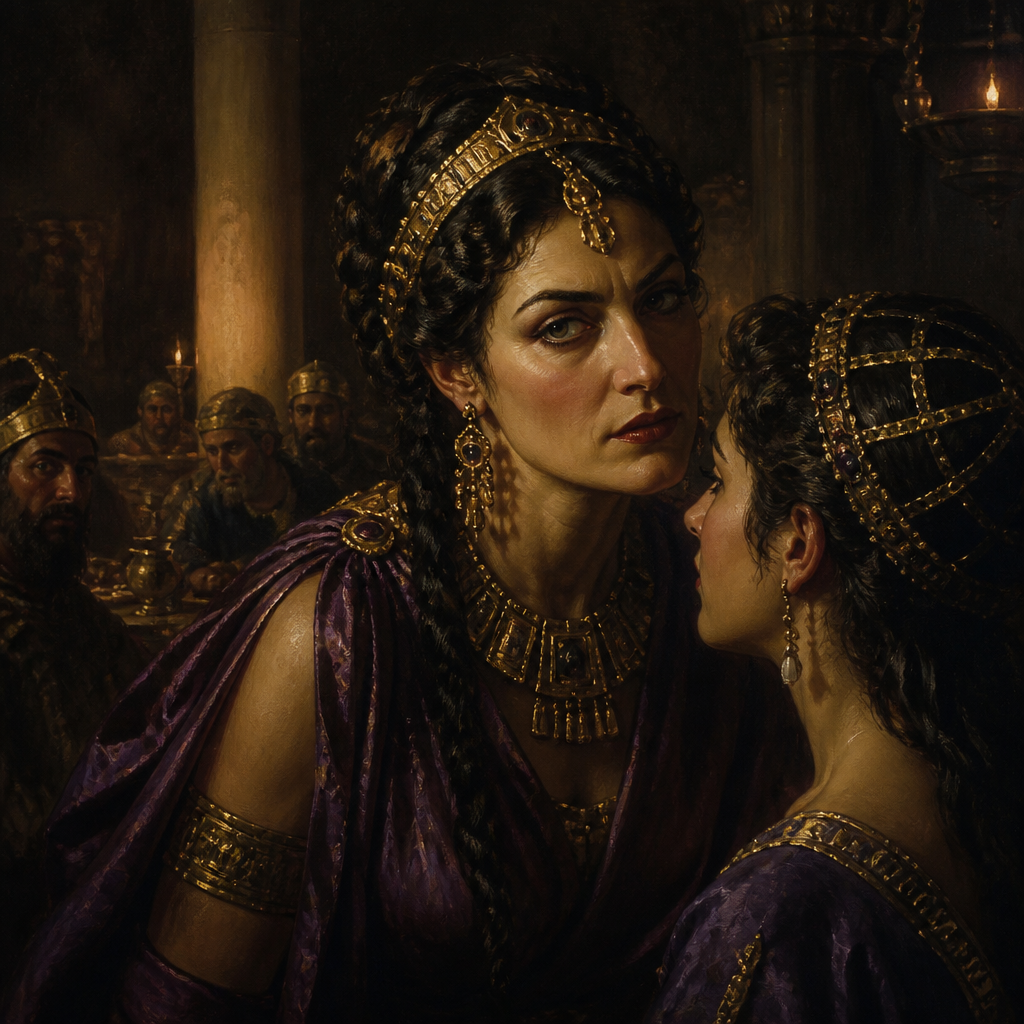
Sister
Categories
Mentions by Book
- Acts6
Family & Relationships
Others Named Herod
Herod the TetrarchMatthew 14:1
The regional ruler of Galilee and Perea who beheaded John the Baptist and participated in the trial of Jesus Christ.
Herod, King of JudeaMatthew 2:1
The Roman-appointed King of Judea who sought to kill the infant Jesus and ordered the Massacre of the Innocents in Bethlehem.