Blastus
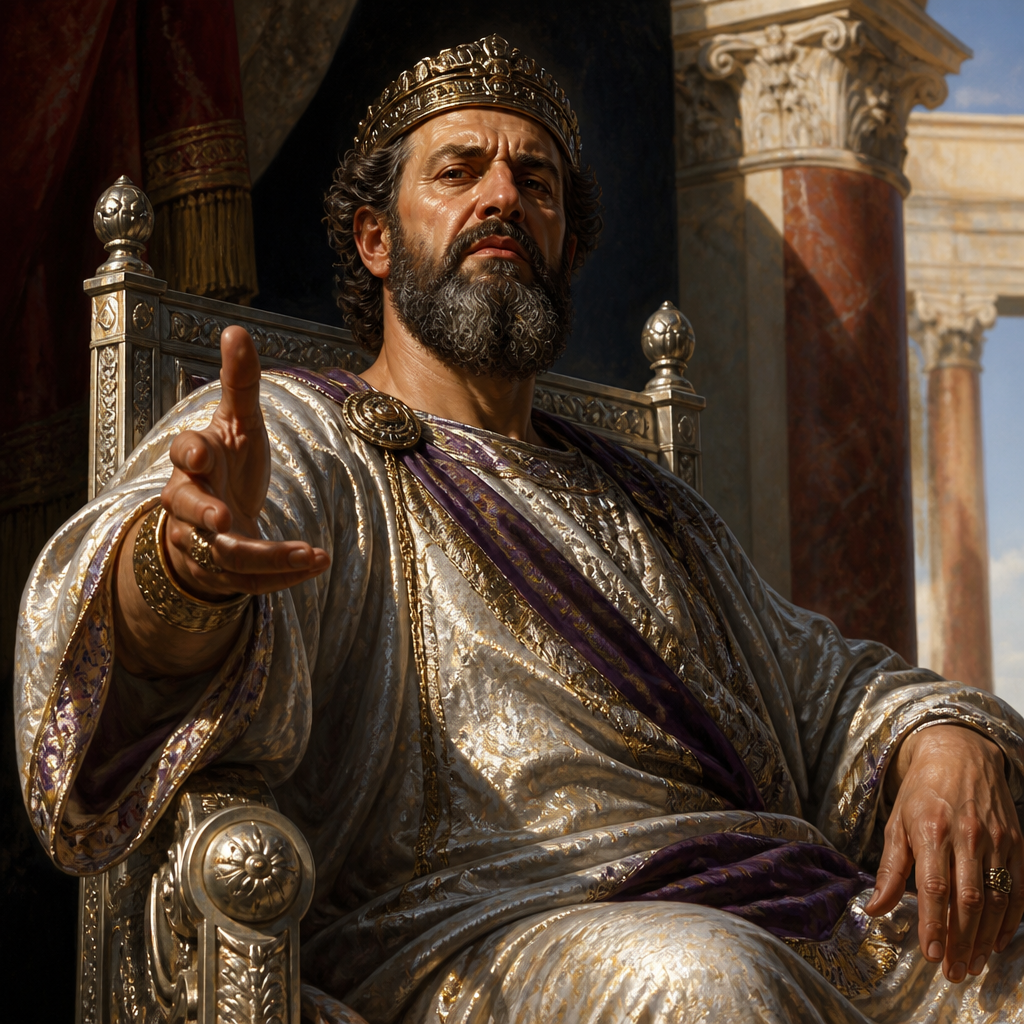
Blastus was a royal chamberlain and trusted official to King Herod Agrippa I during the first century AD.
Blastus is a minor figure appearing briefly in the New Testament within the Book of Acts. As a personal aide or chamberlain to King Herod Agrippa I, he held a position of significant influence within the Herodian court. His role involved managing the king's private affairs and controlling access to the monarch, making him a critical intermediary for diplomatic relations.
His historical footprint is confined to a single verse in Acts 12:20, where he is central to a political dispute between Herod and the coastal cities of Tyre and Sidon. While his personal background is not detailed in the biblical text, his presence underscores the administrative structure of the Judean client-kingdom under Roman oversight in the mid-1st century AD.
Background and Family
The Bible provides no specific information regarding the lineage, tribe, or family of Blastus. The name itself is Greek (Blastos), meaning "sprout" or "bud," which was a common name in the Greco-Roman world. Given his position as a chamberlain (epi tou koitōnos) to Herod Agrippa I, it is likely he was a man of high standing, possibly a freedman or a member of the upper social strata, though the text remains silent on his origins.
The Role of Chamberlain
In the context of the Herodian court, a chamberlain served as the superintendent of the king's bedchamber. This was far more than a domestic role; it was a position of extreme trust. The chamberlain often acted as a gatekeeper, determining who could secure an audience with the king. In a political system defined by personal access to power, Blastus would have been one of the most strategically important figures for anyone seeking the king’s favor.
Major Life Events
The only recorded event involving Blastus occurs during a period of high tension between Herod Agrippa I and the Phoenician cities of Tyre and Sidon. For reasons the author of Acts does not specify, Herod was in a "furious dispute" with these maritime centers. Because Tyre and Sidon were commercial hubs that relied heavily on the agricultural regions controlled by Herod for their food supply, the dispute threatened their survival.
Now Herod was in a furious dispute with the people of Tyre and Sidon, and they convened before him. Having secured the support of Blastus, the king’s chamberlain, they asked for peace, because their region depended on the king’s country for food. (Acts 12:20)
The diplomats from these cities recognized that to appease Herod, they first needed to win over his most trusted official. By "securing the support" of Blastus—a phrase that in the original Greek suggests they either persuaded him or, quite possibly, bribed him—they were able to facilitate a meeting to sue for peace.
Relationship to Other Biblical Figures
Blastus’s primary relationship is with Herod Agrippa I. He appears as a loyal functionary of the king shortly before Herod’s sudden death in Caesarea. While the text mentions his interaction with the envoys from Tyre and Sidon, no specific names are given for those individuals. He is not recorded as having any interaction with the Apostles or the members of the Early Church, though his actions facilitated the public event at which Herod was struck down (Acts 12:21–23).
Spiritual Significance
Though Blastus is a peripheral figure, his mention in the Book of Acts serves a historical and narrative purpose. He illustrates the political environment in which the Early Church operated—a world of court intrigue, diplomatic bribery, and absolute monarchs. His involvement highlights the earthly power structures that stood in contrast to the growing movement of the Gospel. Furthermore, his success in bringing the parties together set the stage for Herod’s final act of pride, where the king accepted divine honors and was subsequently judged by God. Blastus stands as a representative of the secular systems that regulated life in the 1st-century Roman East.
Spiritual Significance
Blastus serves as a historical marker for the political climate of the mid-1st century AD. His role as an intermediary demonstrates the necessity of navigating royal bureaucracies for the survival of neighboring regions like Tyre and Sidon. Theologically, he is a neutral figure whose administrative actions inadvertently set the stage for the narrative of Herod Agrippa I’s hubris and subsequent death.
His inclusion in Luke’s account in Acts lends historical authenticity to the text, as it correctly identifies the office of chamberlain and the economic dependence of Phoenician cities on Judean grain, a detail corroborated by external historical sources of the era.
Frequently Asked Questions
What was the job of a chamberlain in the Bible?
A chamberlain was a high-ranking official in charge of a monarch's private living quarters. They were highly trusted and often controlled access to the king, making them powerful political intermediaries.
Was Blastus a Christian?
There is no evidence in the Bible to suggest Blastus was a Christian. He is presented strictly as a secular official in the service of King Herod Agrippa I.
Why did the people of Tyre and Sidon need Blastus?
They needed him because King Herod was angry with them and had the power to cut off their food supply. By gaining Blastus's support, they secured a chance to negotiate for peace.
How did Blastus help the people of Tyre and Sidon?
He used his influence and proximity to King Herod to facilitate a diplomatic meeting where the cities could ask for peace and restoration of trade.
Connected Figures
Categories
Mentions by Book
- Acts1