Sceva
A Jewish chief priest in Ephesus during the first century AD whose seven sons were known for attempting to exorcise demons using the name of Jesus.
Sceva was a Jewish figure residing in Ephesus during the mid-first century AD, identified in the Book of Acts as a 'chief priest.' While his specific lineage and historical verification outside the Lucan narrative are limited, he is central to the account of the early church’s expansion into Asia Minor. His significance in the biblical record is tied entirely to the activities of his seven sons, who practiced itinerant exorcism.
As a member of the Tribe of Levi, Sceva held a position of religious authority, though the title 'chief priest' in a diaspora city like Ephesus suggests he may have been a member of a high-priestly family or a leader among the local Jewish hierarchy. His presence in Ephesus highlights the intersection of Jewish tradition and the burgeoning Christian movement during the ministry of the Apostle Paul.
Background and Family
Sceva is introduced in the Book of Acts as a "Jewish chief priest" (Acts 19:14). Given the setting in Ephesus, a major Roman center in Asia Minor, Sceva’s role likely involved overseeing Jewish religious affairs or representing the local community. The text identifies him as a Levite, belonging to the traditional priestly class of Israel. He is primarily defined by his progeny; the biblical record focuses on his seven sons who operated as itinerant exorcists. This family tradition suggests a household deeply immersed in the spiritual and ritualistic practices of the era, attempting to navigate the complex religious landscape of Ephesus, which was then a stronghold for the worship of Artemis and various occult practices.
Major Life Events
The biblical record does not detail Sceva’s personal actions, but rather his identity as the father of seven sons who encountered the power of the Gospel. During the Apostle Paul’s two-year ministry in Ephesus, extraordinary miracles were being performed in the name of Jesus. Sceva’s sons attempted to co-opt this power by invoking the name of "the Jesus whom Paul preaches" to cast out evil spirits. Their attempt failed spectacularly when a demon-possessed man retorted, "Jesus I know, and Paul I know; but who are you?" before violently overpowering them. This event led to the public glorification of Jesus' name and a widespread renunciation of sorcery in the city.
Relationship to Other Biblical Figures
Sceva’s life is tethered to the ministry of the Apostle Paul, though there is no record of a direct meeting between the two. His sons served as a foil to Paul’s authentic apostolic authority. While Paul performed genuine miracles through the Holy Spirit, Sceva’s sons represented an attempt to use the name of Christ as a magical formula without personal faith or divine commission. This distinction served to validate Paul’s message among both the Jews and Greeks living in Ephesus.
Spiritual Significance
The account of Sceva and his family serves as a cautionary narrative regarding the nature of spiritual authority. It emphasizes that the power associated with the name of Jesus is not a mechanical tool or a ritualistic incantation available for secular or commercial use. The failure of Sceva’s sons demonstrated that spiritual efficacy is rooted in a relationship with God rather than inherited religious titles or the mere imitation of apostolic methods. Consequently, Sceva remains a representative of the formal religious establishment that witnessed the power of the early church but lacked the spiritual foundation to participate in it.
Spiritual Significance
Sceva’s significance lies in his role as a representative of the Jewish priestly class during the transition to the New Covenant era. His presence in the narrative highlights the distinction between ritualistic religion and the dynamic power of the Holy Spirit. The failure of his sons provided a pivotal moment in Ephesus, leading many to burn their magic scrolls and turn toward the Christian faith.
Furthermore, the mention of Sceva as a 'chief priest' provides historical context for the Jewish diaspora. It illustrates how members of the Tribe of Levi maintained their identity and titles while living in major Hellenistic cities, even as they encountered the radical claims of the early Christian apostles.
Frequently Asked Questions
Was Sceva a High Priest in Jerusalem?
The Bible calls him a 'chief priest,' but there is no record of a man named Sceva serving as the High Priest in Jerusalem. He likely belonged to a high-priestly family or held a senior role in the Ephesian synagogue.
What tribe did Sceva belong to?
Sceva was of the Tribe of Levi, which was the tribe designated for priestly service in Israel.
How many sons did Sceva have?
According to Acts 19:14, Sceva had seven sons.
Where did Sceva live?
The biblical account places Sceva and his family in Ephesus, a prominent city in the Roman province of Asia.
Connected Figures
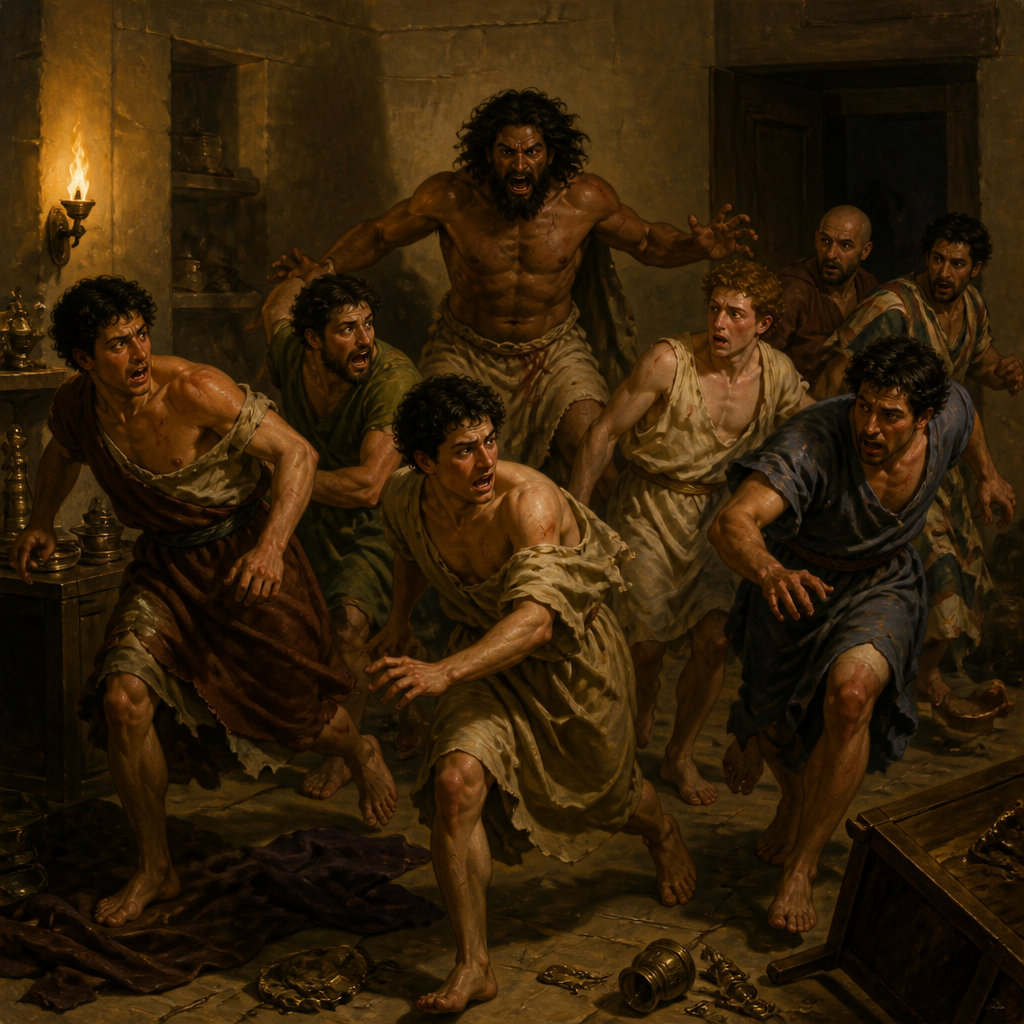
The Seven Sons of Sceva
Sons
Paul the Apostle
Contemporary whose ministry they imitated
Categories
Mentions by Book
- Acts1