
Craftsmen and merchants in the biblical world whose work supported both religious life and significant economic opposition to the gospel.
The biblical record of metalworkers consists of various individuals whose craftsmanship in gold, silver, and bronze shaped both the religious infrastructure of Israel and the economic landscape of the early church. These figures appear across different eras, ranging from the construction of the wilderness tabernacle to the urban conflicts of the first century. The text identifies these men by their specific skills and their contributions to the physical artifacts of worship or commerce.
In the book of Exodus, the text identifies Bezalel as a craftsman filled with the spirit of God to work in gold, silver, and bronze (Exodus 31:1–4). He is joined by Oholiab, who is described as an engraver and a designer (Exodus 38:23). During the monarchic period, the text records that Huram of Tyre was a man skilled in bronze work who traveled to Jerusalem to cast the two great pillars and the bronze sea for the temple (1 Kings 7:13–14). Later, during the restoration of Jerusalem, the text notes that Uzziel and other goldsmiths participated in repairing the city walls (Nehemiah 3:8). In the New Testament, the text identifies Demetrius the Silversmith as a man who made silver shrines of Artemis and organized a trade protest (Acts 19:24). Finally, the text mentions Alexander the Coppersmith, who is noted for the harm he did to the apostolic mission (2 Timothy 4:14).
The organization of these figures in the biblical narrative often highlights the intersection of manual labor and spiritual service. The text does not say how many total workers were employed in these projects, but it emphasizes that their skills were essential for creating the mercy seat, the lampstands, and the ceremonial vessels required by the law (Exodus 37:17–24). The preservation of these names serves to document the physical construction of the sanctuary and the economic realities faced by early Christians.
These metalworkers represent the material dimension of biblical history, where theological concepts were translated into physical objects. The work of Bezalel and Oholiab established the visual center of Israelite worship, while the actions of Demetrius the Silversmith illustrated the tension between local industry and the spread of new religious teachings. By recording these names, the text anchors its narrative in the concrete realities of ancient craftsmanship and the specific individuals who managed the precious metals of their day.
Everyone in this list

Alexander the Coppersmith
Apostate who caused the Apostle Paul great harm and opposed the gospel
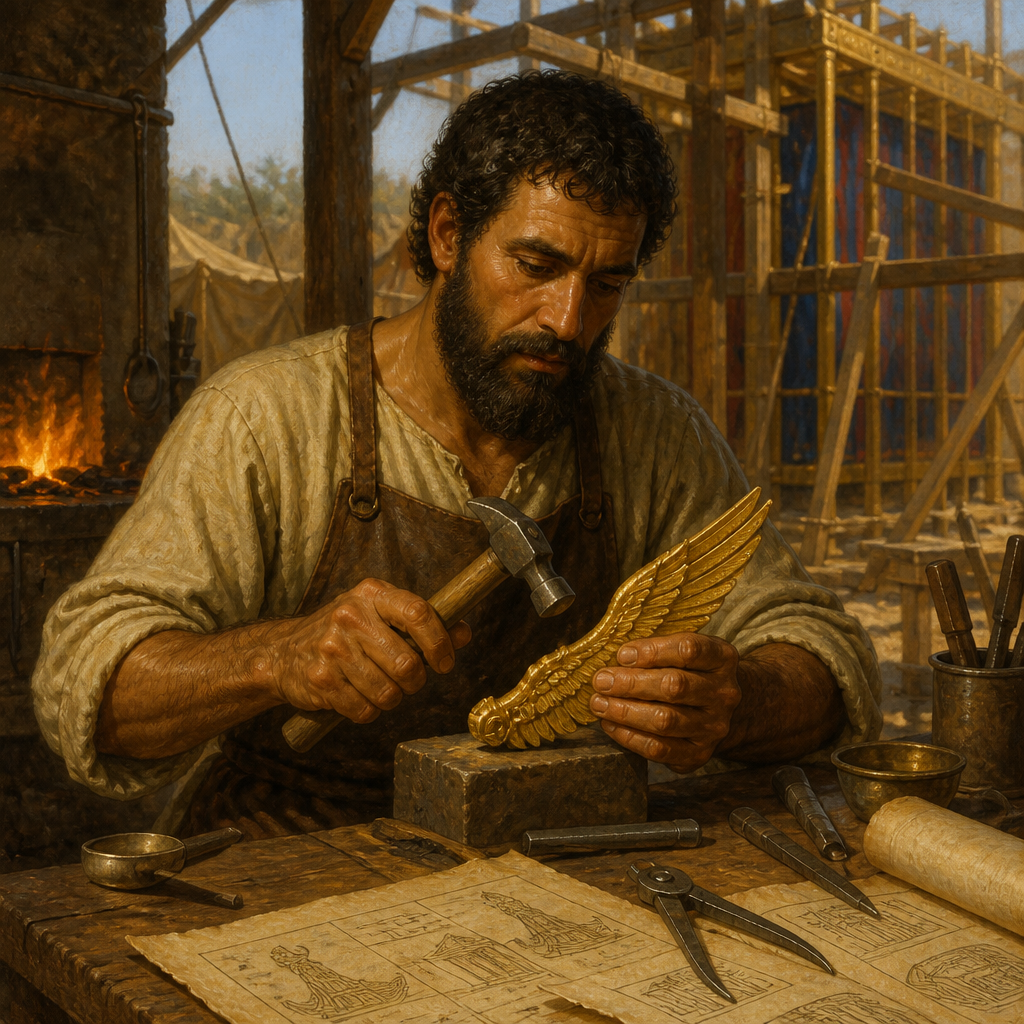
Bezalel, Artisan of the Tabernacle
Craftsman filled with the Spirit of God who built the Ark of the Covenant and the Tabernacle
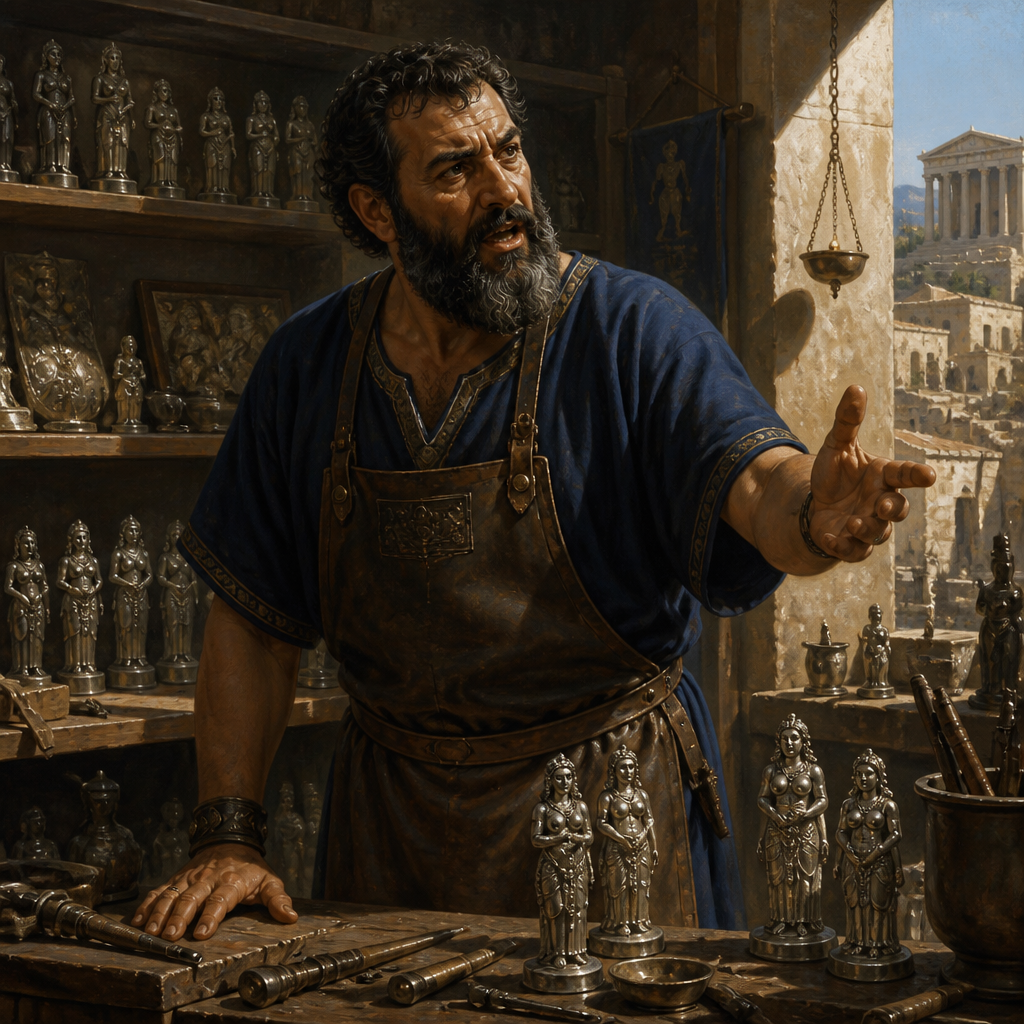
Demetrius the Silversmith
Craftsman who incited the Ephesian riot against Paul
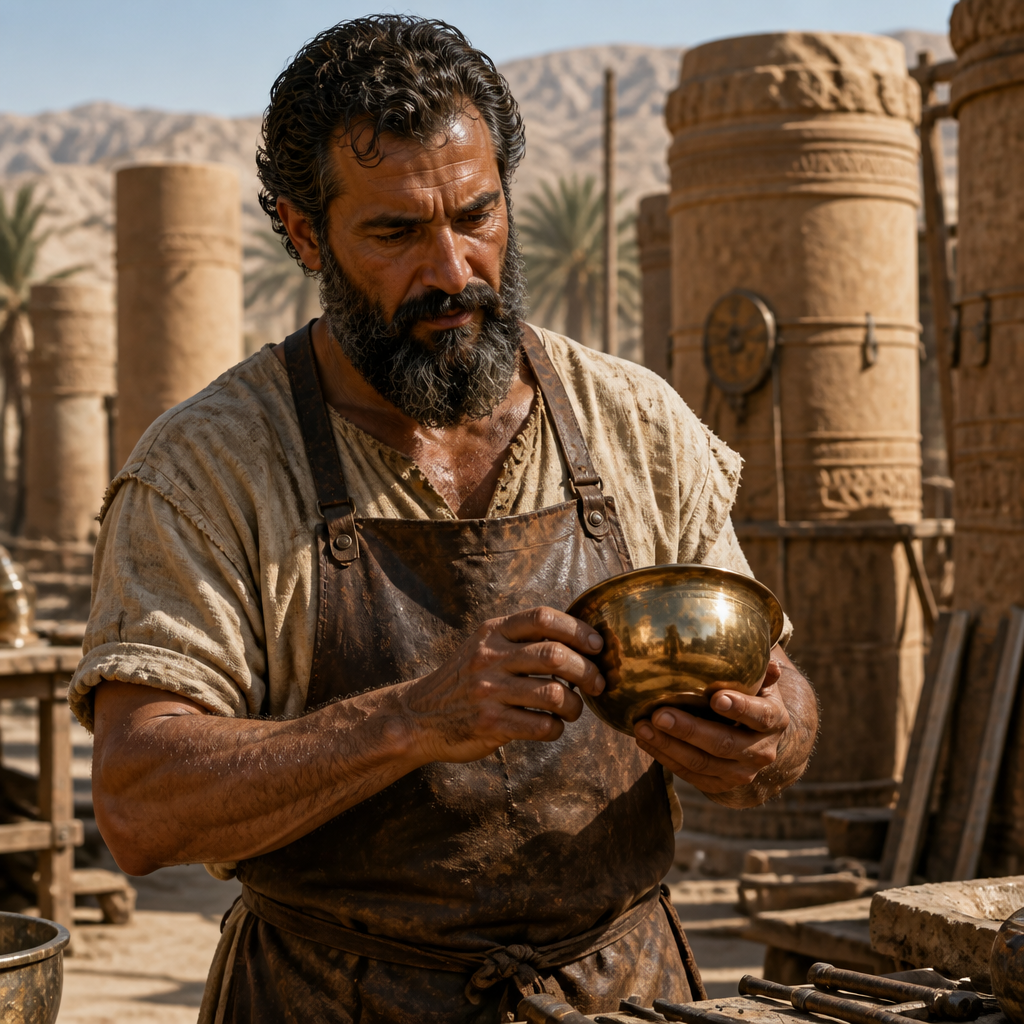
Huram, Artisan of the Temple
Master artisan who crafted the bronze pillars and vessels for Solomon's Temple
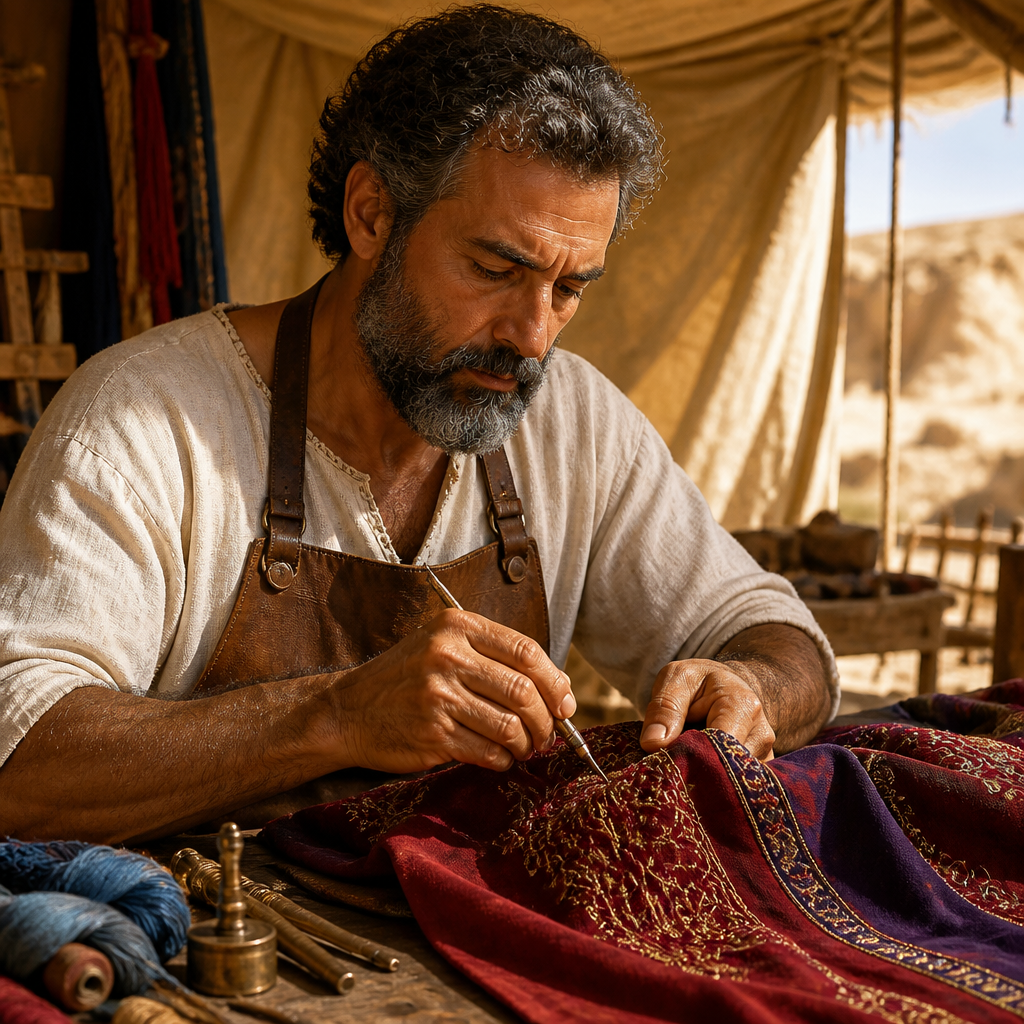
Oholiab
Artisan from the tribe of Dan who assisted Bezalel in constructing the Tabernacle