Toi
Who was Toi in the Bible?
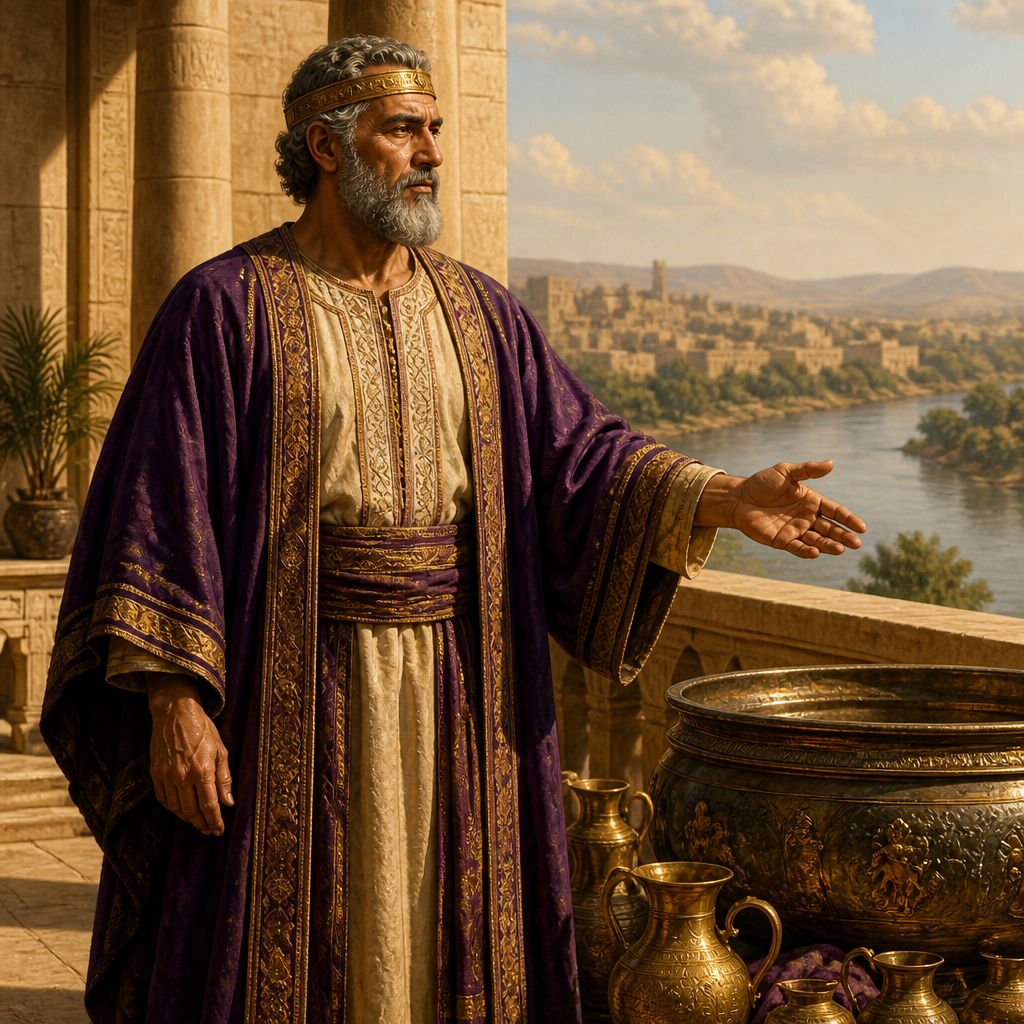
Toi (also spelled Tou) was the King of Hamath during the 10th century BC who established a diplomatic alliance with King David after the defeat of their mutual enemy, Hadadezer.
Toi was a Syrian monarch who reigned over the city-state of Hamath in northern Syria during the early 10th century BC. His reign coincided with the expansion of the United Monarchy of Israel under King David. Hamath was an important strategic and commercial hub located on the Orontes River, serving as a gateway between the Mediterranean coast and the interior of Mesopotamia.
Following David’s decisive military victories against the Aramean forces of Zobah, Toi sought to solidify his own regional standing by forming a tributary or allied relationship with Israel. By sending his son to David with lavish gifts, Toi secured his borders and acknowledged the rising hegemony of the Davidic dynasty in the Levant.
Background and Family
Toi appears in the biblical record as the King of Hamath, a kingdom located north of Damascus. In the parallel accounts of 2 Samuel 8 and 1 Chronicles 18, his name is rendered as both Toi and Tou. While the biblical text is concise regarding his personal lineage, it explicitly identifies him as the father of Joram (also referred to as Hadoram in the Chronicles account). The name of his son, Hadoram, may suggest a cultural connection to the Syrian storm god Hadad, though the biblical narrative focuses primarily on the political functions of this family rather than their religious practices.
Major Life Events
The primary event defining Toi’s biblical footprint is his response to the shifting balance of power in the ancient Near East. For an extended period, Toi had been engaged in a persistent state of war with Hadadezer, the son of Rehob and the king of Zobah. Hadadezer led a powerful Aramean confederation that threatened the autonomy of neighboring states like Hamath.
When King David of Israel launched a campaign against Zobah and successfully "defeated the entire army of Hadadezer" (2 Samuel 8:9), the geopolitical landscape changed instantly. Recognizing that the destruction of Zobah’s military might benefited Hamath, Toi acted quickly to establish peace with the victor. Rather than risk a conflict with the expanding Israelite state, Toi chose the path of diplomacy.
Toi dispatched his son, Joram, to the court of King David. The mission was two-fold: to offer a formal greeting and to "bless" (or congratulate) David for his victory over their mutual adversary. This diplomatic envoy was not merely symbolic; Joram arrived bearing significant wealth, including "articles of silver and gold and bronze" (2 Samuel 8:10). These gifts likely served as a tribute to ensure Hamath’s safety and to signal their status as a friendly neighbor to Israel.
Relationship to Other Biblical Figures
Toi’s relationship with King David was one of mutual benefit. While the text does not describe a personal meeting between the two monarchs, Toi’s proactive stance established a precedent for northern kingdoms seeking favor with Israel. By sending his son as an ambassador, Toi demonstrated a high level of trust and a pragmatic understanding of David’s growing influence.
Additionally, the gifts sent by Toi were not kept as personal spoils for David. The record notes that David dedicated these precious metals to the Lord, along with the silver and gold he had taken from other nations. Consequently, the wealth of Toi’s kingdom eventually contributed to the treasury that would fund the construction of the First Temple in Jerusalem.
Spiritual Significance
Though Toi is a minor figure, his inclusion in the record serves a specific theological and historical purpose. He represents the fulfillment of the promise that Israel would be a light to the nations and a dominant power in the promised land, to whom surrounding kings would bring tribute. The voluntary submission of a foreign king like Toi illustrates the international recognition of God’s favor upon the house of David. In the broader biblical narrative, Toi’s tribute serves as a precursor to the later accounts of the Queen of Sheba and other foreign rulers who would visit Jerusalem to acknowledge the wisdom and power granted to the Israelite monarchy by Yahweh.
Toi serves as a historical marker of the extent of King David’s influence, showing that even distant Syrian kingdoms recognized Israel's sovereignty. His tribute of gold, silver, and bronze is significant because it was dedicated to God by David, eventually providing materials for the construction of the Temple by Solomon.
His role also highlights the geopolitical shift in the Levant during the United Monarchy, where former regional powers like Hamath preferred to become allies of Israel rather than face its military. Toi’s pragmatism illustrates the biblical theme of the nations bringing their wealth to the throne of God's anointed king.
Frequently Asked Questions
What is the difference between Toi and Tou?
They are the same person. 'Toi' is the spelling used in 2 Samuel 8:9, while 'Tou' is the variant spelling used in 1 Chronicles 18:9. Such variations are common in the Hebrew Bible between the books of Samuel-Kings and Chronicles.
Who was Toi's son?
Toi's son is named Joram in 2 Samuel 8:10 and Hadoram in 1 Chronicles 18:10. He served as his father's ambassador to King David.
Why did Toi send gifts to King David?
Toi sent gifts to congratulate David for defeating their common enemy, Hadadezer of Zobah, and to establish a peaceful diplomatic alliance with the rising power of Israel.
Where was Toi's kingdom located?
Toi ruled the kingdom of Hamath, which was located in northern Syria on the Orontes River.
What happened to the gold and silver Toi sent to David?
King David dedicated the articles of silver, gold, and bronze to the Lord. They were added to the treasury of sacred items that were later used by Solomon for the Temple.
Family & Relationships
 ToiThis page
Children
 Joram, Son of ToiSon2 Samuel 8:10Stated
Connected Figures
Family
Son · 2 Samuel 8:10
Joram was the son of King Toi of Hamath who was sent as an ambassador to King David to offer tribute and congratulations following David's victory over the Arameans.
United MonarchyFirst: 2 Samuel 8:102 versesPrince and Ambassador
Categories
Mentions by Book
- 2 Samuel2
- 1 Chronicles1
Scripture References
All 3 indexed verses, in canonical order, from the Berean Standard Bible.
2 Samuel · 2
- 2 Samuel 8:9
When King Toi of Hamath heard that David had defeated the entire army of Hadadezer,
- 2 Samuel 8:10Partial
he sent his son Joram to greet King David and bless him for fighting and defeating Hadadezer, who had been at war with Toi. Joram brought with him articles of silver and gold and bronze,
1 Chronicles · 1
- 1 Chronicles 18:10Partial
he sent his son Hadoram to greet King David and bless him for fighting and defeating Hadadezer, who had been at war with Tou. Hadoram brought all kinds of articles of gold and silver and bronze,
Cited as a key verse; added so References, Key Verses and Mentions by Book share one index.