Joram, Son of Toi
Who was Joram, Son of Toi, in the Bible?
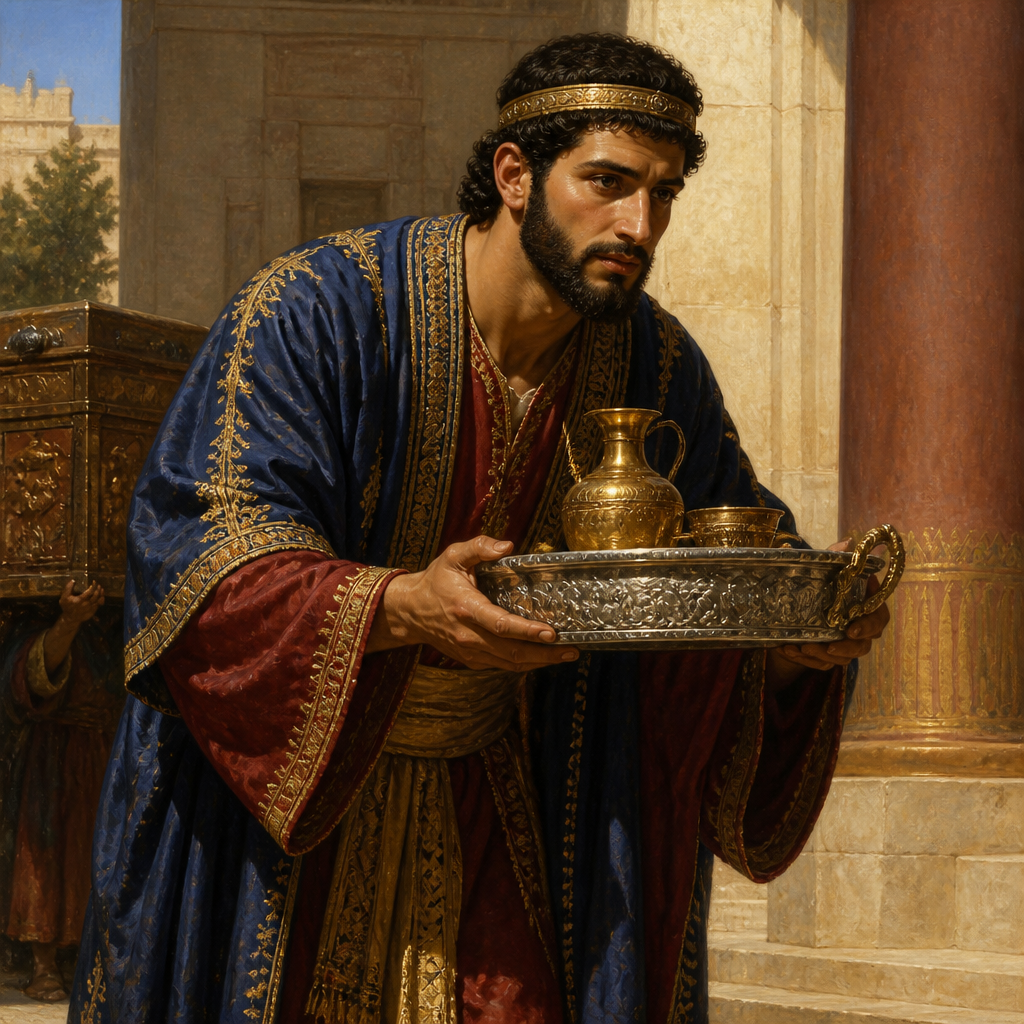
Joram was the son of King Toi of Hamath who was sent as an ambassador to King David to offer tribute and congratulations following David's victory over the Arameans.
This is one of 3 people named Joram in the Bible. See all 3 →
Joram (also known as Hadoram) was a prince of the Aramean city-state of Hamath during the 10th century BC. He served as a diplomatic envoy representing his father, King Toi, in a mission to the court of King David in Jerusalem. This diplomatic gesture followed a significant military shift in the region where the Israelite forces defeated the powerful Hadadezer, king of Zobah.
Though his appearance in the biblical narrative is brief, Joram’s mission underscores the geopolitical prestige of the United Monarchy under David. By bringing expensive gifts of precious metals, Joram signaled Hamath’s submission to or alliance with Israel, effectively acknowledging David as the new regional hegemon in the Levant.
Background and Family
Joram was the son of Toi (or Tou), the King of Hamath. Hamath was a prominent Hittite-Aramean city-state located on the Orontes River in modern-day Syria. During the era of the United Monarchy, Hamath was often at odds with the neighboring kingdom of Zobah, led by Hadadezer. The biblical record indicates that Toi had been engaged in ongoing warfare with Hadadezer, making the political environment of Joram's upbringing one of regional conflict and shifting alliances.
While the Bible does not explicitly state Joram's specific tribe or ethnic lineage beyond his connection to Hamath, he represents the non-Israelite nobility that interacted with the Davidic court. In the parallel account found in 1 Chronicles 18:10, he is referred to as "Hadoram," a variation of the name that likely reflects the Aramean linguistic influence of his home nation.
Major Life Events
Joram’s primary contribution to the biblical narrative occurs after King David’s decisive victory over Hadadezer of Zobah. The defeat of Zobah was a significant relief for King Toi, who had suffered under Hadadezer’s aggression. Recognizing the tactical advantage of an alliance with the rising power of Israel, Toi dispatched Joram to Jerusalem.
Joram’s arrival in the capital was a formal state visit intended to "greet" and "bless" King David. This was not merely a social call but a diplomatic act of gratitude and tributary recognition. Joram did not arrive empty-handed; the scriptures record that he brought with him a substantial collection of articles made of gold, silver, and bronze. This wealth was significant enough that King David ultimately dedicated these items to the Lord, incorporating them into the treasury for the future temple.
Relationship to Other Biblical Figures
Joram’s relationship with King David was that of a foreign dignitary to a sovereign lord. By sending his own son, King Toi signaled the high level of respect he held for David’s military prowess. There is no record of Joram remaining in Jerusalem or having further interactions with the Israelite people, suggesting his role was strictly as a royal emissary and representative of his father’s interests.
Spiritual Significance
Although Joram was a foreign prince, his actions contribute to the biblical theme of the "wealth of the nations" flowing into Jerusalem. The gold and silver he presented to David were not kept for the king’s personal luxury but were consecrated for sacred use. This event foreshadows the prophetic vision of foreign kings bringing tribute to the God of Israel. Joram serves as a historical example of how God’s empowerment of David forced even pagan neighbors to acknowledge the divine favor resting upon the United Monarchy.
Joram's diplomatic mission signifies the expansion of Davidic influence beyond the borders of Israel and the fulfillment of God's promise to make David's name great among the nations. The tribute brought by Joram provided the raw materials—gold, silver, and bronze—that would eventually be used by Solomon in the construction and furnishing of the First Temple. Thus, Joram’s brief appearance links the military victories of the United Monarchy to the liturgical preparation for the Temple.
Frequently Asked Questions
Are Joram and Hadoram the same person?
Yes. 2 Samuel 8:10 refers to him as Joram, while 1 Chronicles 18:10 uses the name Hadoram. This is a common linguistic variation in the Hebrew Bible for the same historical figure.
What items did Joram bring to King David?
Joram brought a variety of articles made of gold, silver, and bronze as a gift from his father, King Toi.
Why did Joram’s father send him to David?
He was sent to congratulate and bless David for defeating Hadadezer, a common enemy who had been at war with the kingdom of Hamath.
What happened to the gifts Joram gave to David?
King David dedicated the gold, silver, and bronze items to the Lord, setting them aside for the treasury of the sanctuary.
Family & Relationships
Parents
 ToiFather2 Samuel 8:10Stated
 Joram, Son of ToiThis page
Connected Figures
Family
Father · 2 Samuel 8:10
Toi (also spelled Tou) was the King of Hamath during the 10th century BC who established a diplomatic alliance with King David after the defeat of their mutual enemy, Hadadezer.
United MonarchyFirst: 2 Samuel 8:93 versesKing of Hamath
Categories
Mentions by Book
- 2 Samuel1
- 1 Chronicles1
Scripture References
All 2 indexed verses, in canonical order, from the Berean Standard Bible.
2 Samuel · 1
- 2 Samuel 8:10
he sent his son Joram to greet King David and bless him for fighting and defeating Hadadezer, who had been at war with Toi. Joram brought with him articles of silver and gold and bronze,
1 Chronicles · 1
- 1 Chronicles 18:10Partial
he sent his son Hadoram to greet King David and bless him for fighting and defeating Hadadezer, who had been at war with Tou. Hadoram brought all kinds of articles of gold and silver and bronze,
Cited as a key verse; added so References, Key Verses and Mentions by Book share one index.
Others Named Joram
Compare all 3 bearers →Joram, Levite of the United Monarchy1 Chronicles 26:25
A Levite during the era of the United Monarchy and a descendant of Moses through Eliezer.
Joram, Son of Ahab and King of Israel2 Kings 1:17
Joram was the ninth king of the northern kingdom of Israel, a son of Ahab and Jezebel, whose reign ended the Omride dynasty during Jehu's bloody coup.