Nebat
Who was Nebat in the Bible?
An Ephraimite from Zeredah and the father of Jeroboam I, the first king of the northern kingdom of Israel.
Nebat was a member of the tribe of Ephraim living during the era of the United Monarchy in Israel. He is historically and biblically identified as the father of Jeroboam I, the official who famously rebelled against King Solomon and subsequently led the ten northern tribes to form the independent Kingdom of Israel. While Nebat himself is never depicted as a participant in the political upheavals of his son's generation, his name became an inseparable part of the biblical identity of his son, Jeroboam, who is almost exclusively referred to as "Jeroboam son of Nebat."
Nebat's lineage is rooted in the village of Zeredah, located within the territory of Ephraim. The biblical record establishes him as the husband of Zeruah, who is described as a widow in the narrative regarding Jeroboam’s rise to power. This suggests that Nebat likely died while his son was still a young man, leaving his family in a state of relative vulnerability that was later countered by Jeroboam’s elevation to high office under Solomon’s administration.
Background and Family
Nebat is introduced in the biblical text within the context of the reign of King Solomon (1 Kings 11:26). He was an Ephraimite, a member of one of the most prominent and historically influential tribes of the northern hill country. His home was the town of Zeredah, a location often associated with the Jordan Valley or the hills of Ephraim.
Nebat’s family structure is defined by his wife, Zeruah, and his son, Jeroboam. The text in 1 Kings 11:26 notes that Zeruah was a widow at the time Jeroboam’s rebellion began. This detail provides the only chronological marker for Nebat’s life: he was active during the middle years of the United Monarchy but likely passed away before his son fled to Egypt to escape Solomon’s wrath. Despite his early exit from the narrative, Nebat’s name is preserved through the patronymic identification of his son, which serves as a recurring refrain throughout the Books of Kings and Chronicles.
Major Life Events
The biblical record does not preserve any specific actions, speeches, or accomplishments attributed directly to Nebat. Unlike the patriarchs or the great kings of Israel, Nebat is a figure defined entirely by his paternity. However, his status as an Ephraimite is significant. The tribe of Ephraim had long held a position of leadership among the northern tribes, and Nebat’s household would have been part of the social fabric that eventually felt the weight of Solomon’s forced labor and taxation policies.
Nebat is mentioned 25 times in the Hebrew Bible, but every single mention is in the phrase "Jeroboam son of Nebat." This repetition suggests that the biblical authors used Nebat’s name not merely as a genealogical marker, but as a specific identifier to distinguish this Jeroboam from later figures and to underscore the origin of the northern monarchy. The last chronological mention of Nebat occurs in 2 Chronicles 13:6, where Abijah, the king of Judah, reflects on the history of the rebellion, citing "Jeroboam the son of Nebat" as the servant of Solomon who rose up against his master.
Relationship to Other Biblical Figures
Nebat’s primary relationship is to his son, Jeroboam I. In the ancient Near Eastern context, the character and reputation of a father were often inextricably linked to the son. Because Jeroboam is credited with establishing the "golden calf" cults at Dan and Bethel, the name "Nebat" becomes associated with the theological deviation of the northern kingdom.
Nebat’s wife, Zeruah, is also an important figure in this family unit. As a widow, she represents a specific social class in ancient Israel that often required protection and support. Her status as a widow when Jeroboam entered Solomon's service (1 Kings 11:26) suggests that Jeroboam may have been driven to work in Solomon’s labor force as a means of supporting his mother. Through this family connection, Nebat is indirectly linked to the prophet Ahijah the Shilonite, who delivered the prophecy of the kingdom's division to Nebat's son.
Spiritual Significance
While Nebat is not described as performing any spiritual acts, his name becomes a linguistic anchor for one of the most significant theological themes in the Books of Kings: the "sin of Jeroboam son of Nebat." The authors of the historical books use this phrase as a standard of judgment for every subsequent king of Israel. From Baasha to Ahab to the final king, Hoshea, each ruler is evaluated based on whether they turned away from the sins that "Jeroboam son of Nebat had caused Israel to commit" (2 Kings 15:9, 2 Kings 17:21).
In this sense, Nebat’s name is preserved in scripture as part of a cautionary legacy. Though he lived during the height of the United Monarchy under Solomon, his lineage became the instrument through which the kingdom was divided. The constant repetition of his name serves as a reminder of the generational impact of leadership—both for good and for ill. For the biblical editors, Nebat was the root of a royal line that defined the spiritual identity of the Northern Kingdom for over two centuries, until the fall of Samaria in 722 BC.
Nebat’s significance is entirely tied to the legacy of his son, Jeroboam I. His name appears consistently in the 'regnal formulas' of the Books of Kings, acting as a label for the specific type of idolatry that characterized the Northern Kingdom. When the text refers to the 'sins of Jeroboam son of Nebat,' it is referencing the state-sponsored worship of golden calves that replaced the central worship of Yahweh in Jerusalem.
From a historiographical perspective, Nebat represents the transition from the United Monarchy to the Divided Monarchy. As an Ephraimite, his identity highlights the tribal tensions that existed under the surface of Solomon's reign. Although he is a background figure, the sheer frequency of his name (25 times) ensures that the reader never forgets the humble, tribal origins of the man who would eventually challenge the Davidic dynasty.
Frequently Asked Questions
Was Nebat a king or a leader in Israel?
No, Nebat was not a king or a political leader. He was an Ephraimite from the town of Zeredah and the father of Jeroboam I, the man who eventually became the first king of the Northern Kingdom of Israel.
What does the name Nebat mean?
The Hebrew name Nebat (נְבָט) is derived from a root meaning 'to look' or 'to behold.'
Who was Nebat's wife?
Nebat's wife was named Zeruah. The Bible describes her as a widow, indicating that Nebat had died by the time their son Jeroboam became a prominent figure and rebelled against King Solomon.
Why is Jeroboam always called 'son of Nebat'?
In ancient Israel, using a patronymic (son of [father's name]) was the standard way to identify an individual. In the Bible, this specific phrasing is repeated to clearly identify Jeroboam I and to link him to his Ephraimite heritage.
Did Nebat live to see the kingdom divide?
It is unlikely. The Bible mentions that his wife Zeruah was a widow when Jeroboam was a young man working for Solomon, suggesting Nebat passed away during the United Monarchy, before the division occurred.
Family & Relationships
 ZeruahWife1 Kings 11:26
Inferred
1 Kings 11:26 names Zeruah, a widow, as the mother of Nebat’s son Jeroboam.Evidence: 1 Kings 11:26
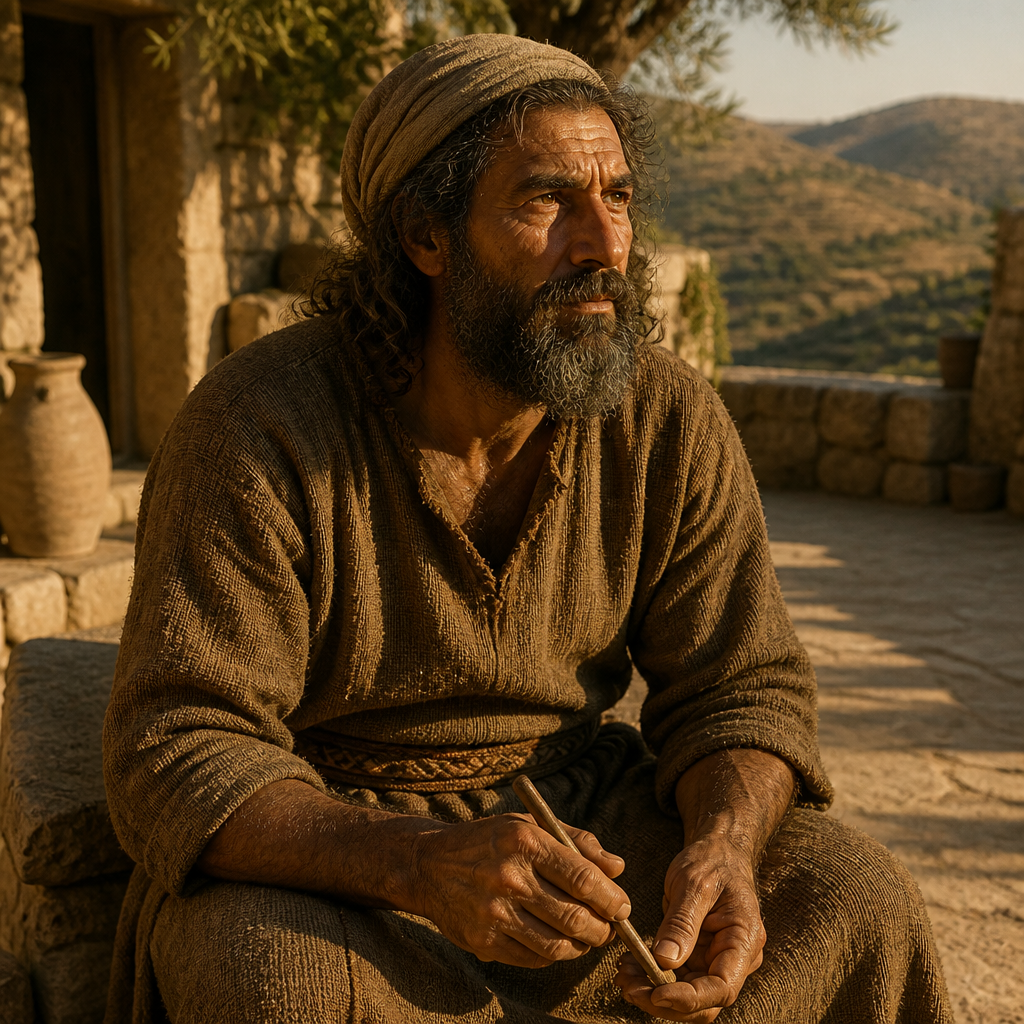 NebatThis page
Children
 Jeroboam son of NebatSon1 Kings 11:26Stated
Connected Figures
Family
Wife · 1 Kings 11:26
The mother of King Jeroboam I and the widow of Nebat, identified as an Ephraimite from Zeredah during the reign of King Solomon.
United MonarchyFirst: 1 Kings 11:261 versesMatriarchEphraim
Son · 1 Kings 11:26
The first king of the Northern Kingdom of Israel who led the ten tribes in a secession from the house of David and established a separate religious system.
United MonarchyFirst: 1 Kings 11:2682 versesSuperintendent of labor, King of IsraelEphraim
Categories
Mentions by Book
- 1 Kings9
- 2 Kings12
- 2 Chronicles4
Scripture References
All 25 indexed verses, in canonical order, from the Berean Standard Bible.
- 1 Kings 11:26
Now Jeroboam son of Nebat was an Ephraimite from Zeredah whose mother was a widow named Zeruah. Jeroboam was a servant of Solomon, but he rebelled against the king,
- 1 Kings 12:2
When Jeroboam son of Nebat heard about this, he was still in Egypt where he had fled from King Solomon and had been living ever since.
- 1 Kings 12:15
So the king did not listen to the people, and indeed this turn of events was from the LORD, to fulfill the word He had spoken to Jeroboam son of Nebat through Ahijah the Shilonite.
- 1 Kings 15:1
In the eighteenth year of the reign of Jeroboam son of Nebat, Abijam became king of Judah,
- 1 Kings 16:3
So now I will consume Baasha and his house, and I will make your house like that of Jeroboam son of Nebat:
- 1 Kings 16:26
For he walked in all the ways of Jeroboam son of Nebat and in his sins, which he caused Israel to commit, provoking the LORD, the God of Israel, to anger with their worthless idols.
- 1 Kings 16:31
And as if it were not enough for him to walk in the sins of Jeroboam son of Nebat, he even married Jezebel the daughter of Ethbaal king of the Sidonians, and he then proceeded to serve and worship Baal.
- 1 Kings 21:22
I will make your house like that of Jeroboam son of Nebat and like that of Baasha son of Ahijah, because you have provoked My anger and caused Israel to sin.’
- 1 Kings 22:52
And he did evil in the sight of the LORD and walked in the ways of his father and mother and of Jeroboam son of Nebat, who had caused Israel to sin.
- 2 Kings 3:3
Nevertheless, he clung to the sins that Jeroboam son of Nebat had caused Israel to commit; he did not turn away from them.
- 2 Kings 9:9
I will make the house of Ahab like the houses of Jeroboam son of Nebat and Baasha son of Ahijah.
- 2 Kings 10:29
but he did not turn away from the sins that Jeroboam son of Nebat had caused Israel to commit—the worship of the golden calves at Bethel and Dan.
- 2 Kings 13:2
And he did evil in the sight of the LORD and followed the sins that Jeroboam son of Nebat had caused Israel to commit; he did not turn away from them.
- 2 Kings 13:11
And he did evil in the sight of the LORD and did not turn away from all the sins that Jeroboam son of Nebat had caused Israel to commit, but he walked in them.
- 2 Kings 14:24
And he did evil in the sight of the LORD and did not turn away from all the sins that Jeroboam son of Nebat had caused Israel to commit.
- 2 Kings 15:9
And he did evil in the sight of the LORD, as his fathers had done. He did not turn away from the sins that Jeroboam son of Nebat had caused Israel to commit.
- 2 Kings 15:18
And he did evil in the sight of the LORD, and throughout his reign he did not turn away from the sins that Jeroboam son of Nebat had caused Israel to commit.
- 2 Kings 15:24
And he did evil in the sight of the LORD and did not turn away from the sins that Jeroboam son of Nebat had caused Israel to commit.
- 2 Kings 15:28
And he did evil in the sight of the LORD and did not turn away from the sins that Jeroboam son of Nebat had caused Israel to commit.
- 2 Kings 17:21
When the LORD had torn Israel away from the house of David, they made Jeroboam son of Nebat king, and Jeroboam led Israel away from following the LORD and caused them to commit a great sin.
- 2 Kings 23:15
He even pulled down the altar at Bethel, the high place set up by Jeroboam son of Nebat, who had caused Israel to sin. Then he burned the high place, ground it to powder, and burned the Asherah pole.
- 2 Chronicles 9:29
As for the rest of the acts of Solomon, from beginning to end, are they not written in the Records of Nathan the Prophet, in the Prophecy of Ahijah the Shilonite, and in the Visions of Iddo the Seer concerning Jeroboam son of Nebat?
- 2 Chronicles 10:2
When Jeroboam son of Nebat heard about this, he returned from Egypt, where he had fled from King Solomon.
- 2 Chronicles 10:15
So the king did not listen to the people, and indeed this turn of events was from God, in order that the LORD might fulfill the word that He had spoken through Ahijah the Shilonite to Jeroboam son of Nebat.
- 2 Chronicles 13:6
Yet Jeroboam son of Nebat, a servant of Solomon son of David, rose up and rebelled against his master.