Azmaveth the Barhumite
A member of King David’s elite group of warriors known as 'The Thirty,' recognized for his military prowess during the United Monarchy.
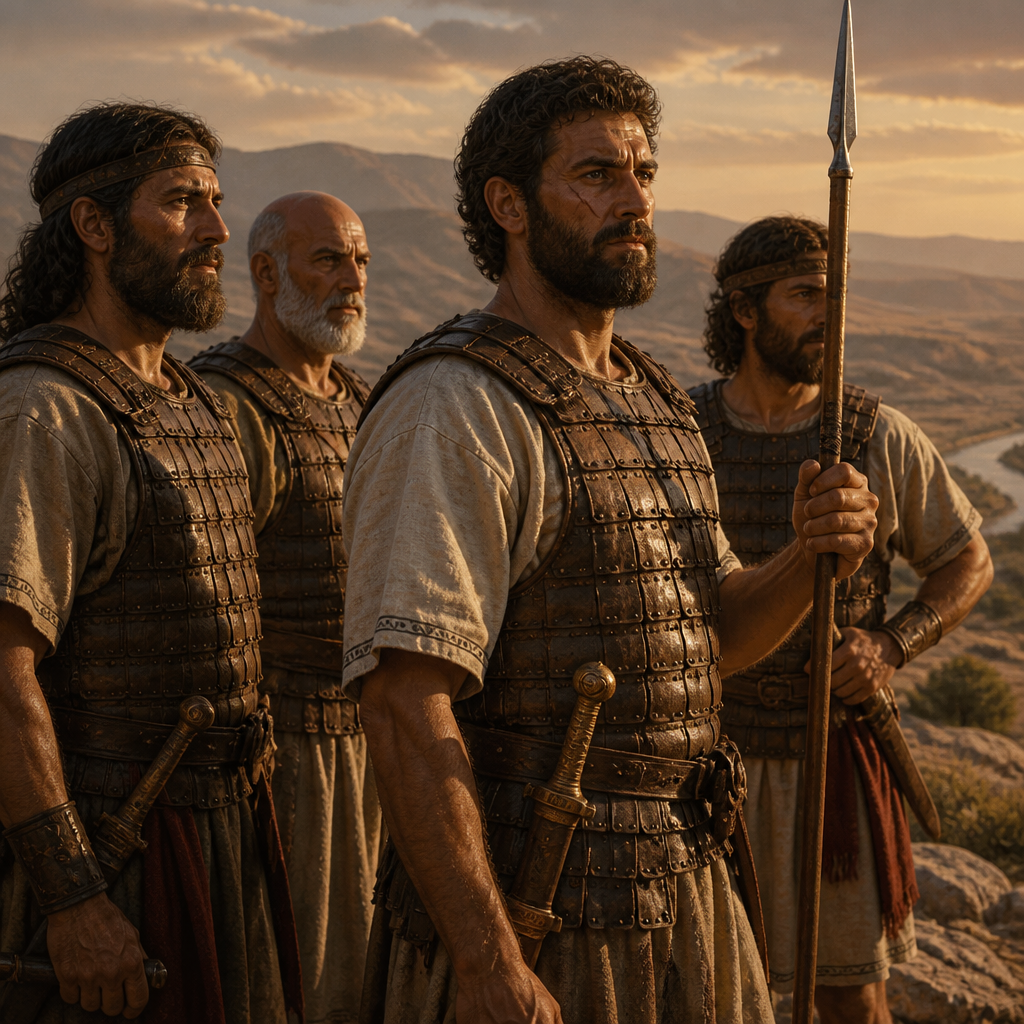
Azmaveth the Barhumite was a distinguished soldier serving during the United Monarchy of Israel under the reign of King David. He is primarily identified in the biblical record as one of David’s 'mighty men' (Hebrew: Gibborim), a specialized core of elite warriors who demonstrated exceptional bravery and loyalty during the establishment and expansion of David's kingdom. His inclusion in this prestigious group indicates that he was a figure of significant military standing and personal fortitude.
While his individual exploits are not detailed with the same narrative depth as figures like Joab or Benaiah, his status as a member of 'The Thirty' marks him as one of the kingdom's most trusted defenders. His name, which may translate to 'Death is Strong' or 'Strength of Death,' reflects the martial culture of the period and the fearsome reputation of the warriors who surrounded the throne during the 10th century BC.
Background and Family
The biblical record provides limited genealogical information regarding Azmaveth. He is consistently identified by his toponymic title as 'the Barhumite' (2 Samuel 23:31) or 'the Baharumite' (1 Chronicles 11:33). This designation suggests he hailed from Bahurim, a village located in the territory of the tribe of Benjamin, situated on the road from Jerusalem toward the Jordan Valley. Bahurim is notable in other biblical narratives as the home of Shimei, who cursed David, and the place where Jonathan and Ahimaaz hid in a well while spying for David during Absalom's rebellion. Azmaveth’s presence in David’s inner military circle from this region highlights the diverse geographic and tribal composition of David’s loyalists during the United Monarchy.
Major Life Events
Azmaveth’s life is defined by his inclusion in the list of the 'Thirty Mighty Men' of David. This group was an elite military order distinct from the larger army and even from the primary 'Three' warriors (Jashobeam, Eleazar, and Shammah). The Thirty served as the king’s personal guard and specialized military leaders who had performed extraordinary deeds during the wars against the Philistines and other neighboring nations.
Although specific battles featuring Azmaveth are not recorded, the timing of the lists in 2 Samuel and 1 Chronicles indicates his active service during the mid-to-late 10th century BC. His appointment to this unit would have required he pass a high threshold of combat proficiency and demonstrated fealty to David, likely during the years of David’s rise to power or the consolidation of the kingdom in Jerusalem.
Relationship to Other Biblical Figures
As a member of the Gibborim, Azmaveth was closely associated with the other champions of Israel. He is listed alongside men such as Abi-albon the Arbathite and Eliahba the Shaalbonite. These men formed a brotherhood of arms that functioned as the backbone of David's tactical operations. Being listed in these rosters signifies that Azmaveth was a contemporary of the high command of the United Monarchy, serving under the generalship of Joab and the spiritual oversight of the king himself.
Spiritual Significance
In the context of the Hebrew Scriptures, Azmaveth represents the 'consecrated warrior.' The military strength of the United Monarchy was viewed not merely as a secular achievement but as a fulfillment of the divine promise to establish the throne of David. By protecting the 'Lord's Anointed,' warriors like Azmaveth were seen as participants in the preservation of the Messianic line.
His inclusion in the chronicles of Israel serves a specific historiographic purpose: it validates the legitimacy and might of David’s reign. The naming of each individual warrior ensures that their personal contributions to the safety of Israel were memorialized in the sacred record, emphasizing that the kingdom was built through the cooperation of dedicated individuals working under God's chosen leader.
Spiritual Significance
Azmaveth’s significance lies in his role as a guardian of the Davidic covenant through his military service. As one of the 'Thirty,' he exemplifies the transition of Israel from a loose confederation of tribes into a centralized, powerful kingdom capable of defending its borders. His presence in the biblical text underscores the theme that God provides 'mighty men' to assist those he has called to leadership.
Furthermore, he serves as a representative of the loyalty found within the tribe of Benjamin (the tribe of Saul) toward the house of David. His service demonstrates the unifying effect of David’s kingship, bringing together former rivals into a single, elite fighting force dedicated to the survival of the United Monarchy.
Frequently Asked Questions
What does the name Azmaveth mean?
The name Azmaveth (עַזְמָ֫וֶת) is generally understood to mean 'Death is Strong' or 'Strength of Death,' possibly reflecting a warrior's identity or a family's recognition of the power of mortality.
What was 'The Thirty' that Azmaveth belonged to?
The Thirty was an elite corps of David's most valiant warriors. They served as high-ranking officers and personal protectors of the king, known for their heroic deeds in battle.
Where was Azmaveth from?
He is called a Barhumite or Baharumite, indicating he was from the village of Bahurim, which was located in the territory of Benjamin, just east of Jerusalem.
In which books of the Bible is this Azmaveth mentioned?
He is mentioned in 2 Samuel and 1 Chronicles, specifically in the chapters listing King David's elite soldiers (2 Samuel 23 and 1 Chronicles 11).
Was Azmaveth a leader in the army?
While the Bible does not specify his exact rank, his inclusion in the 'Thirty' implies a position of leadership and high honor within the military structure of the United Monarchy.
Connected Figures


Categories
Mentions by Book
- 1 Chronicles1
- 2 Samuel1
Others Named Azmaveth the Barhumite
Azmaveth, son of Adiel1 Chronicles 27:25
An official in the administration of King David responsible for the royal storehouses during the Divided Monarchy period.
Azmaveth, Father of Jeziel and Pelet1 Chronicles 12:3
A Benjaminite father whose sons joined David’s army at Ziklag during the Divided Monarchy period.
Azmaveth, Descendant of Saul1 Chronicles 8:36
Azmaveth was a Benjaminite nobleman and a direct descendant of King Saul, appearing in the genealogical records of the chronicler to document the persistence of the house of Saul.