Gether
Gether was a son of Aram and a grandson of Shem, listed in the Table of Nations as a founder of a post-Flood tribal lineage.
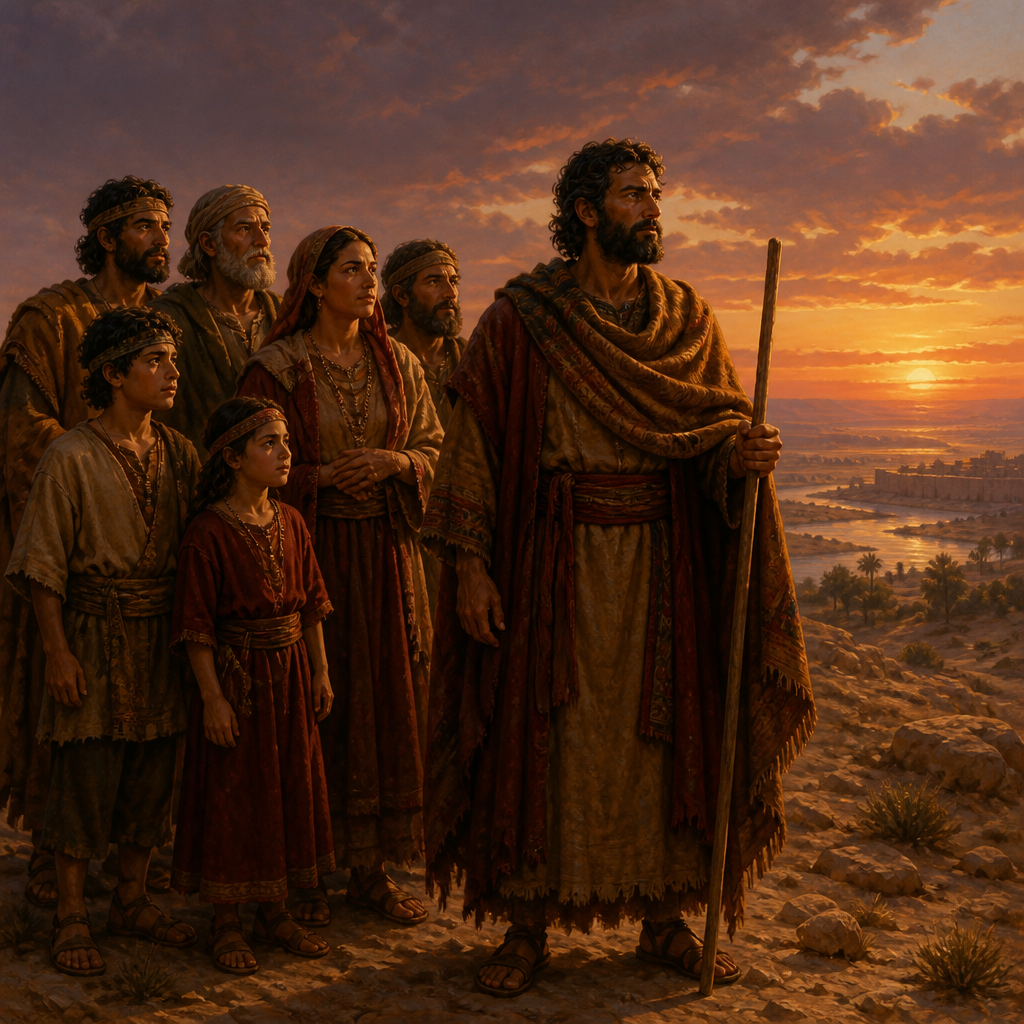
Gether is a figure mentioned within the genealogical records of the book of Genesis and 1 Chronicles, specifically positioned within the "Table of Nations." This document serves as a foundational ethnographic map of the ancient world following the Great Flood. As the third son of Aram, Gether belongs to the Shemite branch of humanity, representing one of the distinct family groups that dispersed across the Earth after the events at the Tower of Babel.
Historically and biblically, Gether’s presence in the text is brief, confined to two identical genealogical listings. He is situated in the Primeval History era, a period characterized by the initial repopulation of the world by the descendants of Noah. While the biblical text provides no narrative details regarding his personal life, his inclusion in the sacred record underscores the importance of the Aramaic lineage in the broader scope of biblical history and the fulfillment of the command to multiply and fill the earth.
Background and Family
Gether is identified in the Masoretic Text as a son of Aram. Aram was one of the five sons of Shem, who was himself one of the three sons of Noah. This placement within the genealogy of Shem (the Semitic line) is highly significant in the biblical worldview, as the Shemite line is the one through which the covenant promises would eventually flow to Abraham.
According to Genesis 10:23, Gether was one of four brothers: Uz, Hul, and Mash (referred to as Meshech in the 1 Chronicles account). Within the structure of the Table of Nations, these four individuals represent the primary subdivisions of the Aramean people. While Aram represents the overarching ethnic group, Gether represents a specific clan or geographical territory that the Arameans occupied in the ancient Near East during the early post-Flood era.
Major Life Events
The biblical record does not preserve any specific biographical events, speeches, or actions attributed to Gether. His entire legacy is preserved within the context of the "Toledot" (generations) of Noah. In the chronological framework of the Bible, Gether lived during the transition from the immediate post-Flood world to the rise of early civilizations. His life is defined by his participation in the migration and settlement patterns that defined the Primeval History of mankind. The absence of specific narrative details suggests that his primary importance to the biblical authors was his role as a link in the chain of human descent and the expansion of the Semitic tribes.
Relationship to Other Biblical Figures
Gether’s primary relationships are defined by his immediate kin. As a grandson of Shem, he is part of the generation that witnessed the rapid diversification of languages and cultures. His brothers are also notable in biblical geography: Uz is famously associated with the land where Job resided (Job 1:1), and Hul and Mash are traditionally associated with regions in Mesopotamia and the Levant. Gether stands alongside these figures as a contemporary and a peer in the establishment of the early Semitic nations.
In the parallel account found in 1 Chronicles 1:17, the list is repeated almost verbatim, though some translations and manuscripts vary on the spelling of his brother Mash/Meshech. This repetition serves to reinforce the genealogical continuity between the primeval world of Genesis and the formalized records of the Kingdom of Israel, ensuring that the origins of the Arameans were correctly attributed to the line of Shem.
Spiritual Significance
While Gether is a minor figure in terms of narrative weight, his spiritual significance lies in the doctrine of the sovereignty of God over human history and geography. The inclusion of Gether in the Table of Nations demonstrates that every tribe and family has a place in God's ordered world. In a theological sense, Gether represents the fulfillment of the blessing God gave to Noah regarding the fruitfulness of his descendants.
Furthermore, for the original Hebrew audience, identifying Gether as a son of Aram served to clarify the relationship between Israel and the Arameans. Although the two nations would later experience periods of intense conflict, their shared ancestry through Shem served as a reminder of their common origins in the post-Flood restoration of humanity.
Spiritual Significance
Gether's significance is primarily genealogical and ethnographic. He serves as a representative of the early Aramean expansion and helps to define the boundaries of the Semitic peoples in the ancient Near East. His presence in the biblical text confirms the historical reality of the post-Flood dispersion and provides a structured account of how modern nations (from the perspective of the ancient Near East) were formed.
Theologically, Gether is a testament to God's providence in the 'Primeval History.' By naming individuals like Gether, the Bible asserts that the origins of nations were not random or mythological, but were rooted in specific historical families and individuals who operated under the divine mandate to inhabit the earth.
Frequently Asked Questions
Who was Gether's father?
Gether was the son of Aram, who was the son of Shem and grandson of Noah.
Where did Gether live?
The Bible does not specify a city or region for Gether, though he is traditionally associated with the Aramean tribes of the ancient Near East, likely in the regions of modern-day Syria or Mesopotamia.
Who were Gether's brothers?
According to Genesis 10:23, his brothers were Uz, Hul, and Mash (also spelled Meshech in 1 Chronicles).
What does the name Gether mean?
The exact etymology of Gether (גֶּ֫תֶר) is uncertain, but some scholars suggest meanings related to 'valley' or 'dread,' though these are speculative.
How many times is Gether mentioned in the Bible?
Gether is mentioned twice: once in Genesis 10:23 and once in 1 Chronicles 1:17.
Connected Figures


Categories
Mentions by Book
- 1 Chronicles1
- Genesis1
Family & Relationships
Sibling
Genesis 10:23
Sibling
Genesis 10:23
Sibling
Genesis 10:23
Parent
Genesis 10:22
Sibling
Genesis 10:23
Sibling
Genesis 10:23
Sibling
Genesis 10:23