Moab
Who was Moab in the Bible?
Moab was the firstborn son of Lot by his eldest daughter and the eponymous progenitor of the Moabite nation.
Moab is a figure appearing in the Book of Genesis during the Patriarchal Period. He was born in the aftermath of the destruction of Sodom and Gomorrah, under circumstances marked by the isolation of his family. His name is traditionally interpreted in Hebrew to mean 'from father,' a direct reference to the nature of his conception.
According to the biblical record, Moab is identified as the direct ancestor of the Moabites, a people who resided east of the Dead Sea. His life is documented exclusively within the narrative of Lot’s flight from the Plain, serving as a genealogical bridge between the line of Terah and the emergence of the neighboring nations of Israel.
Background and Family
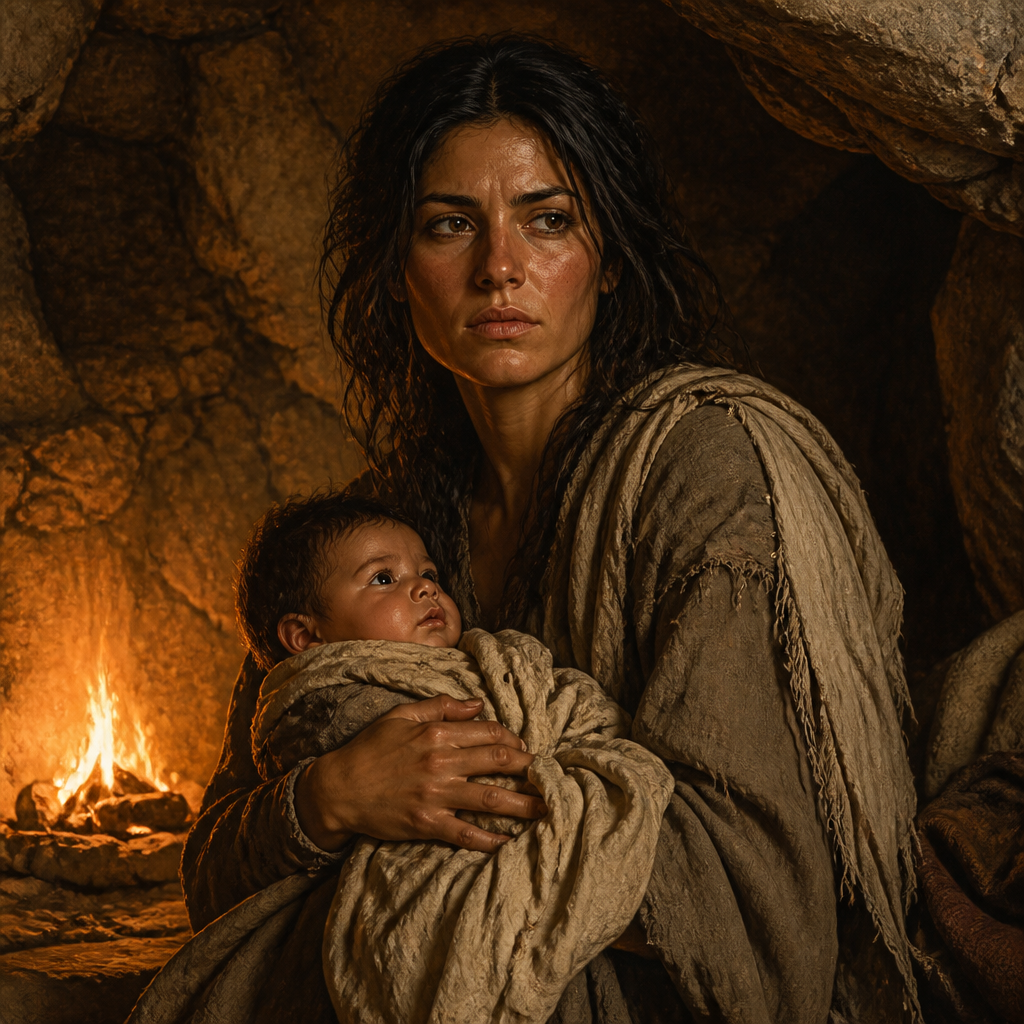
Moab was born to Lot, the nephew of the patriarch Abraham, and Lot’s eldest daughter. Following the divine destruction of Sodom, Lot and his two daughters fled to the mountain regions near Zoar, residing in a cave (Genesis 19:30). Fearing that no men remained on earth to carry on their lineage, the daughters conspired to preserve their family line through their father. Moab was the result of this union involving the older daughter. He was born shortly before his half-brother and cousin, Ben-ammi, the son of Lot’s younger daughter.
Major Life Events
The biblical text provides very little information regarding the individual life of Moab beyond the specific circumstances of his birth. The primary focus of the record in Genesis 19:37 is his role as a founder. Upon his birth, his mother named him Moab, and he is immediately identified by the narrator as the "father of the Moabites of today." This suggests that his historical and narrative importance lies in his status as a patriarch rather than in specific recorded deeds or adult exploits.
Relationship to Other Biblical Figures
Moab’s closest recorded relationships were with his father/grandfather, Lot, and his mother. He shared a unique sibling relationship with Ben-ammi, who founded the nation of Ammon. Through Lot, Moab was a grand-nephew of Abraham, placing the Moabite people in a position of distant kinship to the Israelites. This shared ancestry influenced the subsequent geopolitical and social interactions between Israel and Moab throughout the Old Testament, as the two nations remained distinct yet perpetually linked by their common patriarchal roots.
Spiritual Significance
In the context of the Genesis narrative, the birth of Moab serves as an etiological explanation for the origins of Israel's neighbors. While the circumstances of his conception are portrayed with a sense of desperation and moral complexity, the text uses his arrival to account for the existence of the Moabite nation. The brief mention of Moab highlights the biblical theme of how local nations were perceived as having branched off from the central family lines of the patriarchal era.
Moab’s primary significance is genealogical and ethnographic. He serves as the vital link connecting the lineage of Lot to the Moabite people, who would later become a recurring presence in the history of Israel. His birth narrative explains the tribal identity and kinship ties that defined the Transjordanian region in the biblical worldview.
Furthermore, the record of Moab establishes the ancestral boundaries and heritage that the Israelites were commanded to respect during the Exodus, as the Moabites were recognized as having a legitimate claim to their land through their descent from Lot.
Frequently Asked Questions
Who were the parents of Moab?
Moab was the son of Lot and Lot’s eldest daughter.
What does the name 'Moab' mean?
The name is traditionally understood in Hebrew to mean 'from father' or 'of a father,' reflecting his origins.
Which nation descended from Moab?
He is the ancestor and founder of the Moabites.
Did Moab have any siblings?
He had a half-brother named Ben-ammi, who was the father of the Ammonites.
Where was Moab born?
He was born in a cave in the mountains near Zoar after the destruction of Sodom.
Family & Relationships
Parents
 LotFatherGenesis 19:36–37Stated
 The Older Daughter of LotMotherGenesis 19:37Stated
 MoabThis page
 Ben-ammiBrotherGenesis 19:36–38Stated
Connected Figures
Family
Father · Genesis 19:36–37
Lot was the nephew of Abraham who settled in the Jordan Valley, escaped the destruction of Sodom, and became the progenitor of the Moabites and Ammonites.
Mother · Genesis 19:37
The firstborn daughter of Lot who, following the destruction of Sodom, became the mother of Moab and the ancestress of the Moabite nation.
Brother · Genesis 19:36–38
The son of Lot and his younger daughter, recognized as the eponymous patriarch of the Ammonite nation.
Categories
Mentions by Book
- Genesis3
Scripture References
All 3 indexed verses, in canonical order, from the Berean Standard Bible.
Genesis · 3
- Genesis 19:36Partial
Thus both of Lot’s daughters became pregnant by their father.
Cited as evidence on a family card; added so References, Key Verses and Mentions by Book share one index.
- Genesis 19:37Partial
The older daughter gave birth to a son and named him Moab. He is the father of the Moabites of today.
- Genesis 19:38Partial
The younger daughter also gave birth to a son, and she named him Ben-ammi. He is the father of the Ammonites of today.
Cited as evidence on a family card; added so References, Key Verses and Mentions by Book share one index.