The Older Daughter of Lot
Who was the Older Daughter of Lot in the Bible?
The firstborn daughter of Lot who, following the destruction of Sodom, became the mother of Moab and the ancestress of the Moabite nation.
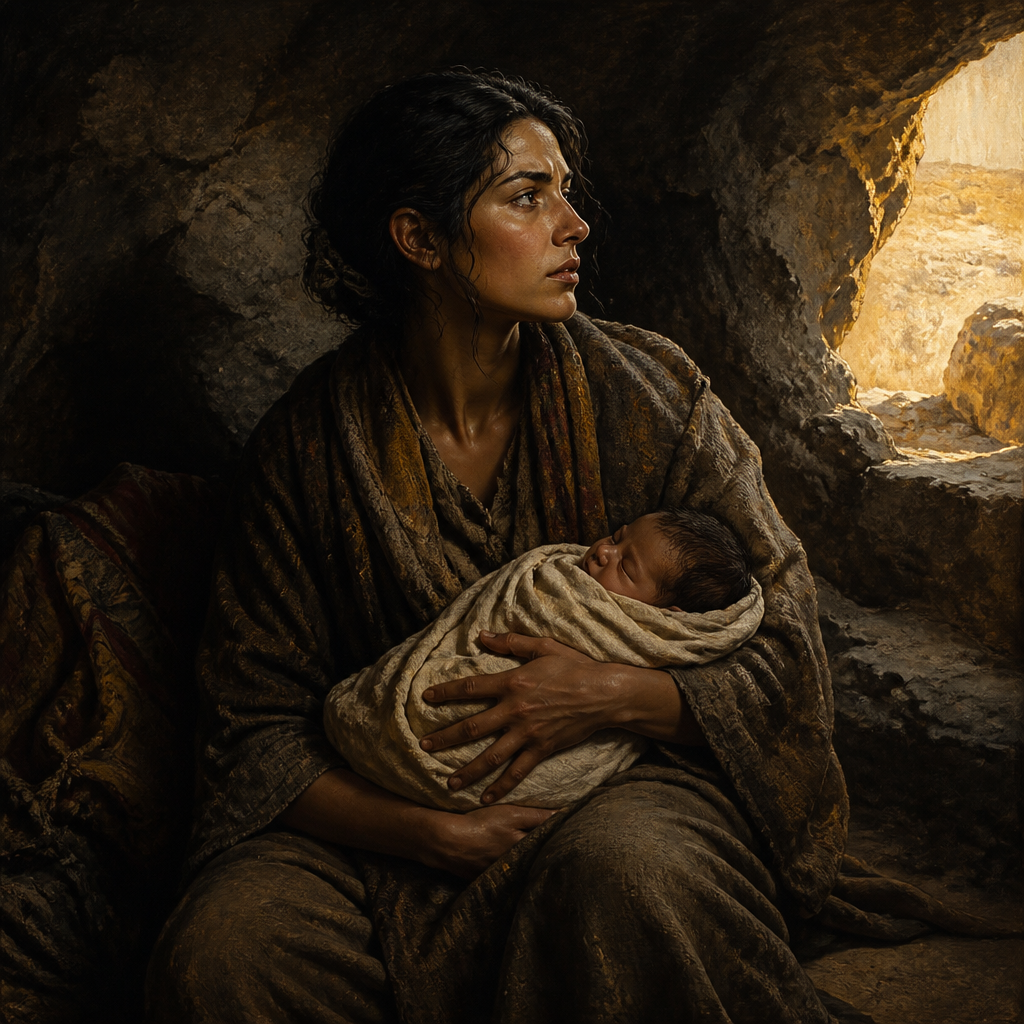
The older daughter of Lot is a figure from the Patriarchal period whose life is defined by the catastrophic destruction of the cities of the plain. After escaping the judgment upon Sodom with her father and younger sister, she resided in the mountain caves near Zoar. Believing their family to be the final survivors of a global or regional upheaval, she took drastic measures to ensure the continuation of her father's lineage.
Her significance in the biblical narrative is primarily genealogical and nationalistic. By bearing a son named Moab, she became the foundational matriarch of the Moabites, a people who would play a recurring and often adversarial role in the history of Israel. Her story is recorded in the book of Genesis as part of the broader history of the patriarch Abraham and his nephew Lot.
Background and Family
The older daughter of Lot was a member of the patriarchal family of Lot, the nephew of Abraham. She resided in the city of Sodom with her father, her mother, and her younger sister. During the visitation of the two angels recorded in Genesis 19, she was identified as being unmarried, though she was betrothed to a man from the city. The biblical text indicates she remained under her father's roof until the divine judgment fell upon the region. Following the destruction of Sodom and Gomorrah, she fled with her father and sister to the small town of Zoar and eventually into the desolate mountain regions.
Major Life Events
The central event in the life of Lot's older daughter occurred in the aftermath of the fire and brimstone that consumed the Jordan Valley. Finding themselves isolated in a cave and fearing that no men remained on earth to provide them with husbands or heirs, she initiated a plan to preserve her father's line. She persuaded her younger sister to join her in an act of incestuous deception, wherein they provided their father with wine until he was intoxicated, leading to him unknowingly fathering children by both daughters.
Following this encounter, the older daughter conceived and gave birth to a son. This event marks her final mention in the biblical record, serving as a pivot point from the era of the early patriarchs to the emergence of the neighboring nations of Israel.
Relationship to Other Biblical Figures
Her primary relationships were defined by her immediate family: her father Lot, her mother (who was famously turned into a pillar of salt during their flight), and her younger sister. Her legacy is cemented through her son, Moab. As the mother of Moab, she is the direct ancestress of the Moabite people. This lineage is particularly notable in later biblical history, as it establishes the origin of the people from whom Ruth the Moabitess—and subsequently King David and Jesus Christ—would eventually descend, despite the controversial circumstances of the nation's beginning.
Spiritual Significance
The account of Lot's older daughter is presented with stark realism, typical of the Genesis narrative. While the text does not explicitly offer a moral condemnation or praise, it serves to explain the origins of Israel's neighbors through a lens of desperation and the breakdown of social order. Her actions reflect a profound concern for the survival of the family name, a value central to the Patriarchal Period, even when executed through means that bypassed traditional moral boundaries. The naming of her son 'Moab' (meaning 'from father') serves as a permanent linguistic marker of his origin.
The older daughter of Lot serves as the biological link between the house of Terah and the nation of Moab. Her presence in the text accounts for the ethnogenesis of the Moabites, explaining their close yet strained kinship with the Israelites. Theologically, her story highlights the themes of survival and the complexities of human agency in the wake of divine judgment.
Frequently Asked Questions
Who was the son of Lot's older daughter?
Her son was named Moab, who became the father and namesake of the Moabite nation.
Where did the older daughter of Lot live after Sodom was destroyed?
She lived in a cave in the mountains near the town of Zoar.
Why did she decide to have children with her father?
According to the text, she believed there were no other men left on earth to marry her or her sister, and she wanted to preserve her father's family line.
Is the older daughter of Lot given a specific name in the Bible?
No, the Bible refers to her only as the 'older daughter' or the 'firstborn'.
Family & Relationships
Parents
 LotFatherGenesis 19:36Stated
 Lot's WifeMotherGenesis 19:36
Inferred
No verse names The Older Daughter of Lot and Lot's Wife together; the mother link is carried from the surrounding genealogy and is not stated in Scripture.Evidence: Genesis 19:36; Genesis 19:16
 The Older Daughter of LotThis page
 The Younger Daughter of LotSisterGenesis 19:36Stated
Children
 MoabSonGenesis 19:37Stated
Connected Figures
Family
Father · Genesis 19:36
Lot was the nephew of Abraham who settled in the Jordan Valley, escaped the destruction of Sodom, and became the progenitor of the Moabites and Ammonites.
Mother · Genesis 19:36
A woman who resided in Sodom and was turned into a pillar of salt for looking back at the city during its divine destruction.
Son · Genesis 19:37
Moab was the firstborn son of Lot by his eldest daughter and the eponymous progenitor of the Moabite nation.
Sister · Genesis 19:36
The younger daughter of Lot was a woman of the Patriarchal era who became the ancestral mother of the Ammonite nation through her son, Ben-ammi.
Categories
Mentions by Book
- Genesis4
Scripture References
All 4 indexed verses, in canonical order, from the Berean Standard Bible.
Genesis · 4
- Genesis 19:15Partial
At daybreak the angels hurried Lot along, saying, “Get up! Take your wife and your two daughters who are here, or you will be swept away in the punishment of the city.”
Cited as evidence on a family card; added so References, Key Verses and Mentions by Book share one index.
- Genesis 19:36Partial
Thus both of Lot’s daughters became pregnant by their father.
Cited as evidence on a family card; added so References, Key Verses and Mentions by Book share one index.
- Genesis 19:37
The older daughter gave birth to a son and named him Moab. He is the father of the Moabites of today.
- Genesis 19:38Partial
The younger daughter also gave birth to a son, and she named him Ben-ammi. He is the father of the Ammonites of today.
Cited as evidence on a family card; added so References, Key Verses and Mentions by Book share one index.