Ephron
Who was Ephron in the Bible?
A Hittite landowner who sold the cave of Machpelah to Abraham as a permanent burial site for Sarah and the patriarchal family.
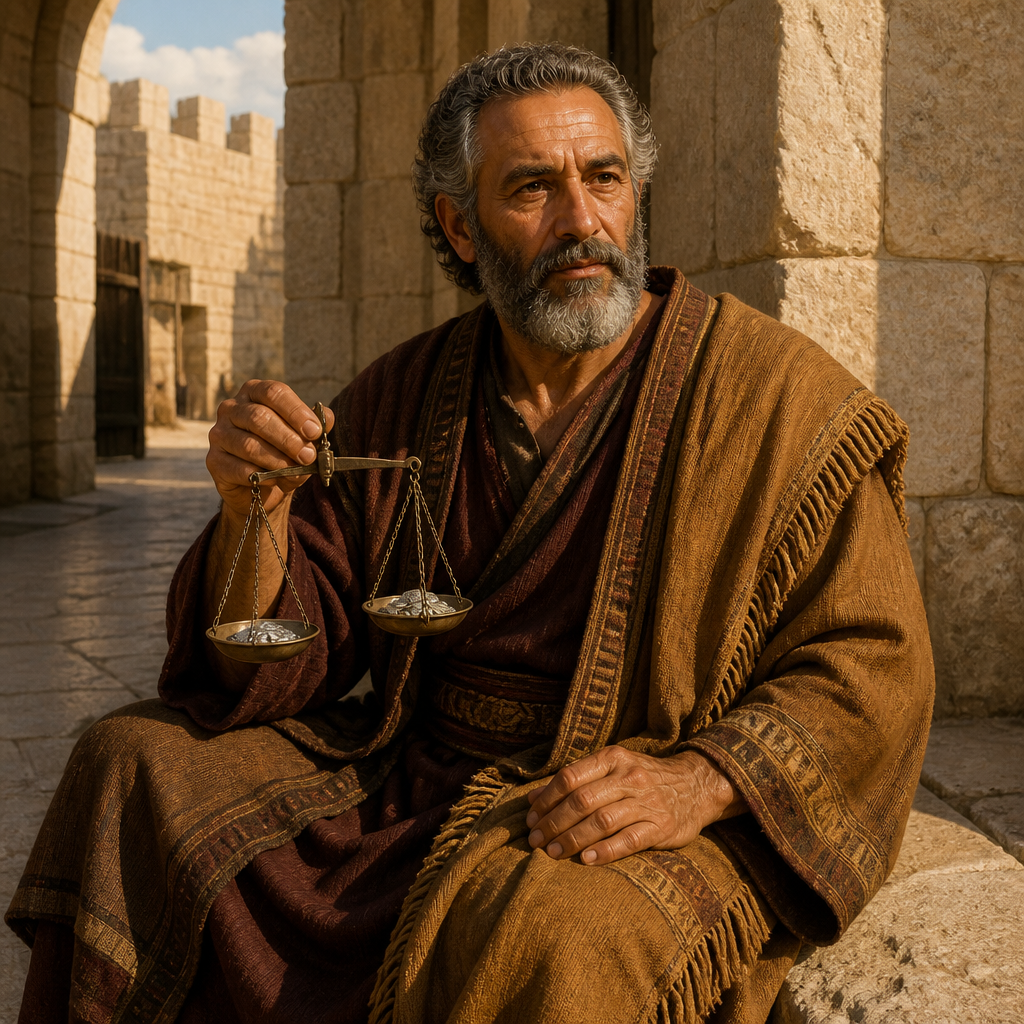
Ephron, son of Zohar, was a prominent member of the Hittite community residing near Hebron during the Patriarchal Period. He is primarily known for his legal transaction with the patriarch Abraham following the death of Abraham's wife, Sarah. According to the Genesis narrative, Ephron held a position of respect among the 'sons of Heth,' as evidenced by his participation in the assembly at the city gate, the traditional location for civil and legal affairs in the Ancient Near East.
Ephron’s role in the biblical record is pivotal because he facilitated the first permanent acquisition of land by the Hebrews in the promised land of Canaan. While Abraham lived as a nomadic sojourner, Ephron provided the legal means for the patriarch to secure a multi-generational tomb. This land purchase—specifically the field of Machpelah—became the final resting place for several of the Bible's most significant figures, ensuring Ephron's name remained relevant throughout the book of Genesis.
Background and Family
Ephron is identified in the text of Genesis 23:8 as the son of Zohar. He is consistently designated as 'Ephron the Hittite' (Genesis 23:10, 25:9, 49:29–30), indicating his ethnic origin among the descendants of Heth. The Hittites were one of the established nations inhabiting the land of Canaan prior to the Israelite conquest. At the time of Ephron’s interaction with Abraham, he resided in or near the city of Hebron (also known as Mamre).
While the biblical text does not provide an exhaustive genealogy for Ephron, it highlights his social standing. He is described as 'sitting among the sons of Heth' (Genesis 23:10) at the city gate. This setting suggests that Ephron was a man of property and influence, likely a recognized elder or a landed citizen capable of engaging in high-stakes public contracts.
Major Life Events
The Negotiation at the Gate
The defining event of Ephron’s life recorded in Scripture is the sale of his property to Abraham. Following Sarah's death at the age of 127, Abraham approached the Hittite community to request a burial site. The community initially offered Abraham his choice of their best tombs for free, but Abraham insisted on a specific plot: the cave of Machpelah at the end of Ephron's field.
Ephron’s response in the presence of the witnesses at the gate is a classic example of Ancient Near Eastern bargaining. He initially offered to give the field and the cave to Abraham as a gift: "No, my lord, listen to me; I give you the field, and I give you the cave that is in it" (Genesis 23:11). However, scholars often interpret this not as a literal offer of a free gift, but as a polite opening gambit in a formal negotiation. Abraham, recognizing the legal necessity of a clear purchase to avoid future disputes, insisted on paying the full price.
The Sale of Machpelah
Ephron eventually named his price: "A piece of land worth four hundred shekels of silver, what is that between me and you?" (Genesis 23:15). Though presented as a trivial amount, four hundred shekels was a significant sum for the era. Abraham immediately agreed to the terms, weighing out the silver according to the 'standard of the merchants.' The transaction was comprehensive; the text specifies that not only the cave and the field were transferred, but also 'all the trees within the boundaries of the field' (Genesis 23:17). This precision ensured that the land was legally 'deeded over' to Abraham as a permanent possession.
Relationship to Other Biblical Figures
Ephron’s relationship with Abraham was characterized by mutual respect and formal etiquette. While they were of different ethnic and spiritual backgrounds, they shared a common social space in Canaan. Ephron served as the facilitator for Abraham’s transition from a landless wanderer to a property owner.
Although Ephron disappears from the narrative after the sale, his name is repeatedly invoked in connection with the burial of the patriarchs. The field he sold is mentioned during the burials of Abraham himself (Genesis 25:9), and later by Jacob on his deathbed. Jacob specifically instructs his sons to bury him in the cave 'in the field of Ephron the Hittite' (Genesis 49:29–30), a request carried out by Joseph (Genesis 50:13). Through this property, Ephron remains linked to the three great patriarchs of Israel: Abraham, Isaac, and Jacob.
Spiritual Significance
In a theological sense, Ephron represents the providential means by which God begins to fulfill the promise of land to Abraham’s descendants. While God had promised the entire land of Canaan to Abraham, the patriarch lived most of his life without owning a single foot of it. Ephron’s willingness to sell the field of Machpelah provided the 'earnest money' or the first-fruits of that inheritance. The meticulous recording of Ephron’s name and the legality of the sale serves to validate the Hebrew claim to the land.
Furthermore, the cave of Machpelah, purchased from Ephron, became a physical anchor for the faith of the patriarchs. By insisting on being buried in the land bought from Ephron rather than in Egypt, figures like Jacob and Joseph demonstrated their faith that God would eventually bring their descendants back to the land of Canaan. Ephron, though a Hittite, thus played an essential role in the geography of biblical hope.
Ephron’s significance lies in his role as the legal grantor of the first piece of the Promised Land owned by Abraham. By selling the cave of Machpelah, Ephron unknowingly provided the site that would become the most sacred burial ground for the patriarchs and matriarchs of Israel. The detailed account of the transaction with Ephron serves as a historical and legal proof of Abraham's legitimate claim to a portion of Canaan, long before the national conquest under Joshua.
Theologically, the mention of Ephron in the dying breaths of Jacob highlights the importance of the land he sold. The field of Ephron represents the bridge between God’s promise and its physical realization. It stands as a testament to a peaceful, legal acquisition that established a permanent Hebrew presence in Hebron, a city that would later become David’s first capital.
Frequently Asked Questions
Who was Ephron's father?
Ephron was the son of Zohar, as stated in Genesis 23:8 and Genesis 25:9.
To which ethnic group did Ephron belong?
Ephron was a Hittite, one of the 'sons of Heth' who lived in the land of Canaan during the time of Abraham.
How much did Abraham pay Ephron for his field?
Abraham paid Ephron four hundred shekels of silver, weighed out according to the current merchant standards.
Which biblical figures are buried in the land purchased from Ephron?
The cave of Machpelah, purchased from Ephron, holds the remains of Abraham, Sarah, Isaac, Rebekah, Jacob, and Leah.
Where was Ephron's field located?
The field was located at Machpelah, near Mamre, which is identified with the city of Hebron in the land of Canaan.
Family & Relationships
Parents
 ZoharFatherGenesis 23:8Stated
 EphronThis page
Connected Figures
Family
Father · Genesis 23:8
The father of Ephron the Hittite, Zohar is noted in the Patriarchal narratives for his association with the sale of the cave of Machpelah to Abraham.
PatriarchsFirst: Genesis 23:82 versesPatriarch of a Hittite family
Categories
Mentions by Book
- Genesis10
Scripture References
All 10 indexed verses, in canonical order, from the Berean Standard Bible.
Genesis · 10
- Genesis 23:8
“If you are willing for me to bury my dead,” he said to them, “listen to me, and approach Ephron son of Zohar on my behalf
- Genesis 23:10Partial
Now Ephron was sitting among the sons of Heth. So in the presence of all the Hittites who had come to the gate of his city, Ephron the Hittite answered Abraham,
- Genesis 23:13
and said to Ephron in their presence, “If you will please listen to me, I will pay you the price of the field. Accept it from me, so that I may bury my dead there.”
- Genesis 23:14
Ephron answered Abraham,
- Genesis 23:16Partial
Abraham agreed to Ephron’s terms and weighed out for him the price he had named in the hearing of the Hittites: four hundred shekels of silver, according to the standard of the merchants.
- Genesis 23:17
So Ephron’s field at Machpelah near Mamre, the cave that was in it, and all the trees within the boundaries of the field were deeded over
- Genesis 25:9
His sons Isaac and Ishmael buried him in the cave of Machpelah near Mamre, in the field of Ephron son of Zohar the Hittite.
- Genesis 49:29
Then Jacob instructed them, “I am about to be gathered to my people. Bury me with my fathers in the cave in the field of Ephron the Hittite.
- Genesis 49:30
The cave is in the field of Machpelah near Mamre, in the land of Canaan. This is the field Abraham purchased from Ephron the Hittite as a burial site.
- Genesis 50:13
They carried him to the land of Canaan and buried him in the cave at Machpelah in the field near Mamre, which Abraham had purchased from Ephron the Hittite as a burial site.