Anah
Who was Anah in the Bible?
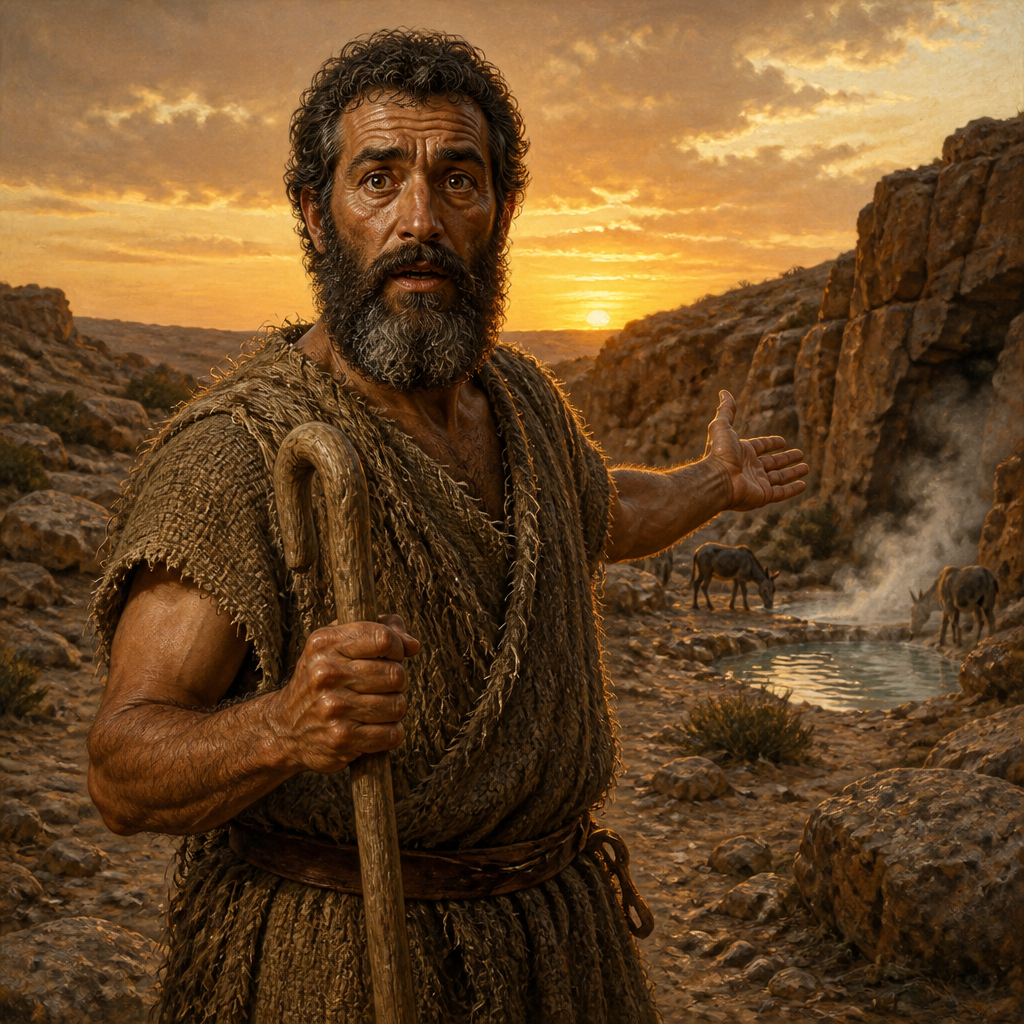
Anah was a Horite chief and son of Zibeon, notable for discovering hot springs in the wilderness while pasturing his father’s donkeys and for being the father of Esau’s wife Oholibamah.
Anah is a significant figure within the patriarchal genealogies recorded in Genesis and 1 Chronicles, specifically associated with the land of Seir and the emergence of the Edomite nation. As a descendant of Seir the Horite, Anah belonged to the indigenous people who inhabited the rugged mountainous region before it was fully settled and dominated by the descendants of Esau. The biblical record identifies Anah as one of the 'chiefs' of the Horites, a term that denotes a position of tribal leadership and territorial influence in the ancient Near East.
While many figures in these expansive genealogies are listed only by name, Anah is distinguished by a specific anecdotal detail regarding a discovery made during his youth. He is also strategically placed in the biblical narrative as a link between the Horite clans and the family of the patriarch Isaac, through the marriage of his daughter, Oholibamah, to Esau. This connection underscores the complex intermingling of nomadic and semi-nomadic tribes in the Transjordan region during the mid-second millennium BC.
Background and Family
Anah was the son of Zibeon the Hivite (or Horite, as the terms are often used interchangeably in the context of the Seir region) and a grandson of Seir the Horite. The genealogy provided in Genesis 36 and 1 Chronicles 1 places Anah within the third generation of the Horite leadership. He was a brother to Aiah and grew to become a prominent leader among his people, eventually being counted among the "chiefs" (Hebrew: alluph) of the Horites who inhabited the land of Seir.
His immediate family included a son named Dishon and a daughter named Oholibamah. The record of his offspring is particularly important because Oholibamah became one of the wives of Esau, the brother of Jacob. This marriage represents a pivotal point in the history of the region, as it solidified the alliance between the arriving descendants of Abraham and the established Horite inhabitants, ultimately leading to the formation of the nation of Edom. The biblical text takes care to repeat his relationship to Oholibamah in Genesis 36:2, 14, 18, and 25, emphasizing his role as a patriarch of a line that would produce Edomite chiefs.
Major Life Events
The most notable event recorded in Anah’s life occurred while he was engaged in the traditional patriarchal occupation of animal husbandry. Genesis 36:24 provides a specific historical marker: "This is the Anah who found the hot springs in the wilderness as he was pasturing the donkeys of his father Zibeon."
This brief mention provides a rare glimpse into the daily life and environmental challenges of the Patriarchal Period. The discovery of "hot springs" (the Hebrew word yemim is rare and sometimes translated as "mules," though modern scholarship and context favor "hot springs" or "water sources") in the arid wilderness of the Arabah or Seir region would have been a discovery of immense strategic and economic value. In a landscape where water was the most precious commodity, the ability to locate a consistent, perhaps geothermal, water source would have significantly increased the prestige and wealth of Anah’s clan. This event was so impactful that it was used as the defining characteristic of his life in the genealogical records, distinguishing him from other men of the same era.
Relationship to Other Biblical Figures
Anah’s primary relationship to the broader biblical narrative is through the house of Isaac. As the father-in-law of Esau, Anah is a progenitor of several Edomite tribes. His daughter Oholibamah bore three sons to Esau: Jeush, Jalam, and Korah. These grandsons of Anah became "chiefs" in their own right within the land of Edom.
Furthermore, Anah’s status as a son of Zibeon and a "son of Seir" (a term often used to denote descendants of the eponymous ancestor of the land) places him at the heart of the transition of the land of Seir from a Horite stronghold to the Edomite kingdom. The preservation of his name in the 1 Chronicles genealogies centuries later confirms his lasting recognition as a foundational figure in the history of the peoples surrounding Israel.
Spiritual Significance
While Anah is not portrayed as a prophet or a recipient of direct divine revelation, his inclusion in the sacred record serves a specific theological and historical purpose. The detail regarding his discovery of water in the wilderness reflects the biblical theme of God’s providence providing for life in the desert. Even among the nations outside of the direct line of the Covenant (the line of Jacob), the Bible records the names and deeds of those who shaped the world in which the patriarchs lived.
Anah’s life illustrates the reality of the "common grace" found in the skills and discoveries of ancient peoples. His work as a shepherd and his keen observation of the land highlight the dignity of labor and the importance of resourcefulness. In the context of the Genesis narrative, Anah serves as a reminder that the history of Israel did not occur in a vacuum; it was intricately woven into the histories of neighboring patriarchs and chiefs who were equally engaged in the struggle for survival and legacy in the ancient Near East.
Anah is significant as a bridge between the indigenous Horites of Seir and the Edomites. His genealogical entry is one of the few in Genesis 36 to include a specific personal achievement—the discovery of water/hot springs—which highlights the importance of environmental resources in the survival of patriarchal clans. Theographically, his inclusion demonstrates the Bible's interest in the origins and leaders of neighboring nations, affirming that the Edomite lineage was rooted in established local leadership.
Frequently Asked Questions
What did Anah find in the wilderness?
According to Genesis 36:24, Anah found hot springs (translated in some older versions as 'mules') while he was pasturing his father Zibeon's donkeys.
Who was Anah's daughter?
His daughter was Oholibamah, who became one of the wives of Esau.
What was Anah's nationality?
Anah was a Horite, a member of the people who lived in the land of Seir before the Edomites became the dominant power.
Who was Anah's father?
Anah was the son of Zibeon the Hivite/Horite.
Was Anah a leader?
Yes, he is specifically listed as one of the 'chiefs' (alluph) of the Horites in Genesis 36:29.
Family & Relationships
Parents
 ZibeonFatherGenesis 36:24Stated
 AnahThis page
 Aiah, Son of ZibeonBrotherGenesis 36:24Stated
Children
 Dishon, Son of AnahSon1 Chronicles 1:41Stated
 OholibamahDaughterGenesis 36:2Stated
Extended family
 EsauSon-in-lawGenesis 36:14
Inferred
Genesis 36:14 lists Esau and Anah among the sons of esau’s, but does not say how the two of them are related.Evidence: Genesis 36:14; Genesis 36:18; Genesis 36:2; Genesis 36:25
Connected Figures
Family
Father · Genesis 36:24
A Horite patriarch and son of Seir, whose lineage integrated into the Edomite nation through the marriage of his granddaughter Oholibamah to Esau.
PatriarchsFirst: Genesis 36:210 versesChief of the Horites
Son · 1 Chronicles 1:41
Dishon was a descendant of Seir the Horite and a son of Anah, established as a tribal figure within the territory of Edom.
Daughter · Genesis 36:2
A wife of Esau and a descendant of the Hivite and Horite peoples, Oholibamah was a prominent matriarch whose sons became powerful chiefs in the land of Edom.
Brother · Genesis 36:24
Aiah was a Horite nobleman of the land of Edom, identified as the son of Zibeon and a member of the ancestral line of Seir the Horite.
PatriarchsFirst: Genesis 36:247 versesHorite Nobleman
Son-in-law · Genesis 36:14
The firstborn son of Isaac and Rebekah, a skillful hunter and the progenitor of the Edomites, known for selling his birthright for a bowl of stew.
PatriarchsFirst: Genesis 25:2573 versesSkillful hunter, man of the field, Chief
Categories
Mentions by Book
- Genesis7
- 1 Chronicles3
Scripture References
All 10 indexed verses, in canonical order, from the Berean Standard Bible.
Genesis · 7
- Genesis 36:2
Esau took his wives from the daughters of Canaan: Adah daughter of Elon the Hittite, Oholibamah daughter of Anah and granddaughter of Zibeon the Hivite,
- Genesis 36:14
These are the sons of Esau’s wife Oholibamah (daughter of Anah and granddaughter of Zibeon) whom she bore to Esau: Jeush, Jalam, and Korah.
- Genesis 36:18
These are the sons of Esau’s wife Oholibamah: Chiefs Jeush, Jalam, and Korah. They are the chiefs descended from Esau’s wife Oholibamah, the daughter of Anah.
- Genesis 36:20
These are the sons of Seir the Horite, who were living in the land: Lotan, Shobal, Zibeon, Anah,
- Genesis 36:24
These are the sons of Zibeon: Aiah and Anah. (This is the Anah who found the hot springs in the wilderness as he was pasturing the donkeys of his father Zibeon.)
- Genesis 36:25
These are the children of Anah: Dishon and Oholibamah daughter of Anah.
- Genesis 36:29
These are the chiefs of the Horites: Chiefs Lotan, Shobal, Zibeon, Anah,
1 Chronicles · 3
- 1 Chronicles 1:38
The sons of Seir: Lotan, Shobal, Zibeon, Anah, Dishon, Ezer, and Dishan.
- 1 Chronicles 1:40
The sons of Shobal: Alvan, Manahath, Ebal, Shepho, and Onam. The sons of Zibeon: Aiah and Anah.
- 1 Chronicles 1:41
The son of Anah: Dishon. The sons of Dishon: Hemdan, Eshban, Ithran, and Cheran.