Alvah
Who was Alvah in the Bible?
Alvah was a chief of Edom, a descendant of Esau, who established a regional clan and administrative district in the land of Seir during the Patriarchal Period.
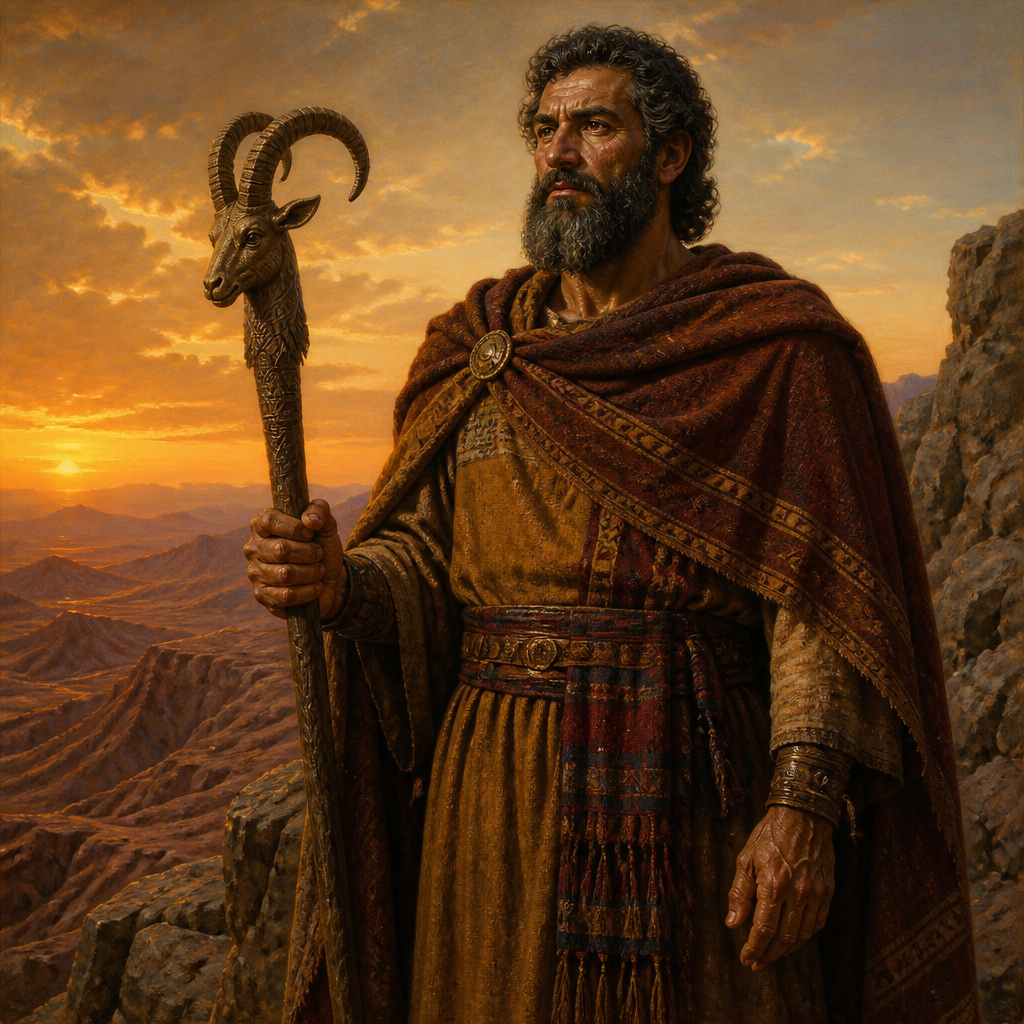
Alvah was a prominent tribal leader or chieftain (Hebrew: 'allup') of the Edomites, emerging from the lineage of Esau. He is mentioned in the genealogical records of both Genesis and 1 Chronicles as one of the 'chiefs of Edom.' His name, which may translate to 'sublimity' or 'evil' depending on the Semitic root applied, represents not just an individual but the eponymous head of a clan that inhabited a specific region in the mountainous territory of Seir.
While the biblical record regarding Alvah is brief, his inclusion in the sacred text serves a critical purpose in documenting the fulfillment of the divine promise to Esau. The scriptures record that Esau would become the father of a great nation, and the listing of Alvah alongside other chiefs demonstrates the organized, aristocratic structure of the Edomite people during the era when the Israelites were still in their formative stages.
Background and Family
Alvah appears within the historical context of the expansion of the descendants of Esau. Following the reconciliation between Jacob and Esau, Esau moved his family and possessions to the hill country of Seir because the land could not support both brothers' vast herds (Genesis 36:6-8). Alvah is identified as one of the "chiefs" (alluphim) of the Edomites. The term 'alluph' denotes a leader of a thousand or a clan head, suggesting that Alvah held significant political and military authority within the Edomite social structure.
Though his direct parentage is not explicitly detailed in the surviving genealogies of Genesis 36 and 1 Chronicles 1, he is categorized among the chiefs "according to their families and regions." This indicates that Alvah was likely a grandson or great-grandson of Esau, helping to partition the land of Edom into distinct administrative and tribal districts that would eventually become a kingdom.
Major Life Events
The biblical text does not record specific biographical anecdotes for Alvah, such as his birth, marriage, or individual exploits. Instead, his presence in the record is defined by his status as a founder. In Genesis 36:40, he is listed among the names of the chiefs according to their "places" and "names." This suggests that the name Alvah was associated with a specific geographic location in Edom. In the ancient Near East, it was common for a chieftain's name to be applied to the district his clan occupied.
Alvah’s mention in 1 Chronicles 1:51 occurs immediately after the death of Hadad, a king of Edom. The text notes, "Then Hadad died. Now the chiefs of Edom were Timna, Alvah, Jetheth..." This transition marks a shift or a parallel structure between the monarchy of Edom and the older tribal chieftain system that governed the various regions of the Seir mountains.
Relationship to Other Biblical Figures
Alvah is consistently listed in proximity to Timna and Jetheth. Timna is often associated with the very first chief mentioned in the Edomite lists, and Jetheth follows Alvah in the sequence. These figures represent the aristocratic peers of Alvah. Collectively, they stand as the non-elect line of the Abrahamic covenant; while Jacob (Israel) received the promise, Alvah represents the political development of Esau’s line, which established a formal government and territorial control long before Israel had a king.
Spiritual Significance
From a theological perspective, Alvah represents the sovereignty of God over the nations. Even though Alvah was not of the line of the promise (Isaac to Jacob), his inclusion in the Bible confirms that God’s word to Rebekah regarding her two sons was being meticulously fulfilled. The rise of Alvah as a chief demonstrates that Esau did indeed become a "great nation" as prophesied.
Furthermore, the inclusion of Alvah in the chronicles of Israel’s history serves as a boundary marker. By identifying the specific chiefs and regions of Edom, the biblical authors established the legal and historical right of the Edomites to their land, a territory that Israel was commanded to respect during the Exodus (Deuteronomy 2:4-5). Alvah stands as a testament to the fact that God tracks the lineage and territories of all peoples, not just the Israelites.
Alvah’s significance lies in his role as a foundational leader of the Edomite nation. His name is preserved in the canon to validate the historical reality of Esau's descendants and their organized societal structure. He serves as a representative of the 'alluphim'—the aristocratic heads of the clans that defined Edomite identity for centuries.
Theologically, Alvah illustrates the common grace and providence of God toward the nations outside of the primary covenant. By naming Alvah, the text acknowledges the dignity and historical presence of the Edomites, ensuring that the origins of Israel's neighbors were well-documented and recognized as part of the broader providential plan for the Near East.
Frequently Asked Questions
Who was Alvah in the Bible?
Alvah was a chief of the Edomites and a descendant of Esau, listed in the genealogies of Genesis and 1 Chronicles.
What does the name Alvah mean?
The name Alvah (עַלְוָה) is generally understood to mean 'sublimity,' 'height,' or 'exaltation' in Hebrew.
What tribe did Alvah belong to?
Alvah belonged to the nation of Edom, specifically the descendants of Esau who inhabited the land of Seir.
Is Alvah mentioned in the New Testament?
No, Alvah is only mentioned in the Old Testament books of Genesis and 1 Chronicles.
Was Alvah a king?
The Bible identifies Alvah as a 'chief' (Hebrew 'alluph'), which indicates a tribal leader or clan head, rather than a king (melek) of the entire nation.
Family & Relationships
 AlvahThis page
Extended family
 EsauAncestorGenesis 36:40
Inferred
Genesis 36:40 names Alvah and Esau in the same verse but does not state an ancestor tie between them; the link rests on the surrounding narrative.Evidence: Genesis 36:40
Connected Figures
Family
Ancestor · Genesis 36:40
The firstborn son of Isaac and Rebekah, a skillful hunter and the progenitor of the Edomites, known for selling his birthright for a bowl of stew.
PatriarchsFirst: Genesis 25:2573 versesSkillful hunter, man of the field, Chief
Categories
Mentions by Book
- Genesis1
- 1 Chronicles1
Scripture References
All 2 indexed verses, in canonical order, from the Berean Standard Bible.
Genesis · 1
- Genesis 36:40
These are the names of Esau’s chiefs, according to their families and regions, by their names: Chiefs Timna, Alvah, Jetheth,
1 Chronicles · 1
- 1 Chronicles 1:51
Then Hadad died. Now the chiefs of Edom were Timna, Alvah, Jetheth,