Zadok the Scribe
A trusted scribe appointed by Nehemiah as a treasurer to manage and distribute supplies to the Levites in Jerusalem.
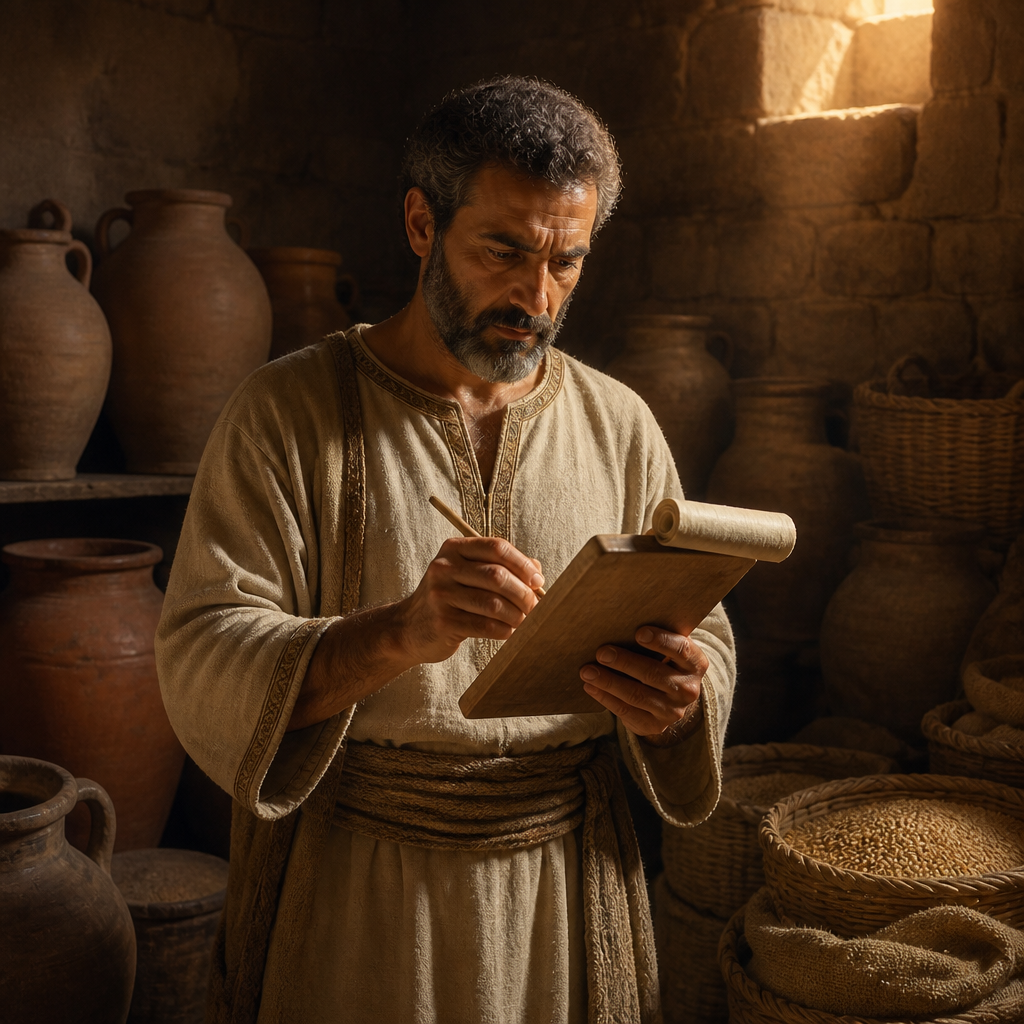
Zadok the scribe was a Jewish official who lived during the post-exilic period, serving under the administration of Nehemiah, the governor of Judah. His role was central to the logistical and economic restoration of the Jerusalem Temple operations following the return from the Babylonian exile. Zadok is specifically noted for his literary and administrative skills, which qualified him for high-level oversight of the community's resources.
Appointed during a period of significant structural and spiritual reform, Zadok was one of four men chosen to stabilize the distribution of tithes and offerings. His appointment was a response to previous failures in the management of the temple storehouses, ensuring that those dedicated to religious service received their proper sustenance. He is characterized by the biblical text primarily through his reputation for integrity and professional reliability.
Background and Family
Historical and biblical records provide no specific information regarding the parentage, ancestry, or tribal affiliation of Zadok the scribe. While the name Zadok is common among the priestly and Levitical lines, this specific individual is distinguished by his professional title as a "scribe" (Hebrew: sopher). In the context of the post-exilic era, a scribe was not merely a copyist but an educated official capable of handling legal documents, financial accounts, and administrative correspondence. His presence in Jerusalem during the mid-5th century BC places him among the remnant that sought to rebuild the Jewish state under Persian oversight.
Major Life Events
The singular recorded event in the life of Zadok occurs in Nehemiah 13. Upon Nehemiah’s return to Jerusalem from the Persian court, he discovered that the temple chambers had been neglected and the Levites had abandoned their posts because their portions had not been delivered. To rectify this, Nehemiah reorganized the storehouses and needed men of unquestionable character to oversee the national tithes of grain, new wine, and olive oil.
Zadok was selected as one of four treasurers to manage these storerooms. He served alongside Shelemiah the priest, Pedaiah the Levite, and Hanan son of Zaccur. The group represented a cross-section of the leadership: the priesthood, the scribal class, and the Levites. Their primary responsibility was the equitable distribution of supplies to their fellow Levites, ensuring the continuity of temple worship.
Relationship to Other Biblical Figures
Zadok’s primary relationship in the biblical narrative is his professional association with Nehemiah. He was chosen by the governor specifically because he was "considered trustworthy" (Nehemiah 13:13). He worked in a team of four, a collegiate body of treasurers designed to provide accountability and transparency in the handling of sacred funds. There are no recorded familial links between this Zadok and other figures of the same name in the post-exilic books of Ezra or Nehemiah.
Spiritual Significance
The significance of Zadok the scribe lies in the biblical emphasis on the necessity of administrative integrity. In the restoration of Israel, the spiritual life of the nation (the temple service) was dependent upon the practical, honest management of physical resources. Zadok represents the "secular" or professional skill set—scribal literacy and accounting—consecrated for holy use. His inclusion in the text serves as a testimony that the survival of the community depended as much on the "trustworthy" administrator as it did on the governor or the priest. He stands as a model of the faithful steward whose behind-the-scenes work enabled the public worship of God to continue without distraction.
Spiritual Significance
Zadok the scribe represents the vital role of administrative integrity within the community of faith. His appointment was a direct solution to systemic corruption and neglect, illustrating that spiritual revival requires logistical support and honest leadership. By being recorded as 'trustworthy,' Zadok highlights the biblical standard for those who handle resources intended for God's work.
His role as a scribe also underscores the transition of the scribal profession from mere royal secretaries to guardians of the Law and community order. In the post-exilic economy, Zadok’s work ensured that the Levites could focus on their religious duties, thereby maintaining the spiritual health of the entire nation.
Frequently Asked Questions
What was the specific job of Zadok the scribe?
Zadok was appointed as one of four treasurers over the temple storerooms. His job was to collect, guard, and distribute the tithes of grain, wine, and oil to the Levites.
Why was Zadok chosen for this position?
According to Nehemiah 13:13, Zadok and his colleagues were chosen because they were 'considered trustworthy.' Nehemiah needed men of integrity to fix the previous mismanagement of temple resources.
In which book of the Bible is Zadok the scribe mentioned?
He is mentioned only in the Book of Nehemiah, specifically in chapter 13, verse 13.
Was Zadok the scribe a priest?
The Bible identifies him specifically as a 'scribe' (*sopher*). While he worked alongside Shelemiah the priest, the text distinguishes their roles, suggesting Zadok served in an administrative and secretarial capacity.
What era did Zadok live in?
Zadok lived during the Post-Exilic Period, specifically during the time when Nehemiah was governor of Judah (c. 444–432 BC).
Connected Figures
Nehemiah
Superior and Appointing Official
Shelemiah
Colleague and Co-Treasurer
Pedaiah
Colleague and Co-Treasurer
Hanan son of Zaccur
Assistant and Colleague
Categories
Mentions by Book
- Nehemiah1
Others Named Zadok the Scribe
Zadok, Grandfather of King Jotham2 Kings 15:33
Zadok was a man of the Divided Monarchy whose daughter, Jerusha, married King Uzziah and became the mother of King Jotham of Judah.
Zadok, Son of AzorMatthew 1:14
A member of the Tribe of Judah identified in the Gospel of Matthew as an ancestor of Jesus Christ during the post-exilic period.
Zadok, Son of ImmerNehemiah 3:29
A man who assisted in the reconstruction of the Jerusalem wall during the post-exilic return under Nehemiah.
Zadok, Priest of the United Monarchy2 Samuel 8:17
A high priest of Israel during the reigns of David and Solomon who remained loyal to the Davidic line and established a permanent priestly dynasty.
Zadok, Levite of the Divided Monarchy1 Chronicles 6:12
A Levite of the line of Aaron who served as an essential link in the high priestly genealogy during the period of the Divided Monarchy.
Zadok, Sealer of the CovenantNehemiah 10:21
A leader or head of the people who joined Nehemiah in signing the formal covenant to follow God's Law during the Post-Exilic Period.
Zadok, Son of BaanaNehemiah 3:4
A participant in the reconstruction of Jerusalem's walls under Nehemiah, identified as the son of Baana.