Zadok, Son of Immer
Who was Zadok, Son of Immer, in the Bible?
A man who assisted in the reconstruction of the Jerusalem wall during the post-exilic return under Nehemiah.
This is one of 8 people named Zadok in the Bible. See all 8 →
Zadok, son of Immer, was a resident of Jerusalem during the mid-5th century BC. He is identified specifically as a contributor to the massive restoration project led by Nehemiah following the Babylonian Exile. The biblical record places him among the dedicated group of citizens who worked to secure the holy city by repairing its breached walls and gates.
While his tribal lineage is not explicitly stated in the specific context of the wall-building account, he is distinguished by his parentage as the son of Immer. His participation in the labor signifies his commitment to the civil and religious restoration of the Jewish community after the return from captivity.
Background and Family
Zadok is identified in the biblical record as the "son of Immer" (Nehemiah 3:29). In the context of the post-exilic community, the name Immer is frequently associated with a priestly house (1 Chronicles 24:14; Ezra 2:37), though the text in Nehemiah 3 does not explicitly apply the title of priest to this specific Zadok. He was a member of the generation that returned to Judah to rebuild the foundations of the nation under the Persian administration.
Major Life Events
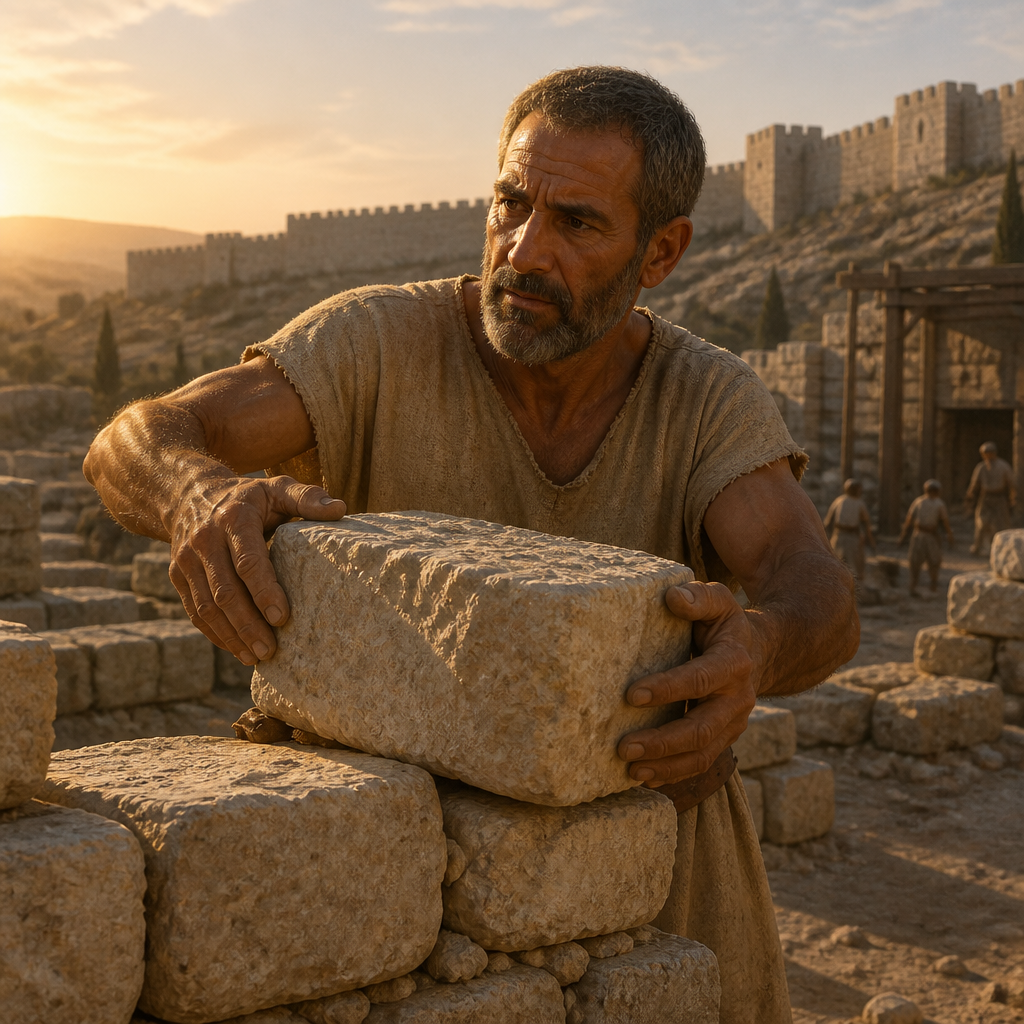
The primary and only recorded event in the life of Zadok, son of Immer, is his participation in the rebuilding of the wall of Jerusalem. Following the decree of King Artaxerxes and the arrival of Nehemiah, the Jewish people organized a systematic repair of the city's defenses. Zadok was assigned a specific section of the wall to restore.
According to the text, Zadok "made repairs opposite his house." This detail is significant as it reflects the strategic organization Nehemiah utilized—assigning men to repair the portions of the wall closest to their own residences to ensure personal motivation and efficient defense.
Relationship to Other Biblical Figures
Zadok’s work was part of a larger collaborative effort involving various leaders and families. He worked in close proximity to Shemaiah son of Shecaniah, who was the guard of the East Gate. This placement suggests that Zadok lived and worked in the eastern section of Jerusalem, a vital area near the Temple precinct. His father, Immer, provided the familial identifier necessary to distinguish him from other men named Zadok active during the same era.
Spiritual Significance
While the mention of Zadok is brief, his spiritual significance lies in his representation of the "faithful remnant." He exemplifies the biblical principle of personal responsibility within a communal task. By repairing the wall "opposite his house," Zadok contributed to the collective safety and sanctity of Jerusalem. His presence in the genealogies of the restoration reflects the biblical emphasis on recording those who labored to re-establish the worship and security of God's people after a period of judgment and exile.
Zadok, son of Immer, represents the practical commitment of the post-exilic community to the restoration of Jerusalem. His inclusion in the list of builders in Nehemiah 3 serves as a historical testimony to the individual families who prioritized the protection of the Holy City over their personal comfort. Theologically, he illustrates the concept of localized service; by attending to the brokenness nearest to him, he contributed to the wholeness of the entire city.
His identification with the house of Immer further underscores the continuity of the Jewish people during the transition from the Exile back to their ancestral lands. Even without an expansive narrative, his record in the scriptures validates the importance of every individual worker in the fulfillment of God’s providential plan for the restoration of Israel.
Frequently Asked Questions
What did Zadok, son of Immer, do in the Bible?
Zadok, son of Immer, participated in the rebuilding of the walls of Jerusalem under the leadership of Nehemiah. Specifically, he repaired the section of the wall located directly opposite his own house.
Where is Zadok, son of Immer, mentioned in Scripture?
He is mentioned only once in the Bible, in Nehemiah 3:29.
Who was Zadok's father?
Zadok's father was a man named Immer.
Was this Zadok a priest?
While the name Immer is associated with a priestly family in other parts of the Bible, Nehemiah 3:29 does not explicitly state that this Zadok was a priest.
Which gate was near Zadok's section of the wall?
Zadok worked next to Shemaiah, the guard of the East Gate, indicating he was working on the eastern side of Jerusalem.
Family & Relationships
Parents
 Immer, Father of ZadokFatherNehemiah 3:29Stated
 Zadok, Son of ImmerThis page
Connected Figures
Family
Father · Nehemiah 3:29
A man living during the Post-Exilic Period whose son, Zadok, assisted in the reconstruction of Jerusalem's walls under Nehemiah.
Categories
Mentions by Book
- Nehemiah1
Scripture References
All 1 indexed verse, in canonical order, from the Berean Standard Bible.
Nehemiah · 1
- Nehemiah 3:29
Next to them, Zadok son of Immer made repairs opposite his house, and next to him, Shemaiah son of Shecaniah, the guard of the East Gate, made repairs.
Others Named Zadok
Compare all 8 bearers →Zadok, Grandfather of King Jotham2 Kings 15:33
Zadok was a man of the Divided Monarchy whose daughter, Jerusha, married King Uzziah and became the mother of King Jotham of Judah.
Zadok, Son of AzorMatthew 1:14
A member of the Tribe of Judah identified in the Gospel of Matthew as an ancestor of Jesus Christ during the post-exilic period.
Zadok, High Priest under David and Solomon2 Samuel 8:17
A high priest of Israel during the reigns of David and Solomon who remained loyal to the Davidic line and established a permanent priestly dynasty.
Zadok, Priest in the Line of Eleazar1 Chronicles 6:12
A Levite of the line of Aaron who served as an essential link in the high priestly genealogy during the period of the Divided Monarchy.
Zadok, Sealer of the CovenantNehemiah 10:21
A leader or head of the people who joined Nehemiah in signing the formal covenant to follow God's Law during the Post-Exilic Period.
Zadok, Son of BaanaNehemiah 3:4
A participant in the reconstruction of Jerusalem's walls under Nehemiah, identified as the son of Baana.
Zadok the ScribeNehemiah 13:13
A trusted scribe appointed by Nehemiah as a treasurer to manage and distribute supplies to the Levites in Jerusalem.