Vashti
Who was Vashti in the Bible?
The first queen of King Xerxes who was deposed after refusing to appear before the king and his guests during a royal banquet in Susa.
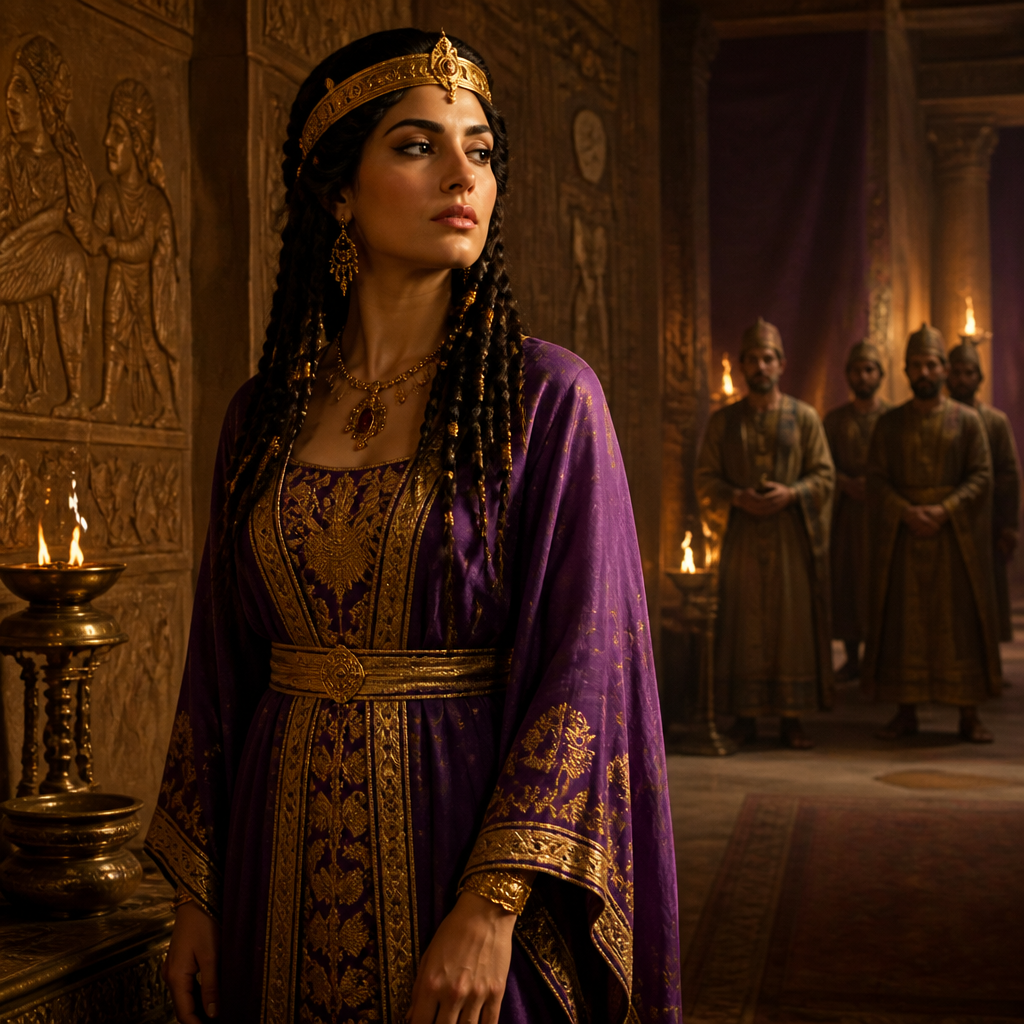
Vashti was the queen of the Persian Empire during the reign of King Xerxes (commonly identified as Xerxes I) in the 5th century BC. Her story is recorded in the opening chapters of the Book of Esther, serving as the catalyst for the rise of Esther to the throne and the subsequent deliverance of the Jewish people from destruction. Vashti is depicted as a figure of high status and significant influence, hosting her own banquet for the women of the palace while the king held a massive feast for his officials.
Her tenure as queen came to an abrupt end following a public act of defiance. When Xerxes, in a state of high spirits from wine, commanded her to appear before his male guests to display her beauty, Vashti refused. This act of disobedience prompted a legal crisis among the king's advisors, leading to a royal decree that stripped her of her title and prohibited her from ever entering the king’s presence again. Her removal set the stage for the selection of a new queen, a process that ultimately brought the Jewish orphan Esther into the royal court.
Background and Family
The biblical record of Vashti is focused entirely on her role as the Queen of Persia during the post-exilic period, specifically in the third year of King Xerxes's reign (c. 483 BC). While the text of Esther does not explicitly state her lineage or tribe, she is clearly established as a woman of immense beauty and royal standing. The scriptural account identifies her as the partner of Xerxes, who ruled over 127 provinces stretching from India to Cush. Biblical data also identifies her as the parent of figures associated with the later Persian line, namely Artaxerxes and Darius, though her primary narrative function in the Bible is defined by her relationship with Xerxes.
Vashti occupied a position of substantial social power. In Esther 1:9, she is described as hosting a separate banquet for the women in the royal palace. This suggests that the royal household maintained a level of gender-segregated social hierarchy, and that Vashti held jurisdiction over the female inhabitants and noblewomen of the capital, Susa.
Major Life Events
The Royal Feast and Defiance
In the third year of his reign, King Xerxes held a 180-day display of his wealth followed by a seven-day banquet. On the final day of the festivities, the king, 'merry with wine,' commanded his seven eunuchs to bring Queen Vashti before the assembly. He intended for her to wear her royal crown so that the 'people and officials' could behold her beauty (Esther 1:11).
In a moment that challenged the absolute authority of the Persian monarch, Vashti refused the command. The text does not provide a specific reason for her refusal, noting only that she 'refused to come at the king’s command brought by his eunuchs' (Esther 1:12). This act of independence sparked a legal and political firestorm. Xerxes, described as being 'furious,' consulted his seven sages concerning the legal implications of a queen defying a royal edict.
The Deposition and Decree
One of the king's advisors, Memucan, argued that Vashti’s actions were not merely a private domestic matter but a threat to the social order of the entire empire. He reasoned that when other women heard of the queen’s defiance, they would also 'despise their husbands' (Esther 1:17). To prevent this, Memucan proposed a permanent royal decree: Vashti was to be banished from the king's presence, and her 'royal position shall be given to a woman better than she' (Esther 1:19).
Xerxes enacted this proposal, issuing an irrevocable decree throughout the provinces. Vashti was stripped of her crown and her status, effectively disappearing from the biblical narrative after this point. Later, when the king's anger cooled, he 'remembered Vashti and what she had done,' leading his servants to suggest a search for a new queen, which resulted in the selection of Esther.
Relationship to Other Biblical Figures
Vashti’s primary relationship is with King Xerxes, whose volatile temper and concern for royal prestige dictated her fate. Her actions created the vacancy that Esther would eventually fill. While Vashti and Esther never meet in the text, their lives are inextricably linked; Vashti’s removal is the prerequisite for Esther’s ascension. The Bible also notes her as the parent of Artaxerxes and Darius, linking her to the subsequent leaders of the Persian Empire who would later interact with figures like Nehemiah and Ezra during the return of the Jewish exiles to Jerusalem.
Spiritual Significance
In the context of the Book of Esther, Vashti serves as a narrative foil to both Xerxes and Esther. Her refusal to be treated as a mere object of display highlights the themes of pride and the limits of human authority that permeate the book. From a providential perspective, Vashti’s deposition is often viewed by scholars as the 'hidden' hand of God at work. Though the name of God is never mentioned in the book of Esther, the removal of Vashti is the first in a series of highly specific events that place the right person (Esther) in the right place to save the Jewish people. Vashti’s brief appearance underscores the biblical theme that even the decrees of pagan kings and the actions of secular rulers are ultimately used to fulfill a divine purpose.
Vashti’s significance lies in her role as the historical catalyst for the events of the Purim narrative. By defying a direct royal order, she sets in motion the legal processes of the Persian court that allow for a Jewish woman, Esther, to become queen. Her story illustrates the volatility of the Persian monarchy and the social pressures of the time, providing a stark contrast to Esther’s later strategic and successful approach to influencing the king.
Theologically, Vashti represents the unpredictability of human power structures. Her sudden fall from the height of imperial influence to total banishment serves as a reminder of the fragility of earthly status. Her removal is the essential plot device that establishes the 'Exile and Return' era's precarious environment for the Jewish people, setting the stage for a demonstration of divine providence through Esther and Mordecai.
Frequently Asked Questions
Why did Vashti refuse to appear before King Ahasuerus?
The Bible does not state her specific motive. It only records that she refused the command brought by the eunuchs. Scholars often suggest she may have found the command undignified or that she wished to maintain her own royal protocols during her separate banquet for women.
Was Vashti executed for her disobedience?
The biblical text does not say she was executed. Esther 1:19 states the decree was that she 'shall never again enter the presence of King Xerxes' and that her royal position be given to another. Her fate after this banishment is not recorded in Scripture.
What does the name Vashti mean?
The name is of Persian origin. While its exact etymology is debated among linguists, it is generally associated with the Persian word for 'beautiful' or 'best,' which aligns with the biblical description of her being 'beautiful to behold.'
How did Vashti's removal affect the Jewish people?
Indirectly, it saved them. If Vashti had remained queen, Esther would not have been in a position to intercede with the king to stop Haman's plot to annihilate the Jews. Vashti's removal is seen as the beginning of God's providential plan in the book.
Is Vashti mentioned anywhere else in the Bible?
No. Her entire biblical footprint is contained within the first two chapters of the Book of Esther, though she is mentioned ten times within that brief span.
Family & Relationships
 XerxesHusbandEsther 1:9
Inferred
Esther 1 calls her Queen Vashti and names the king as the one whose command she refused (1:9–12, 1:17), without using the word wife.Evidence: Esther 1:9
 VashtiThis page
Connected Figures
Family
Husband · Esther 1:9
The powerful Persian king of the post-exilic period who deposed Queen Vashti and eventually chose Esther to be his queen, unknowingly saving the Jewish people from genocide.
Exile and ReturnFirst: Ezra 4:631 versesKing of Persia
Categories
Mentions by Book
- Esther10
Scripture References
All 10 indexed verses, in canonical order, from the Berean Standard Bible.
Esther · 10
- Esther 1:9
Queen Vashti also gave a banquet for the women in the royal palace of King Xerxes.
- Esther 1:11
to bring Queen Vashti before him, wearing her royal crown, to display her beauty to the people and officials. For she was beautiful to behold.
- Esther 1:12
Queen Vashti, however, refused to come at the king’s command brought by his eunuchs. And the king became furious, and his anger burned within him.
- Esther 1:15
“According to law,” he asked, “what should be done with Queen Vashti, since she refused to obey the command of King Xerxes delivered by the eunuchs?”
- Esther 1:16
And in the presence of the king and his princes, Memucan replied, “Queen Vashti has wronged not only the king, but all the princes and the peoples in all the provinces of King Xerxes.
- Esther 1:17
For the conduct of the queen will become known to all women, causing them to despise their husbands and say, ‘King Xerxes ordered Queen Vashti to be brought before him, but she did not come.’
- Esther 1:19
So if it pleases the king, let him issue a royal decree, and let it be recorded in the laws of Persia and Media so that it cannot be repealed, that Vashti shall never again enter the presence of King Xerxes, and that her royal position shall be given to a woman better than she.
- Esther 2:1
Some time later, when the anger of King Xerxes had subsided, he remembered Vashti and what she had done, and what had been decreed against her.
- Esther 2:4
Then let the young woman who pleases the king become queen in place of Vashti.” This suggestion pleased the king, and he acted accordingly.
- Esther 2:17
And the king loved Esther more than all the other women, and she found grace and favor in his sight more than all of the other virgins. So he placed the royal crown upon her head and made her queen in place of Vashti.