Seraiah the Returnee Priest
A prominent priest and leader who returned from the Babylonian Exile with Zerubbabel and later signed the covenant of Nehemiah.
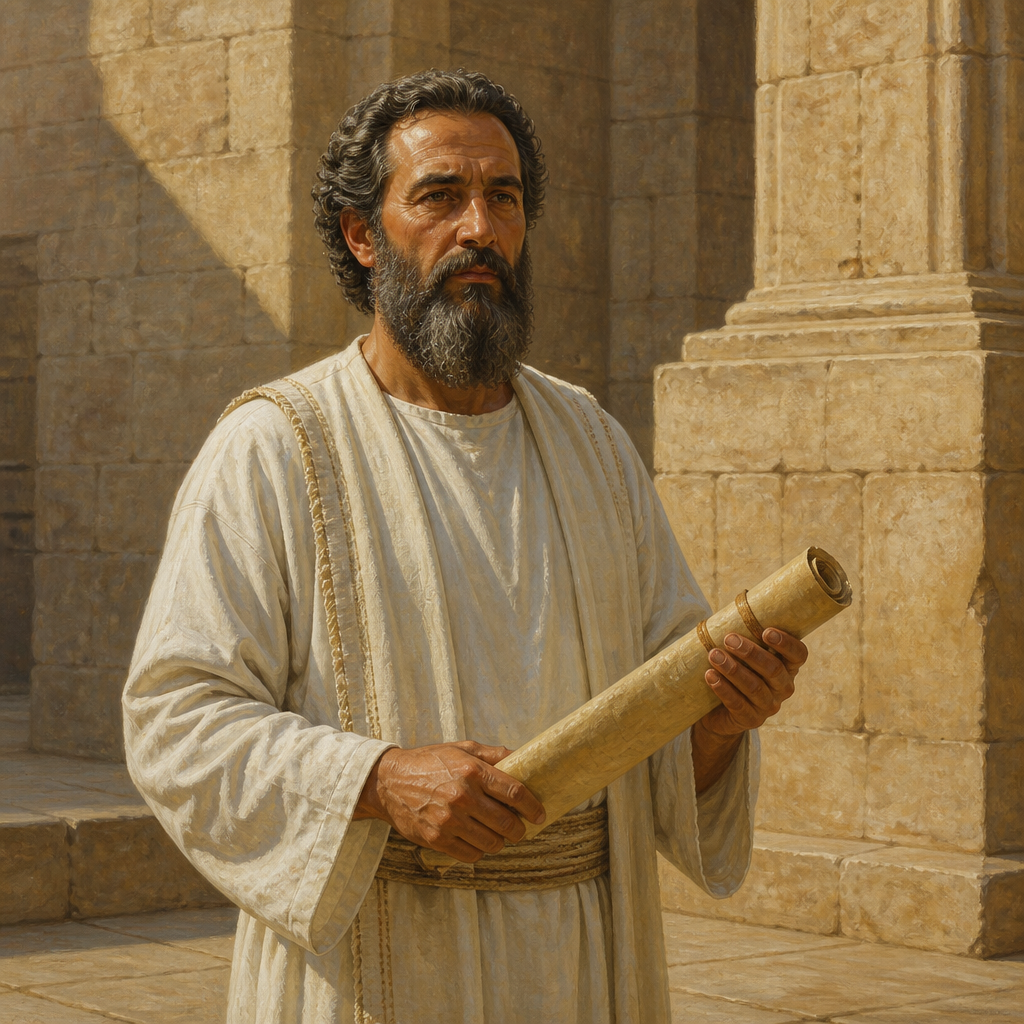
Seraiah was a significant figure during the late 6th and 5th centuries BC, specifically within the community of Jews who returned to Judea from the Babylonian captivity. As a priest, he was part of the foundational leadership that established the second temple period in Jerusalem. His role was both religious and civic, helping to organize the returning exiles and formalizing their commitment to the Mosaic Law.
Throughout the biblical accounts in Ezra and Nehemiah, Seraiah is consistently positioned among the high-ranking officials and ancestral heads of priestly families. His inclusion in these lists underscores his authority and the continuity of the Aaronic priesthood through the turbulent transition from exile back to national sovereignty under the Persian Empire.
Background and Family
Seraiah appears in the historical records of the post-exilic community in Jerusalem during the mid-to-late 5th century BC. While the biblical text does not provide his specific parentage, it identifies him clearly as a priest. By the time of the high priest Joiakim, Seraiah had become the eponymous head of a priestly house, indicating that he was a man of significant heritage and influence. The family of Seraiah continued to be recognized in subsequent generations, with a man named Meraiah serving as the head of his house during Joiakim’s tenure.
Major Life Events
Seraiah’s biblical narrative is defined by three major administrative and spiritual milestones. First, he was among the select group of leaders who accompanied Zerubbabel and Jeshua (Joshua) in the first wave of returnees from Babylon (Ezra 2:2, Nehemiah 12:1). This group was responsible for the initial resettlement of the land and the reconstruction of the altar.
Second, Seraiah was a signatory to the formal "firm covenant" (Nehemiah 10:1-2). During the time of Nehemiah the governor, the people of Israel confessed their sins and pledged to separate themselves from foreign influences and to keep the Sabbath and the Temple requirements. Seraiah’s name appears first in the list of priests who set their seal to this document, reflecting his status as a premier spiritual authority in the restored community.
Finally, his name is preserved in the genealogical records of the priests and Levites. These records were vital for establishing the legitimacy of temple service, and Seraiah is recorded as one of the chief priests who came up with Zerubbabel (Nehemiah 12:1).
Relationship to Other Biblical Figures
Seraiah operated in close proximity to the primary architects of the Restoration. He is listed alongside Zerubbabel, the Davidic governor, and Jeshua, the High Priest, in the initial return. In the signing of the covenant, his name is grouped with other influential priests like Azariah and Jeremiah. In the later administrative records, his legacy is carried forward by Meraiah, who succeeded him as the head of the priestly family of Seraiah.
Spiritual Significance
Seraiah represents the restoration of the covenant relationship between Yahweh and Israel. His presence in the return from exile signifies the survival of the priestly line despite seventy years of captivity. By sealing the covenant under Nehemiah, he acted as a representative for the people, modeling a return to scriptural fidelity and the purification of the nation’s worship practices. His life demonstrates the importance of institutional continuity and the re-establishment of sacred order in a formerly desolate land.
Spiritual Significance
Seraiah serves as a symbol of the endurance and restoration of the Israelite priesthood during the Post-Exilic Period. His inclusion in the foundational lists of returnees and covenant-sealers highlights the biblical emphasis on legitimate leadership and the formal renewal of the Law of Moses after the judgment of the Exile.
Theological focus is placed on his role as a 'head of a priestly house.' This designation ensured that the sacrificial system and temple duties could be properly resumed in Jerusalem, fulfilling the prophetic promises of a return to the Land and the restoration of the Davidic and Aaronic orders.
Frequently Asked Questions
When did Seraiah live?
Seraiah lived during the Post-Exilic Period, specifically returning from Babylon to Jerusalem in the late 6th century BC (c. 538 BC) and continuing his service through the time of Nehemiah in the 5th century BC.
What was Seraiah’s primary role?
He was a priest and a leader of the Jewish people, serving as a chief officer among the returnees and the head of a priestly family.
Did Seraiah sign the covenant of Nehemiah?
Yes, Seraiah is the first priest listed among those who set their seal to the written covenant to follow God's Law in Nehemiah 10:1-2.
Who was the successor of Seraiah’s priestly house?
According to Nehemiah 12:12, Meraiah was the head of the priestly family of Seraiah during the days of the high priest Joiakim.
Connected Figures
Zerubbabel
Leader of the return from exile
Jeshua
High Priest during the return
Nehemiah
Governor and contemporary leader
Meraiah
Head of his priestly house in the next generation
Categories
Mentions by Book
- Nehemiah3
- Ezra1
Others Named Seraiah the Returnee Priest
Seraiah the Chief Priest2 Kings 25:18
Seraiah was the final high priest of Solomon’s Temple in Jerusalem before its destruction by the Babylonians and the father of Ezra the Scribe.
Seraiah, Son of Asiel1 Chronicles 4:35
A descendant of the tribe of Simeon, Seraiah is recorded in the genealogies of 1 Chronicles as the father of Joshibiah and son of Asiel.
Seraiah, Son of Kenaz1 Chronicles 4:13
Seraiah was a descendant of Judah and the brother of Othniel, the first Judge of Israel, noted for being the progenitor of the craftsmen in Ge-harashim.
Seraiah son of Tanhumeth2 Kings 25:23
A Judean military commander who surrendered to Gedaliah at Mizpah following the Babylonian destruction of Jerusalem.
Seraiah, Quartermaster of JudahJeremiah 51:59
Seraiah was a high-ranking official under King Zedekiah who served as a royal quartermaster and acted as a messenger for the prophet Jeremiah during the Babylonian exile.
Seraiah the Scribe2 Samuel 8:17
High-ranking administrative official and royal scribe serving during the reign of King David and into the early United Monarchy.
Seraiah son of AzrielJeremiah 36:26
An officer of King Jehoiakim commissioned to arrest the prophet Jeremiah and his scribe Baruch during the Divided Monarchy.