Pethahiah, Levite of the Great Prayer
A Levite leader during the Post-Exilic period who directed the assembly of Israel in a solemn prayer of confession and praise following the reconstruction of Jerusalem's walls.
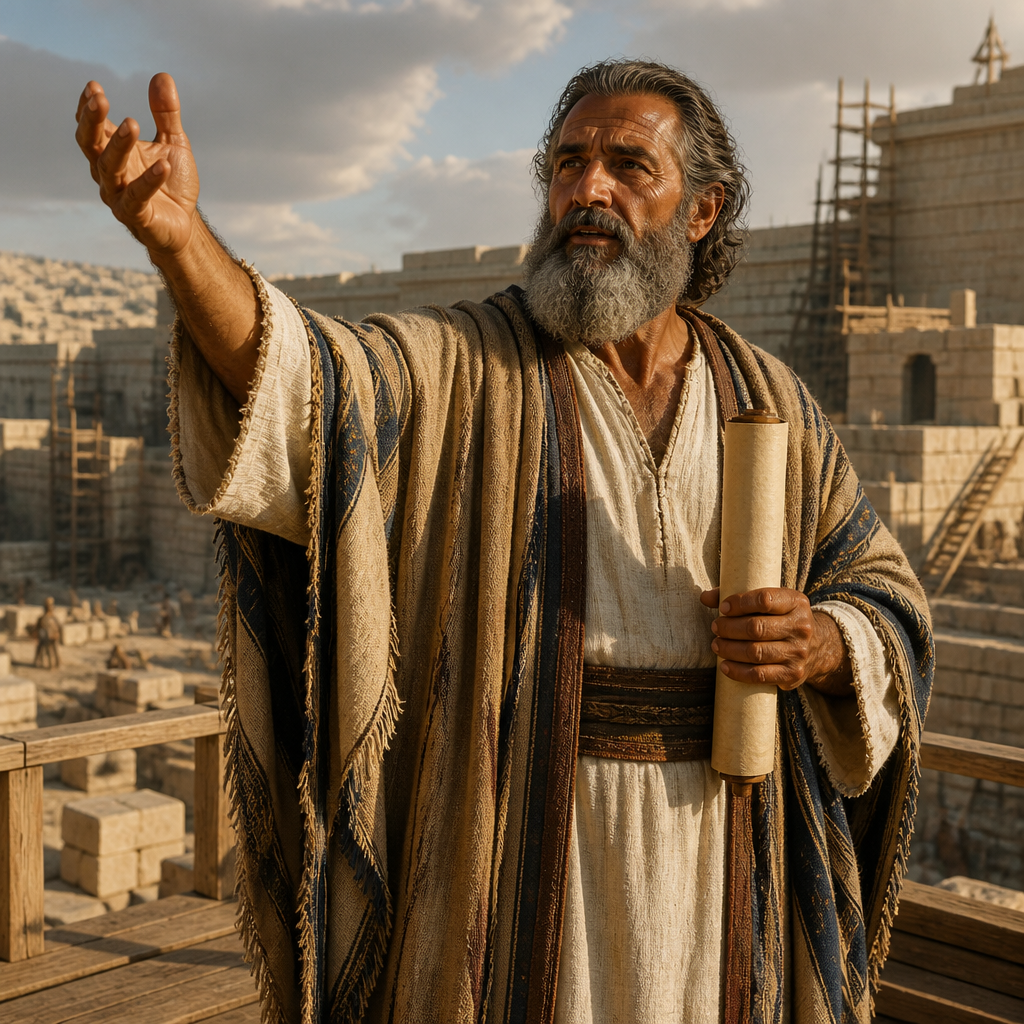
Pethahiah was a prominent Levite who served in Jerusalem during the era of the Exile and Return. He is specifically identified in the biblical record as one of the liturgical leaders who facilitated the spiritual renewal of the Jewish people under the leadership of Nehemiah and Ezra. His role was central to the transition of the community from a state of physical reconstruction to spiritual recommitment.
His primary contribution occurs during a monumental public gathering in the month of Tishrei, shortly after the completion of the city walls. As a Levite, Pethahiah was responsible for the religious education and worship guidance of the returning exiles, standing as a bridge between the ancient traditions of the Tabernacle and the renewed life of the Second Temple period.
Background and Family
The biblical record provides no specific genealogical data regarding Pethahiah’s parentage or his immediate family. However, his identity is firmly established through his tribal affiliation and his professional status as a Levite. Within the context of the Post-Exilic period (c. 5th century BC), being a Levite carried significant weight, as this class was tasked with the maintenance of the Temple, the teaching of the Law of Moses, and the leading of public worship. Pethahiah appears during a time of intense religious reform, likely arriving in Jerusalem during the migrations led by either Ezra or Nehemiah.
Major Life Events
The defining moment of Pethahiah’s career is recorded in Nehemiah 9, during the twenty-fourth day of the seventh month. This followed the Feast of Tabernacles and the public reading of the Torah. The Israelites gathered in sackcloth and with earth on their heads, separating themselves from all foreigners to confess their sins and the iniquities of their fathers.
Pethahiah was one of eight Levites—alongside Jeshua, Kadmiel, Bani, Hashabneiah, Sherebiah, Hodiah, and Shebaniah—who were appointed to stand upon the stairs or a raised platform. Their task was twofold: to quiet the people and to lead them in a responsive, corporate prayer. Pethahiah is specifically named as one of the leaders who commanded the assembly to "Stand up and bless the LORD your God from everlasting to everlasting" (Nehemiah 9:5). This exhortation served as the preamble to one of the longest and most significant prayers in the Old Testament, summarizing the history of God’s faithfulness from the call of Abraham to the present struggles of the returnees.
Relationship to Other Biblical Figures
Pethahiah worked in close proximity to the high-ranking officials of the Persian province of Yehud. While he is mentioned in a list of peers, he operated under the broader spiritual authority of Ezra the Scribe and the administrative authority of Nehemiah the Governor. His inclusion in this specific list of eight Levites suggests he was part of an elite cadre of musical or liturgical experts who were trusted to lead the entire nation in a moment of extreme vulnerability and repentance.
Spiritual Significance
The spiritual legacy of Pethahiah is found in his call to worship. In a moment of national grief and confession, he redirected the focus of the people from their own failures to the nature of God. By declaring that God’s name is "exalted above all blessing and praise," Pethahiah helped establish the theological framework for the Post-Exilic community. His service emphasizes the importance of structured leadership in corporate worship and the role of the Levites in maintaining the continuity of Israel's covenant relationship with Yahweh after the trauma of the Babylonian captivity.
Spiritual Significance
Pethahiah represents the vital role of the Levite in the restoration of Israel's worship life. His specific inclusion in the narrative of Nehemiah 9 highlights the collaborative nature of the reforms, showing that while Nehemiah rebuilt the walls, men like Pethahiah rebuilt the spiritual foundations of the people through public liturgy and the call to praise.
His role is a testament to the power of corporate exhortation. By leading the people to 'bless the Lord,' he facilitated a transition from mourning over sin to celebrating the enduring mercy of God, a theme that would sustain the Jewish people throughout the challenges of the Second Temple era.
Frequently Asked Questions
What does the name Pethahiah mean?
The name Pethahiah (פְּתַחְיָה) is of Hebrew origin, meaning 'Yahweh has opened' or 'The Lord opens.'
What tribe did Pethahiah belong to?
Pethahiah was a member of the tribe of Levi, specifically serving in the liturgical and musical duties assigned to the Levites in the post-exilic community.
When did Pethahiah live?
He lived during the Post-Exilic Period, specifically during the mid-5th century BC, coinciding with the governorship of Nehemiah in Jerusalem.
What specific action did Pethahiah take in the Bible?
He stood with other Levites during a day of national fasting and confession, leading the assembly of Israel in a call to worship and a prayer of praise to God.
Is Pethahiah mentioned in the New Testament?
No, Pethahiah is only mentioned in the Old Testament, specifically in the Book of Nehemiah.
Connected Figures
Nehemiah
Governor under whom Pethahiah served
Jeshua
Fellow Levite leader
Kadmiel
Fellow Levite leader
Ezra
Spiritual leader during the time of Pethahiah's service
Categories
Mentions by Book
- Nehemiah1
Others Named Pethahiah
Pethahiah, Priest of the Divided Monarchy1 Chronicles 24:16
Pethahiah was a priest assigned to the nineteenth of the twenty-four divisions established to serve in the Temple during the Divided Monarchy.
Pethahiah, Agent to the KingNehemiah 11:24
A descendant of Judah through Zerah who served as the Persian king's official representative for Jewish affairs during the post-exilic return to Jerusalem.
Pethahiah, Levite of the ReturnEzra 10:23
A Levite who returned from the Babylonian Exile and was among those who divorced their foreign wives at Ezra's command.