Pelatiah son of Benaiah
A leader in Jerusalem during the Babylonian exile whose sudden death served as a divine sign of judgment through the prophet Ezekiel.
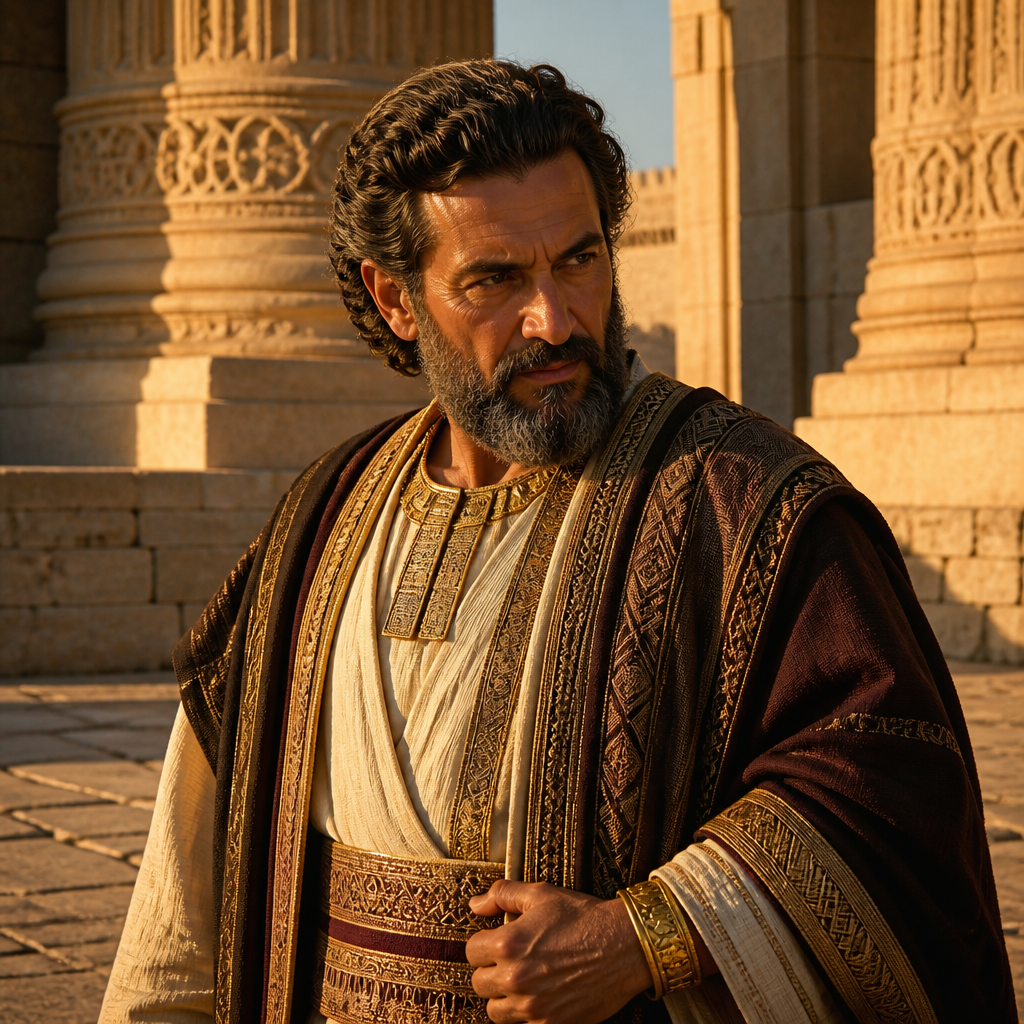
Pelatiah son of Benaiah was a prominent official and leader of the people in Jerusalem during the tumultuous years of the Babylonian exile. He appears within the prophetic visions of Ezekiel, specifically at a time when the remaining leadership in Jerusalem was characterized by spiritual rebellion and false confidence. As one of the twenty-five men standing at the east gate of the Temple, Pelatiah represented the political and social elite who remained in the city after the initial deportations.
His primary significance in the biblical narrative is not found in his long-term governance, but in his sudden and dramatic death. While the prophet Ezekiel was delivering a message of divine judgment against the corrupt leaders of the city, Pelatiah fell dead in the prophet's vision. This event served as a sobering confirmation of the validity of Ezekiel’s words and sparked a moment of intense intercession from the prophet on behalf of the remaining remnant of Israel.
Background and Family
Pelatiah is identified as the son of Benaiah. While the name Benaiah appears frequently in the Old Testament, the text of Ezekiel does not provide further genealogical details to link this Benaiah to other famous figures of the same name, such as David’s commander. Pelatiah belonged to the tribe of Judah and held a position of significant authority within the city of Jerusalem during the final years of the Kingdom of Judah.
He is described by the Spirit of the Lord as one of the "leaders of the people" (Ezekiel 11:1). This suggests he was part of the ruling class or the council of elders that advised the king and managed the affairs of the city while a large portion of the population was already in exile in Babylon. His presence at the "gate of the house of the LORD that faces east" indicates his high status and his involvement in the political and religious centers of Jerusalem.
Major Life Events
The biblical record of Pelatiah is confined to a single visionary experience granted to the prophet Ezekiel around 591 BC. Ezekiel, who was in exile by the River Chebar in Babylon, was transported in a vision to Jerusalem. There, at the entrance of the eastern gate, he observed twenty-five men, including Pelatiah son of Benaiah and Jaazaniah son of Azzur.
According to the divine revelation, these men were "giving wicked counsel" and devising evil in the city. They were misleading the people by suggesting that the time for building houses was near and that the city was a "cooking pot" that would protect them like meat (Ezekiel 11:3). This was a direct contradiction of the prophetic warnings that Jerusalem was destined for destruction. As Ezekiel began to prophesy against this false security, the vision reached a climax: "Now as I was prophesying, Pelatiah son of Benaiah died" (Ezekiel 11:13).
Relationship to Other Biblical Figures
Pelatiah’s narrative is inextricably linked to the prophet Ezekiel. He serves as a foil to the prophetic word; while Ezekiel spoke the truth of God's impending judgment, Pelatiah embodied the resistance and false confidence of the Judean leadership.
Additionally, he is mentioned alongside Jaazaniah son of Azzur. The pairing of these two names highlights them as the representative leaders of the twenty-five men. Pelatiah’s sudden death had a profound impact on Ezekiel, who immediately fell facedown and cried out to God, fearing that this death signaled the total annihilation of the remnant of Israel. This prompted a response from God regarding the future restoration of the exiles, showing that Pelatiah's end was a turning point in the message given to the prophet.
Spiritual Significance
The account of Pelatiah son of Benaiah serves as a stark warning against spiritual blindness and the misuse of leadership. His death illustrated that the judgments pronounced by the prophets were not merely symbolic but carried immediate and tangible weight. In a theological sense, Pelatiah represents the old order of Jerusalem that had to pass away—judged for its corruption—before the "heart of flesh" promised later in Ezekiel 11 could be given to a restored remnant. His life and death underscore the biblical theme that God holds national and religious leaders to a high standard of accountability, and that false peace is often a prelude to sudden judgment.
Spiritual Significance
Pelatiah's significance lies in his role as a representative of the corrupt leadership in Jerusalem during the Babylonian crisis. His sudden death during Ezekiel's prophecy validated the prophet's authority and served as a divine sign that the destruction of Jerusalem was certain. It also provoked the famous 'remnant' prayer by Ezekiel, leading to God's promise of a new spirit and a new heart for the exiles.
Theologically, Pelatiah stands as a warning against 'wicked counsel.' His life demonstrates the biblical principle that political and social standing offers no protection against the judgment of God when that standing is used to mislead the people or ignore divine warnings.
Frequently Asked Questions
Who was Pelatiah's father?
Pelatiah was the son of Benaiah, a man from the tribe of Judah.
How did Pelatiah die?
According to Ezekiel 11:13, Pelatiah died suddenly while the prophet Ezekiel was delivering a vision-prophecy against the leaders of Jerusalem.
What was Pelatiah's role in Jerusalem?
He is identified as one of the 'leaders of the people,' implying he held a position of political or social authority during the Exilic period.
Why did Ezekiel cry out when Pelatiah died?
Ezekiel feared that Pelatiah's death was a sign that God was going to completely destroy all of Israel, leaving no remnant at all.
Where did Ezekiel see Pelatiah?
Ezekiel saw him in a vision at the east gate of the Temple in Jerusalem among twenty-five men.
Connected Figures

Ezekiel
Prophet who witnessed his death
Benaiah
Father
Jaazaniah son of Azzur
Fellow leader in Jerusalem
Categories
Mentions by Book
- Ezekiel2
Family & Relationships
Parent
Ezekiel 11:1
Others Named Pelatiah son of Benaiah
Pelatiah, Grandson of Zerubbabel1 Chronicles 3:21
A descendant of King David and the grandson of Zerubbabel, noted in the post-exilic genealogies of the royal line of Judah.
Pelatiah, Leader of the Simeonites1 Chronicles 4:42
One of four brothers and leaders of the tribe of Simeon who led an expedition to Mount Seir to conquer the Amalekites during the Divided Monarchy.
Pelatiah, Signatory of the CovenantNehemiah 10:22
A leader or head of the people who set his seal to the binding covenant of faithfulness to God during the reforms of Nehemiah.