Miniamin, Priest of the Post-Exilic Period
A Jewish priest who participated in the high-profile dedication ceremony of the rebuilt walls of Jerusalem under the leadership of Nehemiah.
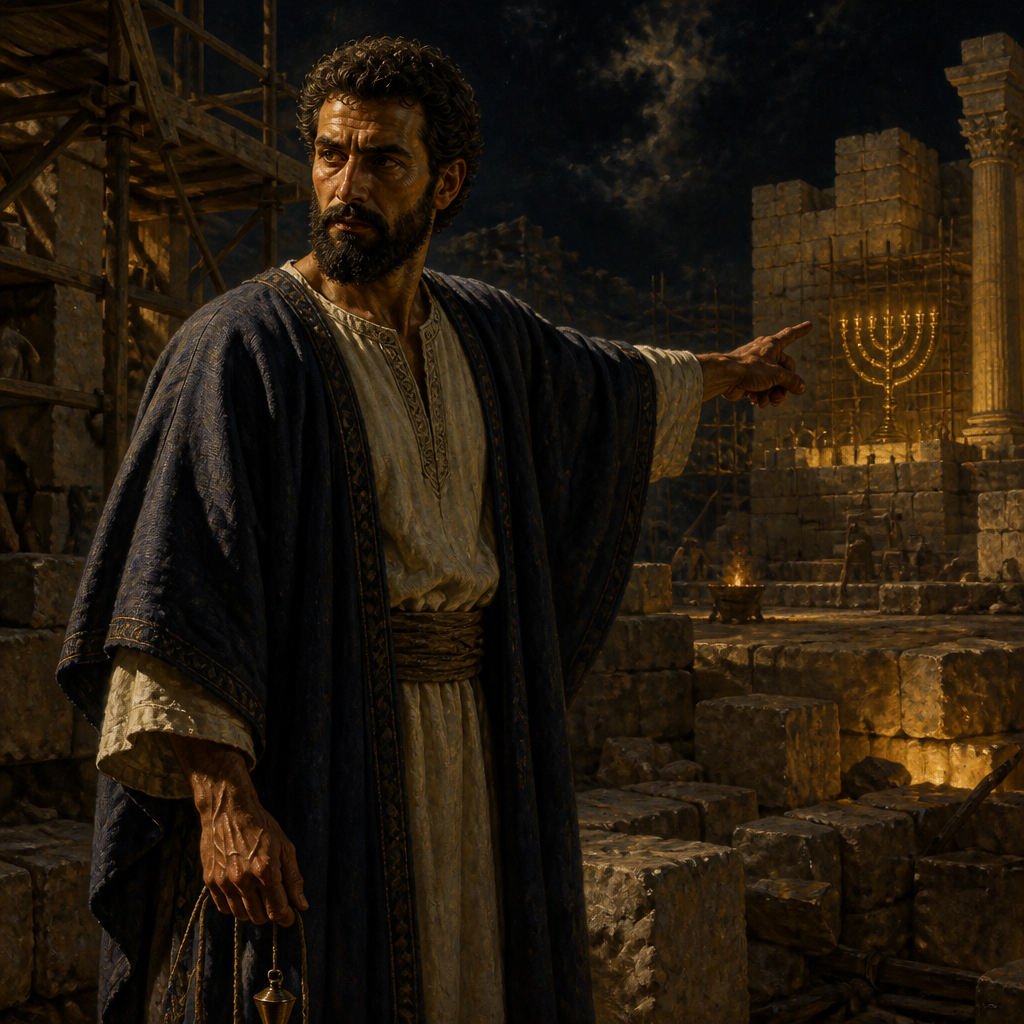
Miniamin was a priest who lived during the Post-Exilic Period, a critical era in Jewish history characterized by the return of the Jewish people from Babylonian captivity and the restoration of Jerusalem's religious and physical infrastructure. While his personal biography is largely unrecorded, his presence is noted during one of the most significant liturgical events of the restoration era: the formal dedication of the city walls.
His role was specifically liturgical, serving among a select group of priests who utilized trumpets to mark the sanctity and joy of the occasion. As part of the priestly class, Miniamin would have been a descendant of Aaron, tasked with maintaining the spiritual purity of the community and leading the congregation in worship at the Second Temple.
Background and Family
Miniamin lived during the mid-5th century BC, a time when the Jewish remnant had returned to Judea from exile in Persia. The biblical record does not provide a specific genealogy for this Miniamin, nor does it identify his specific father or his particular priestly division (though the name Miniamin is elsewhere associated with priestly courses). As a priest (kohen), he was a member of the tribe of Levi and a descendant of the line of Aaron, qualifying him for service in the newly rebuilt Second Temple. His inclusion in the list of participants for the wall's dedication suggests he was a man of recognized standing and ritual purity within the community of returnees.
Major Life Events
The primary event defining Miniamin’s biblical footprint is the dedication of the wall of Jerusalem, as recorded in Nehemiah 12. Following the completion of the wall despite intense local opposition, Nehemiah organized a grand celebration to consecrate the structure. This event involved two large thanksgiving choirs that walked in opposite directions atop the walls.
Miniamin was positioned among the priests who carried trumpets. According to Nehemiah 12:41, he stood alongside Eliakim, Maaseiah, Micaiah, Elioenai, Zechariah, and Hananiah. These trumpeters accompanied the second procession, which marched toward the Sheep Gate and eventually met the first procession at the Temple. The blowing of the trumpets was not merely musical; it was a ritual act signaling the presence of God and the victory of the community in restoring the Holy City.
Relationship to Other Biblical Figures
Miniamin is mentioned in the company of several other prominent priests and leaders of the restoration. He worked under the administrative direction of Nehemiah, the governor of Judah, and likely served under the spiritual oversight of Ezra the scribe. His specific comrades in the trumpet corps included figures like Eliakim and Zechariah. The biblical text presents these men as a unified body, representing the institutional continuity of the priesthood after decades of displacement.
Spiritual Significance
Though Miniamin’s mention is brief, his participation in the dedication ceremony highlights the importance of collective worship and the role of the individual within the community. The sounding of the trumpets by Miniamin and his peers was a fulfillment of the Mosaic Law, which prescribed the use of silver trumpets for gatherings and celebrations (Numbers 10:1-10). In the context of the Post-Exilic Period, Miniamin represents the restoration of these ancient traditions. His presence signifies that the return from exile was not merely a political or architectural feat, but a spiritual renewal where the ordained servants of God resumed their rightful places in the divine liturgy.
Spiritual Significance
Miniamin represents the restoration of the Aaronic priesthood's function in Jerusalem after the Babylonian Exile. His specific role as a trumpeter during the dedication of the wall signifies the reunification of the city's physical security with its spiritual purpose, ensuring that the labor of the people was consecrated through formal worship. The inclusion of his name in the genealogical and historical records of Nehemiah serves to validate the legitimacy of the priestly lines during the Second Temple period.
Frequently Asked Questions
What was Miniamin's job in Jerusalem?
Miniamin was a priest who served as a trumpeter during the dedication ceremony of the rebuilt walls of Jerusalem.
When did Miniamin live?
He lived during the Post-Exilic Period, specifically during the time of Nehemiah in the 5th century BC.
In which book of the Bible is this Miniamin mentioned?
He is mentioned only in the Book of Nehemiah, specifically in chapter 12.
Was Miniamin a Levite?
Yes, as a priest mentioned among those with trumpets at the Temple/wall dedication, he was a member of the tribe of Levi and the house of Aaron.
Who were some of Miniamin's contemporaries?
He served alongside other priests like Eliakim, Maaseiah, and Zechariah, under the leadership of Nehemiah.
Connected Figures
Nehemiah
Governor and leader of the wall dedication
Eliakim
Fellow priest and trumpeter
Zechariah
Fellow priest and trumpeter
Categories
Mentions by Book
- Nehemiah1
Others Named Miniamin
Miniamin, Levite of the Divided Monarchy2 Chronicles 31:15
A Levite official during the reign of King Hezekiah responsible for the distribution of sacred portions to priests in their designated cities.