Maaziah, Priest of the Post-Exilic Period
A prominent priest who served during the post-exilic return to Jerusalem and signed the solemn covenant under Nehemiah.
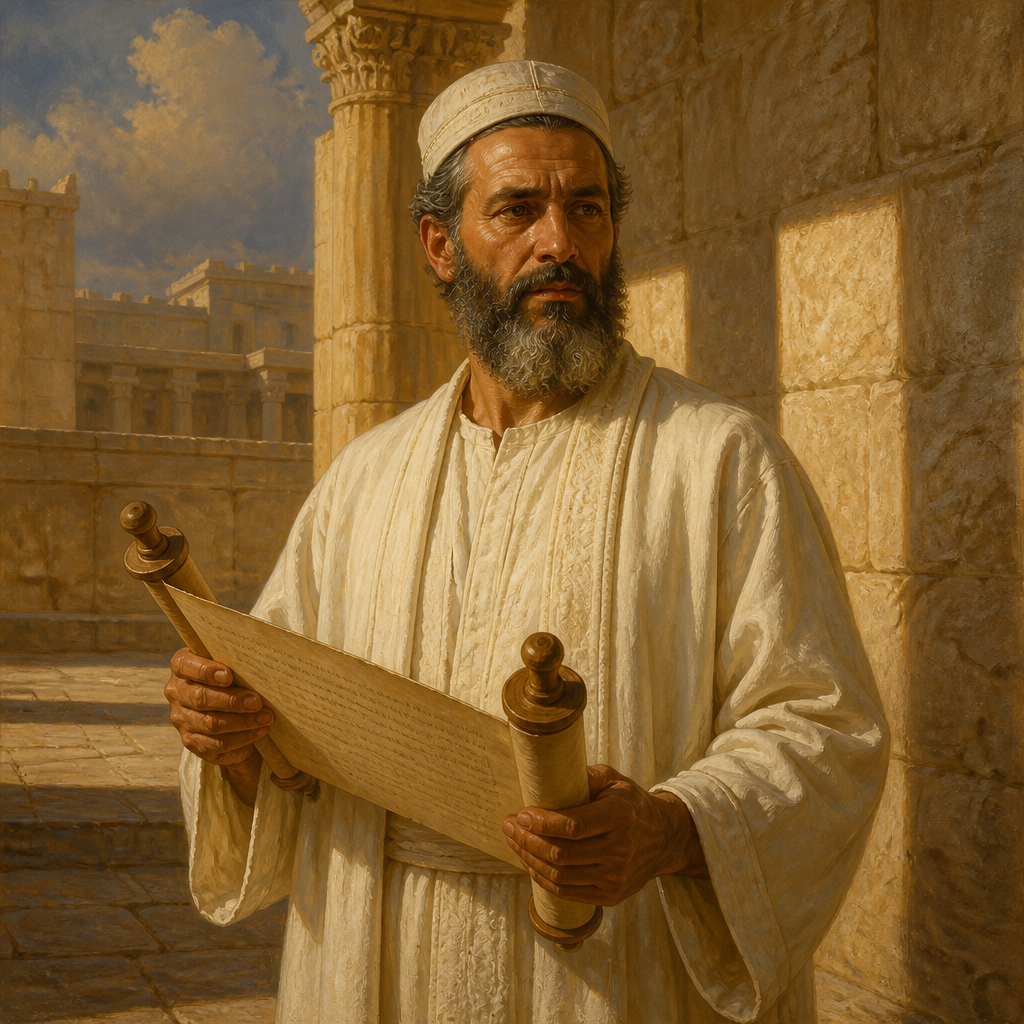
Maaziah (also rendered in some translations as Moadiah) was a priest of Israel who lived during the critical period of the Exile and Return. He was among the religious leaders who returned from the Babylonian captivity to help rebuild the spiritual and physical foundations of Jerusalem. His name, which means 'Consolation of Yahweh' or 'Strength of Yahweh,' reflects the hopeful theology of a community seeking restoration after decades of displacement.
Historically, Maaziah is identified as a head of a priestly house. His primary contribution to the biblical narrative is his participation in the formalization of the community's commitment to the Mosaic Law. During the governorship of Nehemiah, Maaziah was one of the signatories of the 'firm covenant,' a document intended to separate the people from pagan influences and ensure the continued operation of the Second Temple.
Background and Family
The biblical record for Maaziah is situated entirely within the post-exilic books of Nehemiah. As a priest, Maaziah belonged to the tribe of Levi, specifically the line of Aaron, though his specific genealogy beyond his immediate house is not detailed in the text. He appears in the records of the returnees who settled in the Persian province of Yehud (Judah). During this time, the identity of the people was being reconstructed around the Temple and the Law, placing families like that of Maaziah in positions of significant civic and religious authority.
In the lists provided in Nehemiah 12, the name appears with a slight orthographic variation as 'Maadiah' or 'Moadiah.' In these registers, he is linked to the generation of the high priest Jeshua, who led the first wave of returnees with Zerubbabel. By the time of the high priest Joiakim (the son of Jeshua), the priestly house of Maaziah (Moadiah) was led by a man named Piltai (Nehemiah 12:17).
Major Life Events
The most significant event in Maaziah’s recorded life occurs in Nehemiah 10. Following the public reading of the Law by Ezra the Scribe and a period of national confession, the leaders of Israel entered into a written agreement to walk in God's Law. Maaziah is specifically listed in Nehemiah 10:8 as one of the priests who set their seal to this document.
This act of sealing the covenant was not merely a bureaucratic gesture; it was a public pledge to maintain the sanctity of the Sabbath, to avoid intermarriage with surrounding nations, and to provide the necessary wood, grain, and financial support for the Temple sacrifices. Maaziah’s inclusion in this list indicates that he was a recognized leader of a 'father’s house,' representing a large contingent of sub-priests and their families.
Relationship to Other Biblical Figures
Maaziah is frequently grouped with other prominent priestly families of the era. In the sealing of the covenant, his name appears alongside Bilgai and Shemaiah. In the lists of those who returned with Zerubbabel, his name is associated with others such as Mijamin and Bilgah. These groupings suggest a functional hierarchy within the Temple service, where different priestly courses took turns performing the daily rituals and maintaining the sanctuary.
While the text does not record his direct interactions with Nehemiah or Ezra, his presence in the lists of covenant-signers places him in the inner circle of the restoration movement. He served as a bridge between the political leadership of Nehemiah and the spiritual needs of the laity.
Spiritual Significance
The presence of Maaziah in the biblical record underscores the continuity of the Aaronic priesthood through the trauma of the Babylonian Exile. Despite seventy years in a foreign land, the family of Maaziah preserved their genealogical records and their commitment to their liturgical duties. His participation in the covenant sealing represents the theme of corporate repentance—a realization that the survival of the remnant depended upon strict adherence to the covenantal relationship with Yahweh.
Spiritual Significance
Maaziah represents the institutional stability of the post-exilic community. His role as a signatory to Nehemiah’s covenant highlights the importance of leadership accountability in the restoration of Israel. By committing his name to the document, he pledged his house to the reforms necessary to prevent a second exile.
Theologically, Maaziah's inclusion in the registers of Nehemiah 12 serves to validate the legitimacy of the Second Temple priesthood. It demonstrates that the worship offered in the rebuilt Jerusalem was performed by the same authorized families who had served prior to the destruction of Solomon's Temple, thereby maintaining the thread of divine service across generations.
Frequently Asked Questions
What does the name Maaziah mean?
The name Maaziah (Hebrew: Ma'azyahu) means 'Strength of Yahweh' or 'Consolation of Yahweh.'
When did Maaziah live?
He lived during the Post-Exilic Period, specifically during the time of Nehemiah's governorship in the 5th century BC.
What was Maaziah's profession?
He was a priest and a leader of a priestly father's house in Jerusalem.
Is Maaziah mentioned in the New Testament?
No, Maaziah is only mentioned in the Old Testament book of Nehemiah.
Why is Maaziah spelled differently in Nehemiah 12?
In Nehemiah 12:5 and 12:17, the name is likely a variant spelling (Maadiah or Moadiah), which was common in Hebrew genealogical records due to phonetic shifts or scribal conventions.
Connected Figures
Nehemiah
Governor under whom Maaziah served
Piltai
Successor as head of Maaziah's priestly house
Jeshua
High Priest during the initial return of Maaziah's house
Shemaiah
Fellow priest and covenant signatory
Categories
Mentions by Book
- Nehemiah3
Others Named Maaziah
Maaziah, Priest of the Divided Monarchy1 Chronicles 24:18
Maaziah was a Levitical priest who served as the leader of the twenty-fourth and final division of the sanctuary service during the Divided Monarchy.