Maasai
Who was Maasai in the Bible?
A Levite priest of the line of Immer who returned to Jerusalem during the Post-Exilic Period to restore temple worship.
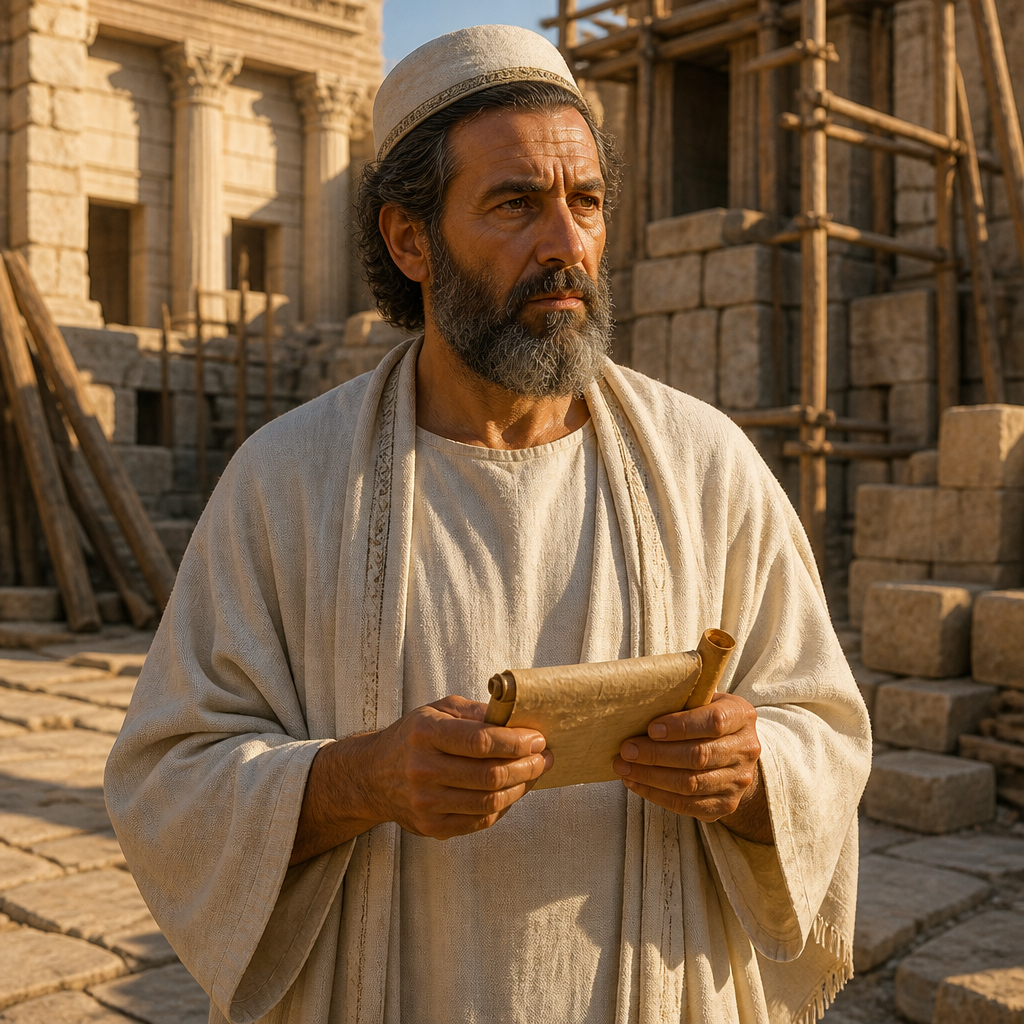
Maasai (also identified as Amashai in some translations) was a priest of the tribe of Levi who lived during the critical period of the Exile and Return. Following the Babylonian captivity, the Jewish people were granted permission by the Persian authorities to return to their ancestral homeland. Maasai was among the select group of individuals who resettled in Jerusalem to re-establish the religious life of the community.
His presence in the biblical record is found in the genealogical lists of 1 Chronicles and Nehemiah. These lists are not merely bureaucratic records; they serve to authenticate the lineage of those serving in the restored Temple. As a member of the house of Immer, Maasai represented a specific priestly division that was essential for the continuity of the sacrificial system and the spiritual governance of the post-exilic Jewish state.
Background and Family
Maasai was a descendant of the tribe of Levi, specifically within the priestly line. The biblical record provides a detailed lineage for him, tracing his ancestry through several generations to establish his legitimacy for service in Jerusalem. According to 1 Chronicles 9:12, he was the son of Adiel, who was the son of Jahzerah, the son of Meshullam, the son of Meshillemith, and finally the son of Immer.
The house of Immer was one of the twenty-four priestly courses established during the time of King David (1 Chronicles 24:14). By identifying Maasai with this house, the chronicler connects the post-exilic community directly to the golden age of the United Monarchy, suggesting that the restoration in Jerusalem was a legitimate continuation of the Davidic religious order. In the parallel account in Nehemiah 11:13, the name appears as "Amashai," which scholars generally consider a variant or phonetic spelling of the same individual, where his father is listed as Azarel.
Major Life Events
The primary life event recorded for Maasai is his participation in the resettlement of Jerusalem. After decades of displacement in Babylon, the returnees faced a city in ruins. Maasai was among the "leaders of families" who took up residence in the city when many others preferred the safety of the rural outskirts.
His role was vital to the functioning of the Second Temple. The accounts in Nehemiah suggest that he and his associates were responsible for the "work of the house," a term encompassing the daily sacrifices, the maintenance of the sanctuary, and the instruction of the law. The text notes that these men were "valiant warriors" (Nehemiah 11:14), a description that may refer to their spiritual stamina or their physical readiness to defend the newly rebuilt walls of Jerusalem against hostile neighbors like the Samaritans and Ammonites.
Relationship to Other Biblical Figures
Maasai is listed alongside other prominent post-exilic leaders such as Adaiah, son of Jeroham. These men worked under the broader leadership of figures like Nehemiah the governor and Ezra the scribe. His specific relationship to his father, Adiel (or Azarel), marks him as a member of a family that maintained its records and identity despite the upheaval of the Babylonian conquest.
Spiritual Significance
While the biblical text does not record any specific speeches or miracles performed by Maasai, his inclusion in the Holy Scripture signifies the importance of faithful service and historical continuity. In the post-exilic context, being a priest of the line of Immer meant carrying the weight of Israel’s covenantal obligations. Maasai represents the "remnant"—those who were willing to leave the relative comfort of Babylon to rebuild the spiritual heart of the nation. His life illustrates the biblical theme of restoration: that God preserves a specific lineage to ensure that his worship continues throughout generations, even through periods of national judgment and exile.
Maasai’s significance lies in his role as a bridge between the pre-exilic traditions of the Temple and the post-exilic restoration. As a priest from the line of Immer, his presence in Jerusalem validated the renewed sacrificial system, ensuring it adhered to the Mosaic Law and Davidic organization. His inclusion in the genealogies of both 1 Chronicles and Nehemiah underscores the biblical emphasis on 'holy seed' and the necessity of documented lineage for those approaching the altar of God. He stands as a representative of the faithful priesthood that enabled the Jewish community to survive and thrive after the devastation of the Babylonian Exile.
Frequently Asked Questions
Was Maasai the same person as Amashai?
Yes, most biblical scholars and commentators identify Amashai in Nehemiah 11:13 as a variant spelling of Maasai in 1 Chronicles 9:12, given the identical lineage leading back to Immer.
What tribe did Maasai belong to?
Maasai belonged to the tribe of Levi and was part of the priestly class, specifically the family of Immer.
When did Maasai live?
He lived during the Post-Exilic Period, the time when the Jewish people returned from Babylon to Jerusalem (c. 5th century BC).
What was Maasai's primary job?
He was a priest and a leader of a family who performed the 'work of the house' in the reconstructed Temple in Jerusalem.
Who was Maasai's father?
According to 1 Chronicles 9:12, his father was Adiel; the parallel account in Nehemiah 11:13 calls him Azarel.
Family & Relationships
Parents
 Adiel, Priest of the Post-Exilic PeriodFather1 Chronicles 9:12Stated
 MaasaiThis page
Extended family
 Meshullam, Levite of the ReturnGreat-Grandfather1 Chronicles 9:12Stated
Connected Figures
Family
Father · 1 Chronicles 9:12
A priest of the tribe of Levi and descendant of Immer whose family served in Jerusalem following the return from Babylonian exile.
Great-Grandfather · 1 Chronicles 9:12
A Levite priest during the Post-Exilic period who served in the priestly lineage of Immer, contributing to the re-establishment of Jerusalem.
Categories
Mentions by Book
- 1 Chronicles1
- Nehemiah1
Scripture References
All 2 indexed verses, in canonical order, from the Berean Standard Bible.
1 Chronicles · 1
- 1 Chronicles 9:12
Adaiah son of Jeroham, the son of Pashhur, the son of Malchijah; Maasai son of Adiel, the son of Jahzerah, the son of Meshullam, the son of Meshillemith, the son of Immer;
Nehemiah · 1
- Nehemiah 11:13Partial
and his associates, the leaders of families—242 men; Amashai son of Azarel, the son of Ahzai, the son of Meshillemoth, the son of Immer;
Cited as a key verse; added so References, Key Verses and Mentions by Book share one index.