Jozabad, Levite of the Return
A Levite during the post-exilic return to Jerusalem who assisted in the critical task of accounting for the Temple’s gold and silver vessels.
Jozabad, son of Jeshua, was a prominent Levite who lived during the critical period of the Jewish return from Babylonian exile. He is specifically noted for his service during the administration of the priest Ezra, who led a second wave of Israelites back to Jerusalem in approximately 458 BC under the decree of Artaxerxes I. Jozabad’s role was one of significant trust and administrative responsibility within the Temple hierarchy.
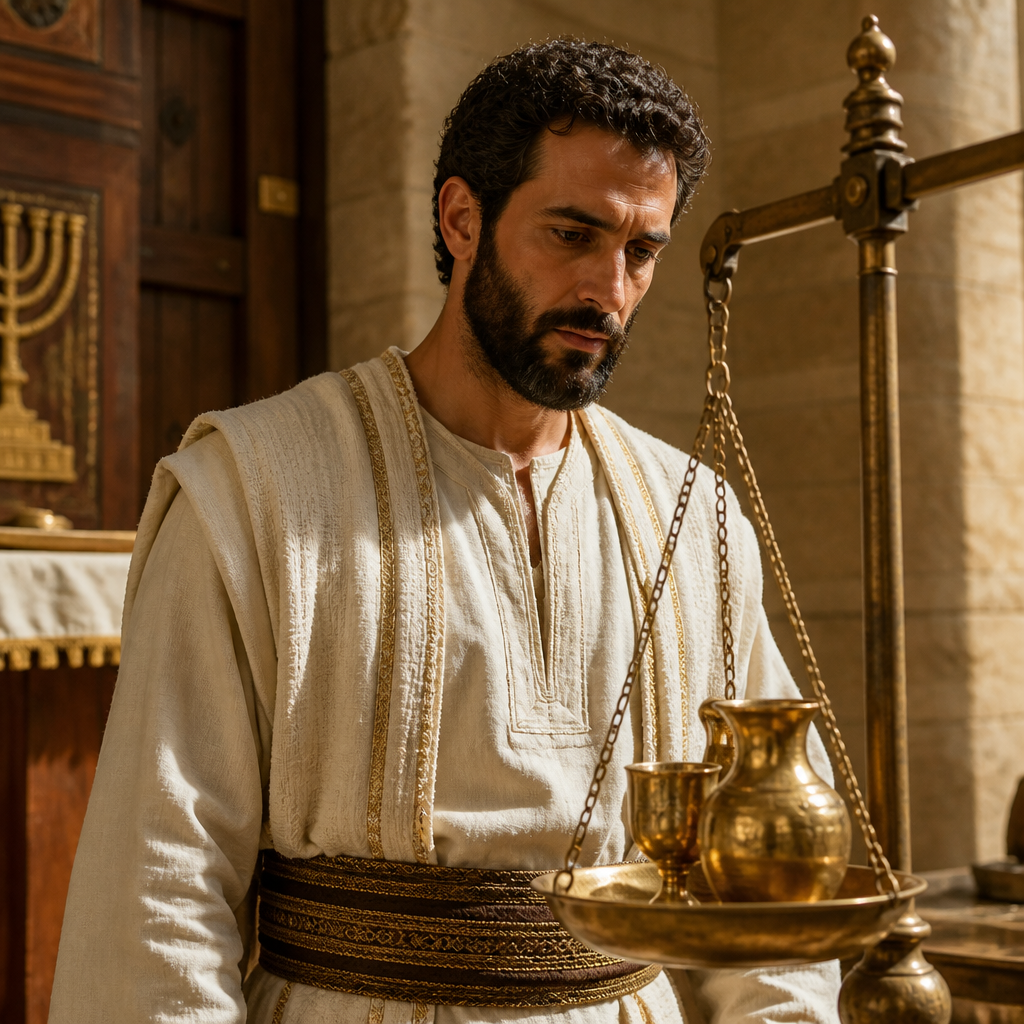
His primary recorded contribution occurs upon the arrival of the exiles in Jerusalem. As the community sought to restore the religious life of the nation, Jozabad was appointed as one of the official witnesses and caretakers responsible for the weighing and auditing of the precious metals and sacred articles brought from Babylon. This task was not merely administrative but was a ritualized act of stewardship to ensure that all items dedicated to the God of Israel were accounted for in the house of God.
Background and Family
Jozabad is identified in the biblical record as the "son of Jeshua." In the context of the return from exile, this lineage likely connects him to the priestly or Levite families that had preserved their genealogical records despite decades of displacement in Babylon. While the Bible does not provide an exhaustive biography of his early life or his time in the Persian Empire, his inclusion in the group tasked with handling the Temple treasury indicates he was a man of established reputation and Levitical standing.
Major Life Events
The sole but significant mention of Jozabad occurs in Ezra 8:33. After a grueling four-month journey from Babylon to Jerusalem, Ezra and the returning exiles observed a three-day period of rest. On the fourth day, the focus shifted to the formal transfer of the enormous wealth—silver, gold, and bronze vessels—that had been donated by the Persian king and his counselors for the Temple.
Jozabad was one of four men selected to oversee this transfer. The text states that the articles were weighed into the hand of Meremoth son of Uriah the priest, who was accompanied by Eleazar son of Phinehas. Jozabad, representing the Levites alongside Noadiah son of Binnui, served as a witness and recipient of these sacred goods. The meticulous weighing of these items served as a public demonstration of integrity, ensuring that none of the wealth intended for the worship of God had been misappropriated during the journey.
Relationship to Other Biblical Figures
Jozabad worked in close proximity to the leading religious figures of the restoration era. He served under the direct authority of Ezra the Scribe and worked alongside the high-ranking priests Meremoth and Eleazar. His partnership with Noadiah son of Binnui highlights a collaborative Levitical structure designed to maintain checks and balances in the Temple administration. This collaborative effort was essential for the legal and spiritual re-establishment of the community in the land of Judah.
Spiritual Significance
Though his mention is brief, Jozabad represents the category of faithful "hidden" servants whose administrative diligence allowed the broader spiritual reforms of the post-exilic period to succeed. By participating in the public weighing and recording of the Temple’s wealth, Jozabad helped establish a culture of transparency and holiness in the newly returned community. His service emphasizes the biblical principle that stewardship of physical resources is a sacred duty, intrinsically linked to the worship and honor of God within the sanctuary.
Spiritual Significance
Jozabad’s inclusion in the record of Ezra 8 serves as a testament to the importance of accountability in the restoration of Israel's worship. His role ensures that the transition from the Persian treasury to the Jerusalem Temple was handled with absolute precision and legal purity. Theologically, Jozabad exemplifies the Levite as a guardian of the sacred, demonstrating that the restoration of the Temple required not just architects and priests, but also trustworthy administrators to manage the logistics of holiness.
Frequently Asked Questions
What was Jozabad's specific role in the book of Ezra?
Jozabad was a Levite who helped oversee the weighing and inventory of gold, silver, and sacred vessels as they were delivered to the Temple in Jerusalem after the return from Babylon.
Who was Jozabad's father?
According to Ezra 8:33, Jozabad was the son of Jeshua.
When did Jozabad live?
He lived during the Post-Exilic Period, specifically during the return led by Ezra in approximately 458 BC.
Why was the weighing of the silver and gold important for Jozabad?
It was a measure of integrity and stewardship, proving that all the donations provided by the Persian King Artaxerxes were safely transported and delivered to the house of God without loss.
Is this the same Jozabad who married a foreign woman?
While other men named Jozabad are mentioned in Ezra 10 as having married foreign women, the Jozabad of Ezra 8:33 is specifically identified by his role in the treasury and his father Jeshua, distinguishing him within the narrative.
Connected Figures
Categories
Mentions by Book
- Ezra1
Family & Relationships
Parent
Ezra 8:33
Others Named Jozabad
Jozabad, Levite Teacher of the LawNehemiah 8:7
A Levite during the Post-Exilic Period who helped Ezra instruct the people of Israel in the understanding of the Mosaic Law during a public assembly in Jerusalem.
Jozabad, Leader of the LevitesNehemiah 11:16
A high-ranking Levite official in post-exilic Jerusalem who supervised the external maintenance and administration of the Temple of God.
Jozabad, Overseer under Hezekiah2 Chronicles 31:13
Jozabad was a Levite official appointed by King Hezekiah to manage the abundant tithes and offerings brought to the Temple during the religious reforms of the 8th century BC.
Jozabad, Levite of the Exile and ReturnEzra 10:23
A Levite who returned from the Babylonian exile and was identified among those who had taken foreign wives during the reforms of Ezra.
Jozabad, Chief of Manasseh1 Chronicles 12:20
A military commander and tribal chief of Manasseh who defected from King Saul to join David's army at Ziklag during the Divided Monarchy period.
Jozabad, Levite Officer under Josiah2 Chronicles 35:9
A high-ranking Levite official who provided significant livestock donations for King Josiah's massive Passover celebration in Jerusalem.
Jozabad, Chief of Manasseh1 Chronicles 12:20
A military leader from the tribe of Manasseh who defected to David at Ziklag during the Divided Monarchy period.
Jozabad, Son of PashhurEzra 10:22
A descendant of Pashhur who was among the post-exilic community that repented of marrying foreign women during the reforms of Ezra.
Jozabad the Gederathite1 Chronicles 12:4
Jozabad the Gederathite was a skilled warrior and Benjamite defector who joined David at Ziklag during his flight from King Saul.