Hashabneiah, Levite of the Restoration
A Levite during the post-exilic period who led the Israelites in a corporate prayer of confession and praise following the reconstruction of Jerusalem's walls.
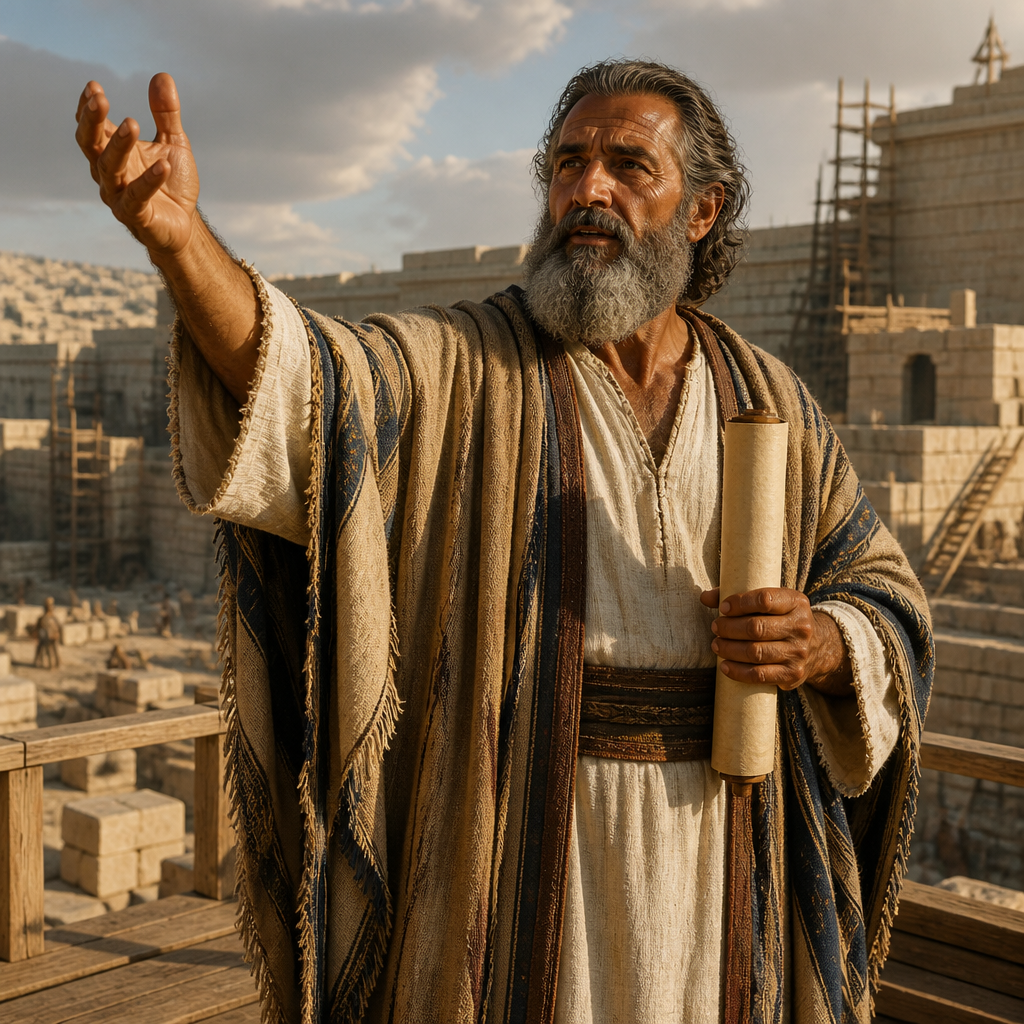
Hashabneiah was a Levite who lived during the era of the Exile and Return. He is specifically documented in the biblical record as one of the liturgical leaders who facilitated a significant moment of national repentance and worship in Jerusalem after the completion of the city's walls under Nehemiah’s governorship.
His role was centered on the spiritual reawakening of the Jewish people in the mid-5th century BC. Along with a small group of fellow Levites, Hashabneiah was responsible for directing the congregation to stand and bless Yahweh, initiating one of the most comprehensive prayers of confession recorded in the Old Testament.
Background and Family
Hashabneiah appears in the biblical narrative during the Post-Exilic Period, specifically during the days of Nehemiah the governor and Ezra the scribe. While his specific lineage and tribal ancestry are not detailed beyond his identification as a Levite, his presence in Jerusalem indicates he was among the remnants of the tribes who returned from the Babylonian captivity to resettle Judah. The name Hashabneiah is thought to mean "Whom Yahweh has considered" or "Thought of Yahweh," reflecting the providential themes of the restoration era.
Major Life Events
The primary event involving Hashabneiah occurred on the twenty-fourth day of the seventh month, shortly after the Feast of Tabernacles (Nehemiah 9:1). The Israelites had assembled with fasting, wearing sackcloth, and putting dust on their heads to confess their sins. Hashabneiah was selected as one of the Levites—alongside Jeshua, Kadmiel, Bani, Sherebiah, Hodiah, Shebaniah, and Pethahiah—to lead the assembly.
Hashabneiah’s specific contribution was the call to worship. He and his colleagues commanded the people:
“Stand up and bless the LORD your God from everlasting to everlasting: Blessed be Your glorious name, and may it be exalted above all blessing and praise” (Nehemiah 9:5).
This instruction preceded a lengthy recitation of Israel's history, from the call of Abraham through the Exodus and the wilderness wanderings, acknowledging God’s faithfulness despite the nation’s repeated rebellions.
Relationship to Other Biblical Figures
Hashabneiah is listed in direct association with other prominent Levites of the restoration, most notably Jeshua and Kadmiel. These men functioned as a collective spiritual leadership body under the civil authority of Nehemiah. There are no specific individual family relationships or personal interactions recorded for Hashabneiah in the biblical text beyond this group liturgical function.
Spiritual Significance
Hashabneiah represents the restoration of the Levitical priesthood’s functional role in Israelite society. After decades of exile where the formal sacrificial and liturgical systems were suspended, Hashabneiah’s leadership in Nehemiah 9 signifies the return to structured, scriptural worship. His exhortation to bless God "from everlasting to everlasting" emphasizes the eternal nature of the divine covenant, a crucial theological point for a community seeking to reclaim its identity as God's chosen people in a post-exilic world.
Spiritual Significance
Hashabneiah’s significance lies in his role as a catalyst for national repentance. By directing the people to exalt God’s name 'above all blessing and praise,' he helped shift the focus of the returning exiles from their physical hardships to their spiritual obligations. His presence in the text affirms the continuity of the Levitical office during the rebuilding of Jerusalem's religious life.
He serves as a historical witness to the public reading of the Law and the subsequent corporate confession that defined the community of the Return. His brief mention underscores that the reconstruction of Jerusalem was not merely a construction project, but a spiritual reformation requiring led worship and liturgical precision.
Frequently Asked Questions
When did Hashabneiah live?
Hashabneiah lived during the Post-Exilic Period, specifically around 444 BC, during the time of Nehemiah and Ezra.
What was Hashabneiah's role in the Bible?
He was a Levite who led the Israelite assembly in a call to worship and a prayer of confession after the walls of Jerusalem were rebuilt.
In which book of the Bible is Hashabneiah mentioned?
He is mentioned exclusively in the Book of Nehemiah, specifically in chapter 9, verse 5.
What does the name Hashabneiah mean?
The name is Hebrew for 'Whom Yahweh has considered' or 'Thought of Yahweh'.
Connected Figures
Categories
Mentions by Book
- Nehemiah1
Others Named Hashabneiah
Hashabneiah, Father of HattushNehemiah 3:10
Hashabneiah was a Jewish man of the post-exilic period whose son, Hattush, assisted in the reconstruction of Jerusalem's walls under Nehemiah.