Elioenai, Musician Priest under Nehemiah
A post-exilic priest and trumpeter who participated in the joyful dedication ceremony of the rebuilt walls of Jerusalem under the leadership of Nehemiah.
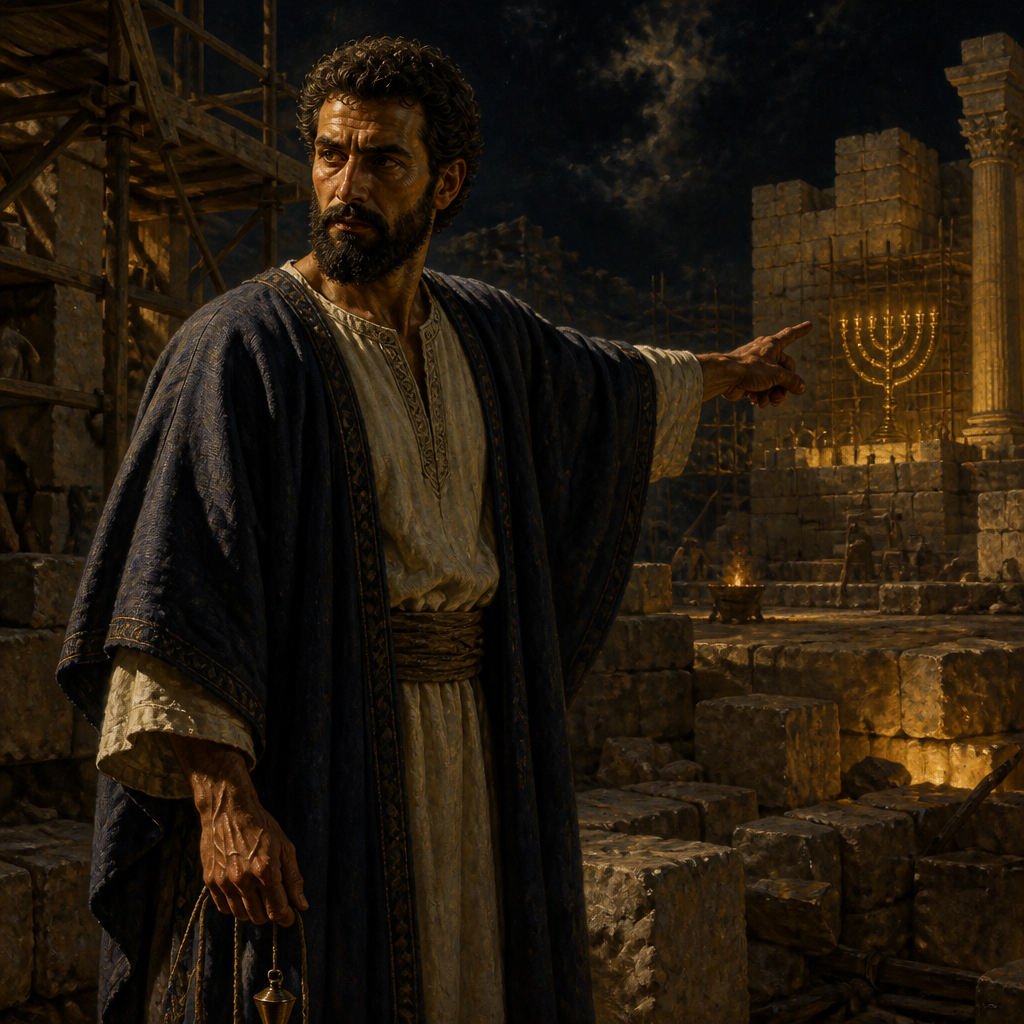
Elioenai was a priest during the Post-Exilic Period, a time when the Jewish people were re-establishing their religious and civic identity in Jerusalem following the Babylonian captivity. He is specifically identified in the biblical record as one of the officiating priests who participated in the momentous dedication of the wall of Jerusalem. This event served as the spiritual and political climax of Nehemiah’s governorship, signaling the restoration of the holy city's security and sanctity.
While his individual biography is not detailed beyond this specific event, his inclusion in the list of trumpeters signifies his status as a man of priestly lineage and his active involvement in the liturgical life of the community. In the context of Nehemiah 12, Elioenai is positioned among the elite group of musicians who led the people in a grand processional of thanksgiving, contributing to the 'great joy' that was heard from afar.
Background and Family
The biblical record identifies Elioenai as a priest during the era of the Return from Exile. Although his specific tribal lineage is not explicitly named in the single verse that mentions him, his status as a priest (Hebrew: kohen) confirms his descent from the tribe of Levi and the line of Aaron. He served during the administration of Nehemiah, the governor appointed by the Persian king Artaxerxes I, and likely worked alongside the high priest Eliashib. Unlike many other figures of the period whose genealogies are meticulously recorded to prove their right to the priesthood, Elioenai appears in the functional context of his office rather than his ancestry.
Major Life Events
The defining moment of Elioenai’s recorded life occurs in Nehemiah 12:41 during the dedication of the wall of Jerusalem. After the wall had been completed despite significant opposition, Nehemiah organized a massive celebration to consecrate the structure to God. Two large thanksgiving choirs were appointed to walk in opposite directions atop the walls.
Elioenai was part of the group of priests assigned to carry and sound the silver trumpets. According to the text, he stood alongside fellow priests Eliakim, Maaseiah, Miniamin, Micaiah, Zechariah, and Hananiah. This group accompanied the second choir, which marched to the right toward the Dung Gate and eventually toward the Water Gate. The sounding of the trumpets by Elioenai and his colleagues was not merely musical; it was a ritual act of proclamation, signaling the triumph of the restoration and the presence of God within the city.
Relationship to Other Biblical Figures
Elioenai is mentioned in the company of several prominent leaders of the restoration period. He operated under the authority of Nehemiah and likely followed the musical direction of Jezrahiah the overseer, who led the singers. He is listed in immediate proximity to other trumpeting priests such as Eliakim and Zechariah. While the text does not detail his personal relationships, his inclusion in this specific list indicates he was a contemporary of the priest-scribe Ezra, who led the first of the two great processions.
Spiritual Significance
Elioenai represents the restoration of the "Sacrifice of Praise" in the post-exilic community. His role as a trumpeter is significant because, in the Mosaic Law (Numbers 10:1-10), the sounding of trumpets was a divine ordinance for gathering the community, signaling war, and celebrating feasts. By blowing the trumpet at the wall's dedication, Elioenai helped fulfill the promise that the voice of joy would return to Jerusalem. His presence in the biblical text, though brief, underscores the importance of every individual role in the communal worship and the rebuilding of the covenant community.
Spiritual Significance
Elioenai’s significance lies in his role as a participant in the liturgical restoration of Israel. His involvement in the dedication of Jerusalem's walls highlights the transition from a people in mourning to a people of praise. As a trumpeter, he was a literal voice of the community’s renewed covenant with God, demonstrating that the reconstruction of the city was as much a spiritual endeavor as it was a physical one.
Furthermore, he serves as a representative of the faithful priesthood that remained committed to the service of the Temple and the city during a period of great geopolitical instability. His inclusion in the Nehemiah 12 register ensures that his contribution to one of the most important days in post-exilic history is preserved as a matter of sacred record.
Frequently Asked Questions
What was Elioenai's role in the book of Nehemiah?
Elioenai was a priest and a trumpeter who participated in the formal dedication ceremony of the rebuilt walls of Jerusalem.
Which tribe did Elioenai belong to?
As he is explicitly identified as a priest in Nehemiah 12:41, he belonged to the tribe of Levi.
What instrument did Elioenai play?
He played the trumpet, specifically the silver trumpets used by priests for holy convocations and celebrations.
When did Elioenai live?
He lived during the Post-Exilic Period (5th century BC), during the time of Nehemiah's governorship in Jerusalem.
In which biblical book is this Elioenai mentioned?
This specific Elioenai is mentioned only in the Book of Nehemiah, chapter 12, verse 41.
Connected Figures
Nehemiah
Governor and leader of the dedication ceremony
Eliakim
Fellow priest and trumpeter
Zechariah
Fellow priest and trumpeter
Categories
Mentions by Book
- Nehemiah1
Others Named Elioenai
Elioenai, Leader of Simeon1 Chronicles 4:36
A prominent tribal leader of the Simeonites listed in the genealogical records of 1 Chronicles during the era of the Divided Monarchy.
Elioenai, Son of Becher1 Chronicles 7:8
A Benjamite descendant and son of Becher, recorded in the genealogies of 1 Chronicles during the Egyptian Sojourn and Wilderness era.
Elioenai, Son of Neariah1 Chronicles 3:23
A descendant of King David through the line of Zerubbabel, known for his large family of seven sons during the era of the Divided Monarchy.
Elioenai, Descendant of ZattuEzra 10:27
Elioenai was a descendant of Zattu who returned to Jerusalem from the Babylonian exile and was identified during Ezra's reforms as one who had married a foreign woman.
Elioenai, Descendant of PashhurEzra 10:22
A member of the priestly family of Pashhur who was required to divorce his foreign wife during Ezra's post-exilic reforms.