Col-hozeh, Father of Baruch
Col-hozeh was a member of the Tribe of Judah and an ancestor of Maaseiah, a leader who resettled in Jerusalem during the Post-Exilic Period.
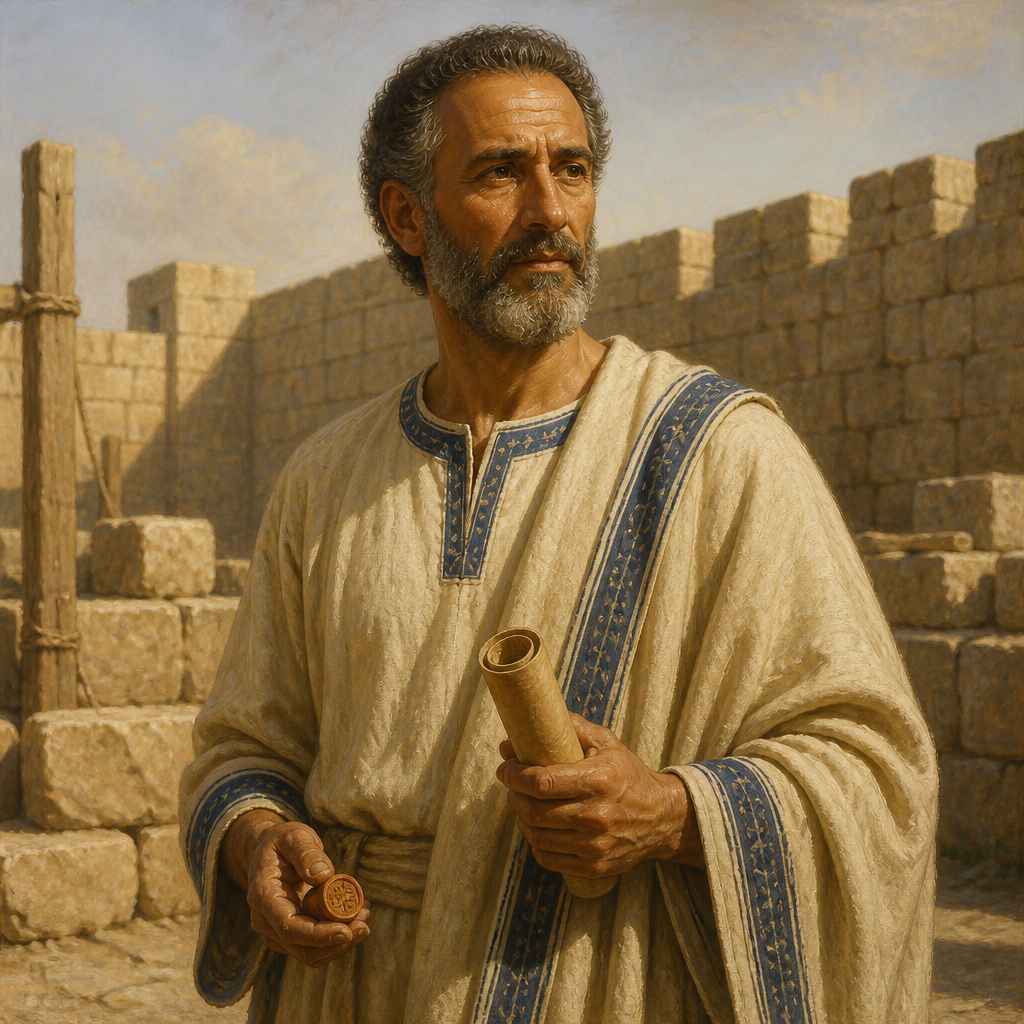
Col-hozeh (fl. 5th century BC) was a Judean man belonging to the lineage of Shelah, the son of Judah. He is mentioned in the genealogical records of Nehemiah 11, which document the prominent families and leaders who chose to reside in the city of Jerusalem after the return from the Babylonian captivity. As the father of Baruch and the son of Hazaiah, Col-hozeh occupies a specific place in the tribal registry of Judah.
The name Col-hozeh is notable for its Hebrew meaning, which translates literally to 'every seer' or 'all-seeing.' While the name suggests a prophetic association or an ancestor with visionary qualities, the biblical text does not provide specific details regarding his personal life or professional occupation beyond his inclusion in this essential post-exilic registry.
Background and Family
Col-hozeh was a member of the Tribe of Judah, specifically descending from the line of Shelah. Shelah was the third son of the patriarch Judah, and his descendants formed one of the primary branches of the tribe that maintained their identity through the Babylonian Exile. The biblical record in Nehemiah 11:5 situates Col-hozeh within a multi-generational lineage: he was the son of Hazaiah and the grandson of Adaiah.
The genealogical preservation of Col-hozeh's family demonstrates the importance placed on ancestral purity and tribal inheritance during the restoration of the Jewish community under Nehemiah's leadership. By documenting Col-hozeh as the father of Baruch and the grandfather of Maaseiah, the text validates the status of his descendants who took up residence in the newly fortified Jerusalem.
Major Life Events
The biblical text does not record specific events or deeds performed by Col-hozeh during his lifetime. His significance in the narrative of the Exile and Return is primarily genealogical. He represents the bridge between the generations that endured the displacement of the exile and the generation that saw the physical reconstruction of Jerusalem's social and religious fabric.
Because Col-hozeh is listed in the context of Nehemiah 11, his legacy is tied to the repopulation of Jerusalem. After the walls were rebuilt, the leaders of the people dwelt at Jerusalem, while the rest of the people cast lots to bring one out of ten to dwell in the holy city. Col-hozeh’s grandson, Maaseiah, was among those identified as a resident leader, indicating that Col-hozeh’s family held a position of respect and influence within the community of the returnees.
Relationship to Other Biblical Figures
Col-hozeh is defined by his relationships to his immediate kin and his distant ancestors. He is the son of Hazaiah, the son of Adaiah, the son of Joiarib, and the son of Zechariah. His primary descendant mentioned is his son, Baruch, through whom the line continued to Maaseiah.
Critically, the text links Col-hozeh back to Shelah. This connection distinguishes his family from the more prominent Davidic and Pharezite lines of Judah, highlighting the diversity of the Judean families that returned to the land. As an ancestor of Maaseiah, Col-hozeh is directly linked to the administrative and spiritual restoration of the post-exilic community.
Spiritual Significance
The name Col-hozeh, meaning 'All-Seer,' carries intrinsic spiritual weight. In the Hebrew Bible, the term hozeh (seer) is frequently used to describe a prophet who receives divine visions. While there is no direct evidence that Col-hozeh himself functioned as a prophet, the naming convention within his family may reflect a heritage of spiritual sensitivity or a parental hope for divine guidance.
In a broader theological sense, the inclusion of Col-hozeh in the book of Nehemiah underscores the biblical theme that every individual within the community of faith has a place in the divine record. Though his personal actions remain unrecorded, his existence ensured the continuation of a godly lineage that contributed to the rebuilding of the Holy City. He stands as a representative of the many 'hidden' figures whose faithful adherence to their tribal identity allowed the nation of Israel to persist through the trials of the exile.
Spiritual Significance
Col-hozeh serves as a vital link in the post-exilic genealogies that established the legitimacy of those living in Jerusalem. His presence in the text affirms the survival of the Shelanite branch of the Tribe of Judah through the Babylonian captivity. The mention of his lineage provides a legal and historical foundation for his grandson Maaseiah’s leadership role in the restored city, ensuring that the repopulation of Jerusalem followed strict ancestral lines.
Frequently Asked Questions
Who was Col-hozeh's father?
Col-hozeh was the son of Hazaiah, a descendant of the Tribe of Judah.
To which tribe did Col-hozeh belong?
Col-hozeh belonged to the Tribe of Judah, specifically the lineage of Shelah.
What does the name 'Col-hozeh' mean?
The name Col-hozeh is derived from Hebrew and means 'every seer' or 'all-seeing.'
Where is Col-hozeh mentioned in the Bible?
He is mentioned in Nehemiah 11:5 in the context of the genealogical records of Jerusalem's residents.
Who was Col-hozeh’s famous descendant?
His grandson, Maaseiah, is listed as a significant resident and leader in Jerusalem during the time of Nehemiah.
Connected Figures
Categories
Mentions by Book
- Nehemiah1
Family & Relationships
Child
Nehemiah 11:5
Parent
Nehemiah 11:5
Others Named Col-hozeh
Col-hozeh, Father of ShallumNehemiah 3:15
A prominent individual during the post-exilic return whose son, Shallum, served as the ruler of the district of Mizpah and oversaw critical repairs to Jerusalem's walls.